

Kidney Hydration Plan Calculator
Important Note
Always discuss your hydration plan with your healthcare provider before any contrast dye procedure. This calculator provides general guidance only.
Your Kidney Function
Risk Assessment
Your Personalized Hydration Plan
When you're scheduled for a CT scan, angiogram, or other imaging test that uses contrast dye, your doctor might tell you to drink more water. But it’s not just about staying hydrated-it’s about protecting your kidneys from damage. The contrast dye used in these tests can be toxic to kidney cells, especially if you already have reduced kidney function. This damage, called contrast-induced acute kidney injury (CI-AKI), isn’t rare. It happens in up to 20% of high-risk patients and can lead to longer hospital stays, dialysis, or even permanent kidney decline.
What Exactly Is CI-AKI?
CI-AKI is defined as a sudden drop in kidney function within 48 to 72 hours after receiving contrast dye. Doctors measure this by checking your serum creatinine levels. If it rises by 0.5 mg/dL or more from your baseline, or jumps 25% higher than before the procedure, you’re diagnosed with CI-AKI. This isn’t just a lab number-it’s a real risk. Studies show CI-AKI adds an average of 3.2 days to your hospital stay and increases costs by about $7,500 per case. For someone with diabetes or chronic kidney disease, this can be life-altering.Why Hydration Works
Your kidneys filter blood. When contrast dye enters your bloodstream, it can cause blood vessels in the kidneys to narrow, reduce blood flow, and trigger oxidative stress. Hydration helps by diluting the dye, keeping blood flowing through the kidneys, and flushing out toxins faster. Think of it like rinsing a clogged drain-you’re not fixing the pipe, but you’re preventing buildup.The Standard Hydration Protocol
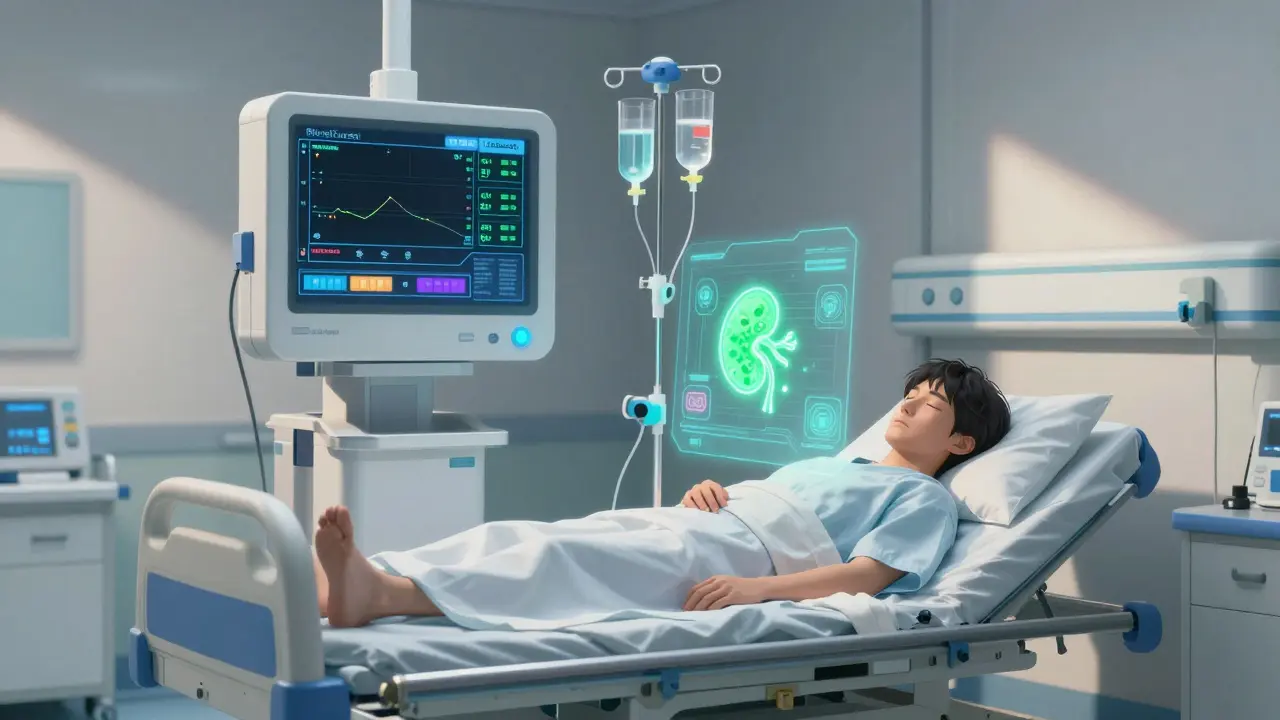
The most common approach is intravenous (IV) saline. The standard plan uses 0.9% sodium chloride (normal saline) at a rate of 3 to 4 mL per kilogram of body weight per hour. This starts 4 hours before the procedure and continues for 4 hours after. For a 70 kg person, that’s about 210 to 280 mL per hour-roughly a full water bottle every 20 minutes. It’s simple, widely available, and works. Studies show it cuts CI-AKI risk by 26% compared to no hydration at all.Advanced Protocols: What Works Better
Not all hydration is created equal. More advanced methods show significantly better results, especially for high-risk patients.- Sodium bicarbonate: Instead of saline, some centers use a solution of sodium bicarbonate (154 mmol/L). The protocol: 3 mL/kg/hr for 1 hour before, then 1 mL/kg/hr for 6 hours after. This slightly alkaline solution may neutralize free radicals in kidney cells. It reduces CI-AKI by 26%, similar to saline, but with better outcomes in diabetic patients.
- Hemodynamic-guided hydration: This uses real-time monitoring of central venous pressure to adjust fluid delivery. Too little fluid? Risk of kidney damage. Too much? Risk of fluid overload, especially if you have heart failure. This method cuts CI-AKI by 59%. It’s precise, but requires specialized equipment and trained staff.
- RenalGuard system: This is a closed-loop device that measures your urine output in real time and automatically adjusts IV fluid to keep you producing 150-200 mL of urine per hour. It’s like a smart drip system for your kidneys. In trials, it reduced CI-AKI by 68%-the best result seen in over 20,000 patients. For someone with eGFR under 60 mL/min/1.73m², it dropped CI-AKI from 22% to just 7.3%.
The RenalGuard system, made by PL Corazon, is now used in about 15% of large cardiac cath labs in the U.S. But it costs roughly $1,200 more per procedure. The trade-off? Preventing one CI-AKI case saves about $4,200 in avoided hospitalization and dialysis.
Oral Hydration: A Viable Alternative?
You don’t always need an IV. Multiple studies show that drinking water works just as well for many people. The typical oral plan: 500 mL of water 2 hours before the procedure, then 250 mL every hour during and after. One large study found CI-AKI rates were 4.7% with oral hydration versus 5.1% with IV-no statistically significant difference. For low-risk patients, this is a game-changer. No needles. No IV pole. No waiting in a hospital bed for hours.Who Doesn’t Need Aggressive Hydration?
Not everyone needs to be drenched in fluids. A 2018 study in eClinicalMedicine found that for patients with eGFR above 29 mL/min/1.73m², prophylactic hydration offered no benefit. Their CI-AKI rate was 1.8% with no extra fluids versus 2.1% with IV saline. The same study showed that withholding hydration in this group was not inferior. This means thousands of low-risk patients every year are getting unnecessary IVs. The VA/DOD Clinical Practice Guideline for Chronic Kidney Disease (April 2025) now recommends: “Withhold prophylactic hydration for elective patients with eGFR >29 mL/min/1.73m².”When Hydration Can Hurt
More fluid isn’t always better. If you have heart failure, especially with reduced ejection fraction, extra fluids can cause pulmonary edema. Dr. Emily Chen from Massachusetts General Hospital warns: “Even 500 mL of excess fluid can trigger decompensation in someone with a weak heart.” That’s why hemodynamic-guided protocols exist-to balance kidney protection with heart safety. For patients with eGFR under 30 mL/min/1.73m², the VA/DOD guideline says: “Consider alternative imaging before using contrast.”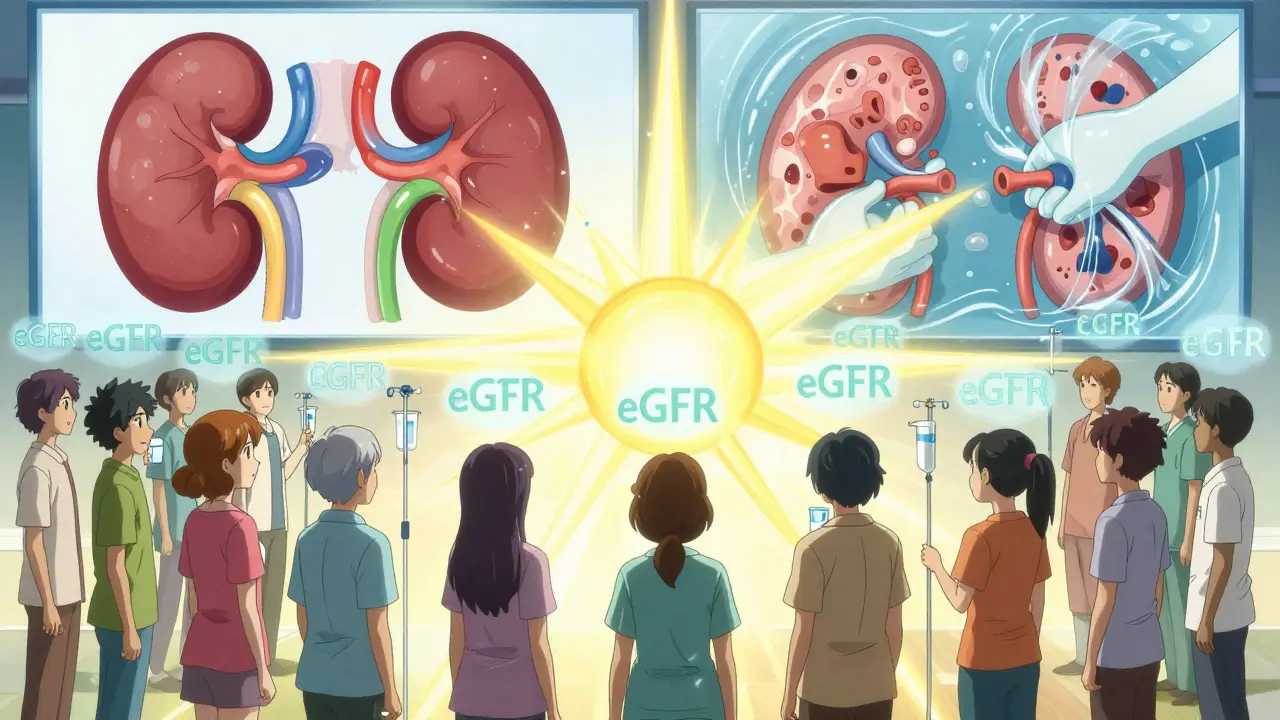
What About Oral vs. IV?
If you’re healthy, mobile, and have no heart problems, oral hydration is safe, effective, and more comfortable. If you’re elderly, dehydrated, have nausea, or are on diuretics, IV may be better. For high-risk patients-those with CKD stage 3 or worse, diabetes, or heart failure-IV or RenalGuard is preferred. The key is matching the method to the person.Implementation Challenges
Getting this right isn’t easy. Hospitals struggle with scheduling. A 12-hour hydration protocol means overnight stays. Staff shortages make consistent monitoring hard. Patients forget to drink water. Some don’t understand why they need to. The Mayo Clinic cut their CI-AKI rate from 12.3% to 5.7% in a year by standardizing protocols across cardiology, radiology, and nursing teams. It took coordination, education, and tracking outcomes.What You Should Ask
If you’re facing a contrast procedure, ask:- “What’s my eGFR?” (This tells your risk level.)
- “Do I need IV fluids, or is drinking water enough?”
- “Do I have heart failure or fluid restrictions?”
- “Will you check my creatinine 48 hours after the test?”
The National Kidney Foundation’s patient guide says: “Ask what your daily fluid needs are.” That’s the right question. Your hydration plan should be personalized-not one-size-fits-all.
The Future: AI and Biomarkers
By 2026, AI-driven fluid systems will likely be standard in high-risk cases. Early pilots at Johns Hopkins show AI can predict fluid needs based on age, weight, kidney function, and even blood pressure trends-cutting CI-AKI by another 15-20%. Research is also looking at new biomarkers that detect kidney cell stress within minutes, not hours. These could one day replace creatinine as the go-to test.For now, the best advice is simple: Know your kidney numbers. Drink water if you’re healthy. Let your care team guide you if you’re at risk. And remember-hydration isn’t just a recommendation. It’s a shield.
Can drinking water really prevent kidney damage from contrast dye?
Yes, for many people. Drinking water before and after contrast procedures helps flush the dye out of your kidneys faster, reducing the time it spends in contact with kidney cells. Studies show oral hydration with 500 mL of water before and 250 mL per hour during the procedure is just as effective as IV fluids for patients with normal or mildly reduced kidney function (eGFR >29 mL/min/1.73m²). For high-risk patients, IV hydration or advanced systems like RenalGuard are more reliable.
Is IV hydration always better than drinking water?
No. IV hydration is more controlled and faster, so it’s preferred for people who are dehydrated, have nausea, or have very poor kidney function (eGFR <60 mL/min/1.73m²). But for healthy or low-risk patients, oral hydration is equally effective and avoids needles, IV lines, and longer hospital stays. The 2020 meta-analysis found no significant difference in CI-AKI rates between oral and IV methods in patients with eGFR above 29.
Who should avoid contrast dye altogether?
People with severe chronic kidney disease (eGFR <30 mL/min/1.73m²) should avoid contrast dye unless absolutely necessary. The VA/DOD 2025 guideline recommends considering non-contrast imaging alternatives like ultrasound or MRI in these cases. If contrast is unavoidable, hydration must be carefully managed, and the risks weighed against the diagnostic benefit. Always discuss alternatives with your doctor.
Does N-acetylcysteine (NAC) help protect kidneys during contrast procedures?
No, not when used with proper hydration. A 2020 meta-analysis of 21,000 patients found NAC provided no additional protection against CI-AKI when patients were adequately hydrated. The American Heart Association no longer recommends routine NAC use. The real protector is fluid-enough, and at the right time.
How long after a contrast procedure should my kidney function be checked?
Your serum creatinine should be measured 48 to 72 hours after the procedure. This is the standard window for detecting CI-AKI. If your creatinine rises by 0.5 mg/dL or 25% from your baseline, you may have kidney injury. Don’t assume everything’s fine just because you feel okay-kidney damage often has no symptoms early on.
11 Comments
March 11, 2026 David L. Thomas
CI-AKI is such a sneaky villain-silent until it’s already done damage. The RenalGuard system is wild, honestly. Real-time urine feedback loops? That’s not just medicine, that’s sci-fi made real. And the cost-benefit analysis? $1,200 upfront to save $4,200? That’s not a luxury, that’s a no-brainer for high-risk cohorts. The VA/DOD guideline shift is long overdue. We’ve been over-hydrating low-risk folks like they’re marathon runners at a water station. Time to personalize, not generalize.
March 13, 2026 Alexander Erb
So I just had a CT last week and they gave me a water bottle and said ‘drink up, champ!’ 🥤 I was like, ‘wait, that’s it?’ But then I read this and realized-yep, that’s literally all I needed. No IV, no hospital bed, no drama. Just water. My kidneys thank me. 🙌
March 14, 2026 Tom Bolt
Let me be perfectly clear: the assertion that ‘oral hydration is just as effective as IV’ is only valid under specific, narrowly defined conditions-namely, eGFR >29 mL/min/1.73m², absence of heart failure, normovolemia, and no concurrent diuretic use. To generalize this as a universal recommendation is not just misleading-it’s clinically dangerous. The data does not support blanket equivalence. Period.
March 16, 2026 Shourya Tanay
As someone from a country where IV access isn’t always available, I’m fascinated by how much emphasis is placed on fluid protocols here. In my hospital, we rely on oral hydration for 80% of cases because it’s practical. But I’ve seen patients with eGFR 25 get IVs anyway-just because ‘it’s protocol.’ This post made me realize we need better risk stratification, not just more fluids. The RenalGuard sounds like a dream-expensive, yes, but maybe worth the investment long-term.
March 16, 2026 Gene Forte
Every kidney is a miracle. Every drop of fluid, a lifeline. We don’t just hydrate to prevent damage-we honor the body’s innate wisdom. When we listen to the numbers-eGFR, creatinine, cardiac status-we’re not just practicing medicine. We’re practicing respect. And that’s what makes this article more than clinical-it’s human.
March 18, 2026 Kenneth Zieden-Weber
So let me get this straight: we have a $1,200 device that reduces CI-AKI by 68%, but hospitals won’t adopt it because ‘it’s too expensive’? Meanwhile, we spend $7,500 per CI-AKI case on extended stays and dialysis. Are we running a hospital or a game of financial Jenga? 🤔
March 19, 2026 Chris Bird
Hydration? That's it? You're telling me all this fancy tech and studies just boil down to 'drink water'? My grandma could've told you that. Why do we need 2000 words to say 'don't let your kidneys dry out'? This is why medicine is broken.
March 21, 2026 Bridgette Pulliam
I appreciate the nuance here. The distinction between low-risk and high-risk patients is critical-and yet, in practice, we often default to the most conservative approach for everyone. I’ve seen elderly patients with eGFR 45 and no cardiac history forced into 12-hour IV infusions, only to develop fluid overload. It’s not care-it’s protocol theater. Personalization isn’t a luxury; it’s the ethical baseline.
March 23, 2026 Mike Winter
It’s funny how we treat kidneys like they’re disposable. We pump them full of contrast, then slap a ‘drink water’ sticker on it like that fixes everything. But really, we’re just delaying the inevitable. The RenalGuard system? That’s not innovation-it’s damage control. We need to ask: why are we using contrast at all? Is it necessary? Or are we just scanning because we can?
March 23, 2026 Randall Walker
...and yet here we are... still... giving IVs to people who just need a glass of water... because... paperwork... I mean... really?...
March 24, 2026 Miranda Varn-Harper
While the data presented is statistically compelling, one must consider the confounding variables: selection bias in trials, institutional funding disparities, and the fact that many patients with eGFR >29 mL/min/1.73m² are still at risk due to comorbidities not accounted for in these studies. To claim oral hydration is universally sufficient is a gross oversimplification. The National Kidney Foundation’s guide, while well-intentioned, lacks the granularity required for clinical decision-making at the individual level.
Write a comment