

Imagine reaching for your morning pill, but you can’t read the tiny text on the bottle. Or picture sitting in a noisy pharmacy waiting room, unable to hear the pharmacist’s crucial instructions about dosage changes. For millions of people living with low vision or hearing loss, this isn't a hypothetical scenario-it is their daily reality.
This gap in accessibility creates a dangerous situation. Medication safety is not just about taking the right drug; it is about being able to identify, measure, and understand how to use that drug independently. When sensory impairments block these basic steps, the risk of serious errors skyrockets. In fact, research shows that individuals with visual impairment are 1.67 times more likely to experience medication errors than those with normal vision. This article breaks down exactly where these risks come from and, more importantly, what practical tools and strategies you can use right now to stay safe.
The Hidden Dangers of Standard Packaging
Most medicine packaging is designed for people with full sensory abilities. The font sizes are often too small, the color contrasts are weak, and the verbal instructions assume perfect hearing. These design choices create specific barriers that lead to preventable harm.
For people with low vision, the primary challenge is identification. Standard prescription labels often use fonts as small as 7-10 points. Even if you have magnifying glasses, distinguishing between two white oval pills-one for blood pressure and one for sleep-can be impossible if they look identical. A survey by the American Foundation for the Blind (AFB) found that 65% of visually impaired respondents struggled significantly with identifying their medications correctly. Furthermore, measuring liquid medicines becomes a guessing game when you cannot see the meniscus line on a spoon or syringe clearly.
For those with hearing loss, the danger lies in communication. Pharmacies are often loud environments. If you miss the pharmacist saying "take this twice a day" instead of "once a day," the consequences can be severe. Additionally, many modern medication reminder devices rely on auditory alarms. If you cannot hear the beep, you might skip a dose entirely or take it at the wrong time.
| Barrier Type | Impact on Low Vision Users | Impact on Hearing Loss Users |
|---|---|---|
| Labeling | Inability to read small print or distinguish colors | N/A (Visual barrier) |
| Counseling | Misinterpreting written instructions | Missing verbal dosage changes or warnings |
| Measurement | Difficulty seeing lines on spoons/syringes | N/A (Visual barrier) |
| Reminders | Can use visual/tactile alerts | Auditory alarms may go unheard |
Practical Solutions for Visual Impairment
You do not need expensive technology to start managing your medications safely. Simple, low-tech modifications can drastically reduce error rates. The key is consistency and contrast.
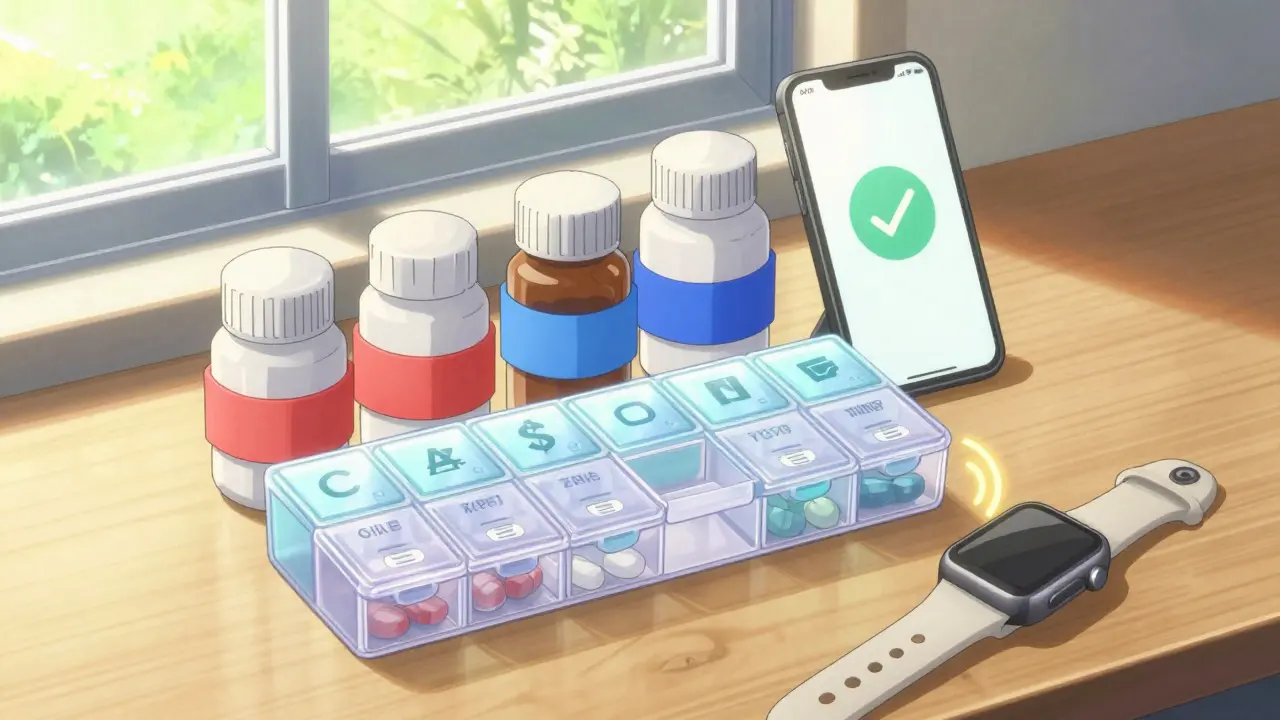
- Color-Coding Systems: Use colored tape or rubber bands to indicate timing. For example, place a red band around bottles taken in the morning and a blue band for evening doses. This method achieves approximately 78% effectiveness in helping users distinguish schedules.
- High-Contrast Labeling: Ask your pharmacist to write instructions in large, black marker on a white background. The AFB Guidelines recommend a minimum of 18-point font size. Avoid glossy tapes that cause glare, which can make reading even harder for those with certain types of vision loss.
- Tactile Markers: Apply braille stickers or distinct shapes (like a square sticker for one med, a circle for another) to bottles. While braille literacy is lower among adults who lose vision later in life, tactile markers still help differentiate containers by touch.
- Blister Cards: Request that your pharmacist dispense tablets in blister packs rather than loose bottles. Blister cards provide a clear visual and tactile grid showing which days have been completed, reducing the chance of double-dosing.
If you struggle with liquid medications, consider using a dosing cup with raised markings or a digital scale. Weighing the liquid can be more accurate than trying to see the measurement line, provided you know the weight-to-volume ratio for your specific medication.
Bridging the Gap for Hearing Loss
Communication breakdowns are the biggest risk for people with hearing loss. To mitigate this, you must control the environment and the method of information transfer.
- Request Written Confirmations: Never rely solely on verbal instructions. Ask the pharmacist to write down every change in dosage, frequency, or new side effects. Many pharmacies now offer apps where you can view your prescription history and instructions digitally.
- Optimize the Environment: When picking up prescriptions, ask to speak with the pharmacist in a quiet area away from the counter noise. Face them directly so you can lip-read if necessary. If you use hearing aids, ensure they are charged and functioning before your visit.
- Use Visual Alerts: Replace standard audible pill reminders with vibrating alarms or flashing light systems. Devices like the Hero Health dispenser use voice recognition and visual cues, ensuring you know when it is time to take your meds even if you are in a noisy room or wearing earplugs.
- Leverage Technology: Apps that connect to your smartwatch can send haptic feedback (vibrations) for medication reminders. This bypasses the need for sound entirely.

The Role of Assistive Technology
While low-tech solutions work well for simple regimens, complex schedules benefit from electronic aids. However, cost and ease of use vary widely.
Basic electronic organizers, such as the PillDrill, cost around $30 and offer simple audio prompts. They are effective for straightforward once-or-twice-daily routines. On the other end of the spectrum, advanced systems like the Talking Rx device allow pharmacists to record up to 60 seconds of customized verbal directions. Studies show these devices improve adherence by 92% because the instructions are personalized and repeatable.
For those comfortable with smartphones, AI-powered apps can scan medication labels and read them aloud via screen readers. Ensure any app you choose meets WCAG 2.1 AA accessibility standards, which guarantee compatibility with VoiceOver (iOS) or TalkBack (Android). Remember, technology requires a learning curve. Adopting a new system typically takes 2-4 weeks of consistent practice, so start with one tool at a time.
Advocating for Better Pharmacy Practices
Safety is a shared responsibility. Pharmacists play a critical role, yet only 28% routinely spend the extra 3-5 minutes needed to properly counsel visually impaired patients. You have the right to request accommodations under laws like the Americans with Disabilities Act (ADA) in the US or the Equality Act in the UK.
Here is how to advocate for yourself effectively:
- Be Explicit: Tell the pharmacist, "I have low vision/hearing loss. I need my labels marked in large print/large contrast." Do not assume they will notice.
- Ask for the AFB Guidelines: Mentioning the American Foundation for the Blind’s labeling guidelines signals that you are informed and expect professional standards.
- Bring a Buddy: If possible, have a family member or friend accompany you during initial pickups to verify that the packaging meets your needs.
- Provide Feedback: If a pharmacy fails to accommodate you, let the manager know. Consistent feedback drives systemic change.
Regulatory bodies like the MHRA in the UK and the FDA in the US are slowly recognizing these gaps. The 2021 'Safety Gap' report highlighted that only 8% of medicine packaging includes meaningful accessibility features beyond basic braille names. By speaking up, you contribute to the data that pushes these agencies toward mandatory accessible labeling standards.
Creating a Safe Home Environment
Your home setup matters as much as the pharmacy's packaging. Organize your medication storage to minimize cognitive load and sensory strain.
Store all medications in one dedicated, well-lit location. For low vision users, install high-intensity LED task lighting above your medicine cabinet. Keep the surface clutter-free to avoid knocking over bottles. Use a weekly pill organizer with large compartments. Fill it once a week when you have good lighting and perhaps assistance, rather than trying to sort pills daily.
For hearing loss users, keep a notebook near your medication station to log doses. Checking off a box provides a visual confirmation that you have taken your meds, preventing accidental double-dosing if an alarm was missed.
When to Seek Help
If you find yourself frequently confused about your medications, do not wait for an error to occur. Contact your healthcare provider immediately. An occupational therapist specializing in vision or hearing loss can assess your home environment and recommend specific adaptations. They can also train you on using assistive devices effectively.
Remember, asking for help is a sign of strength, not weakness. Medication safety is fundamental to your health. By implementing these strategies and advocating for accessible care, you take control back into your hands.
What font size is recommended for prescription labels for low vision?
The American Foundation for the Blind (AFB) recommends a minimum font size of 18 points for prescription labels. This should be paired with high-contrast lettering (black on white) and sufficient white space to ensure readability.
How can I distinguish between similar-looking pills?
You can use color-coded rubber bands or tape on the bottles. Additionally, ask your pharmacist to dispense medications in blister packs, which provide a clear visual and tactile schedule. Tactile markers like braille stickers or distinct shapes can also help differentiate containers by touch.
Are there free resources for accessible medication labeling?
Many pharmacies offer large-print labels and bold writing services at no extra cost. Organizations like the RNIB in the UK and AFB in the US provide free guides and templates for creating accessible home medication systems.
What should I do if I miss a medication reminder due to hearing loss?
Switch to non-auditory reminders such as vibrating smartwatches or flashing light alarms. Keep a physical logbook to check off doses visually. If you realize you missed a dose, consult your pharmacist or doctor before taking it late to avoid overdose risks.
Is it legal for pharmacies to refuse accessible labeling?
In many countries, including the US and UK, laws like the ADA and Equality Act require reasonable accommodations for disabilities. Refusing to provide accessible labeling upon request may violate these regulations. You can file a complaint with local health authorities or disability rights organizations if faced with refusal.