
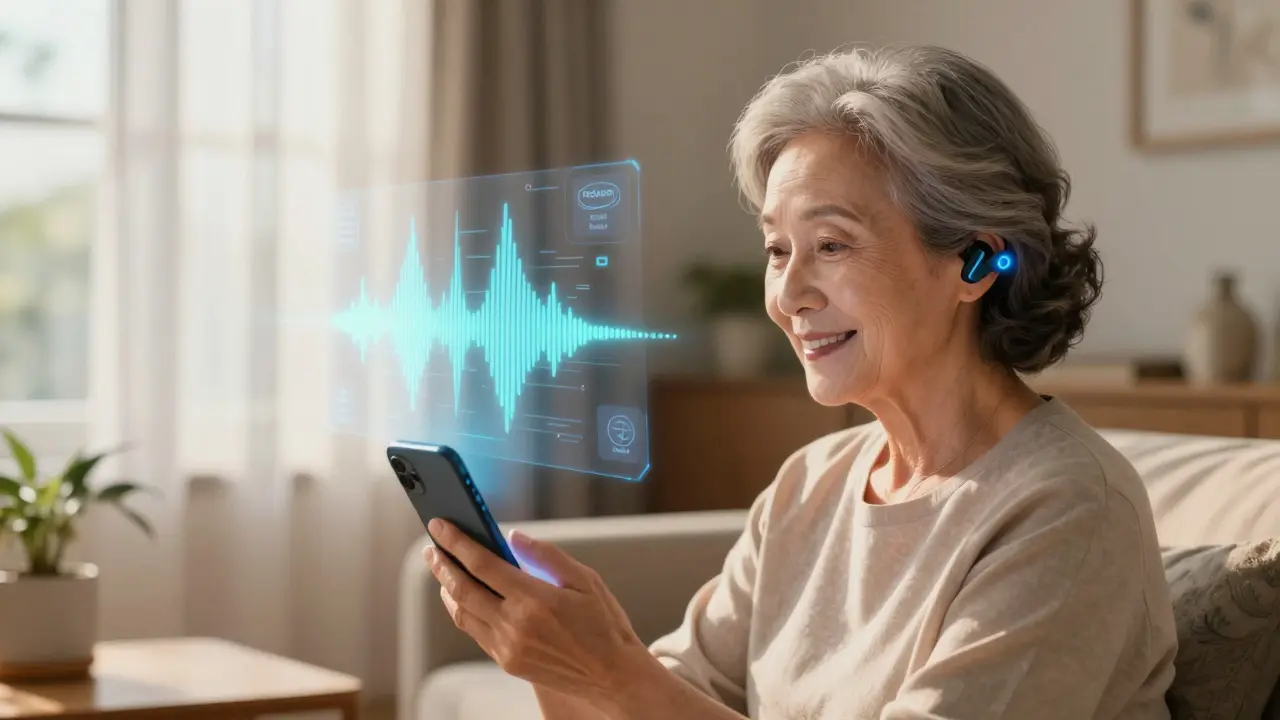
For years, getting your hearing aids adjusted meant driving to an audiologist’s office-sometimes hours away-just to fix a squeal, lower the volume, or tweak how well you hear in a crowded room. Now, that’s changing. With teleaudiology, you can do most of it from your living room. No commute. No waiting room. Just a smartphone, a stable internet connection, and a few clicks to get your hearing aids working better than ever.
What Is Teleaudiology, Really?
Teleaudiology isn’t just a video call with your audiologist. It’s a full system for delivering hearing care remotely. This includes remote hearing tests, real-time adjustments to your hearing aids, follow-up counseling, and even troubleshooting feedback or volume issues-all without stepping into a clinic.
It started as a solution for people in rural areas who lived too far from audiology services. But during the pandemic, it exploded. By 2023, over 60% of U.S. hearing care providers were using teleaudiology regularly. That’s up from just 12% in 2019. The tech behind it is simple: Bluetooth-enabled hearing aids connect to apps like myPhonak, ReSound Smart, or Signia App. From there, your audiologist can see how your devices are performing, make real-time tweaks, and even guide you through simple tests at home.
How It Works: Two Ways to Connect
There are two main ways teleaudiology works: asynchronous and synchronous.
Asynchronous means you do something on your own, and your audiologist reviews it later. For example, you might use a smartphone app to take a hearing test in a quiet room. The app plays tones at different volumes and pitches, and you press a button when you hear them. Your results are sent securely to your provider, who then adjusts your hearing aids and emails you back with instructions.
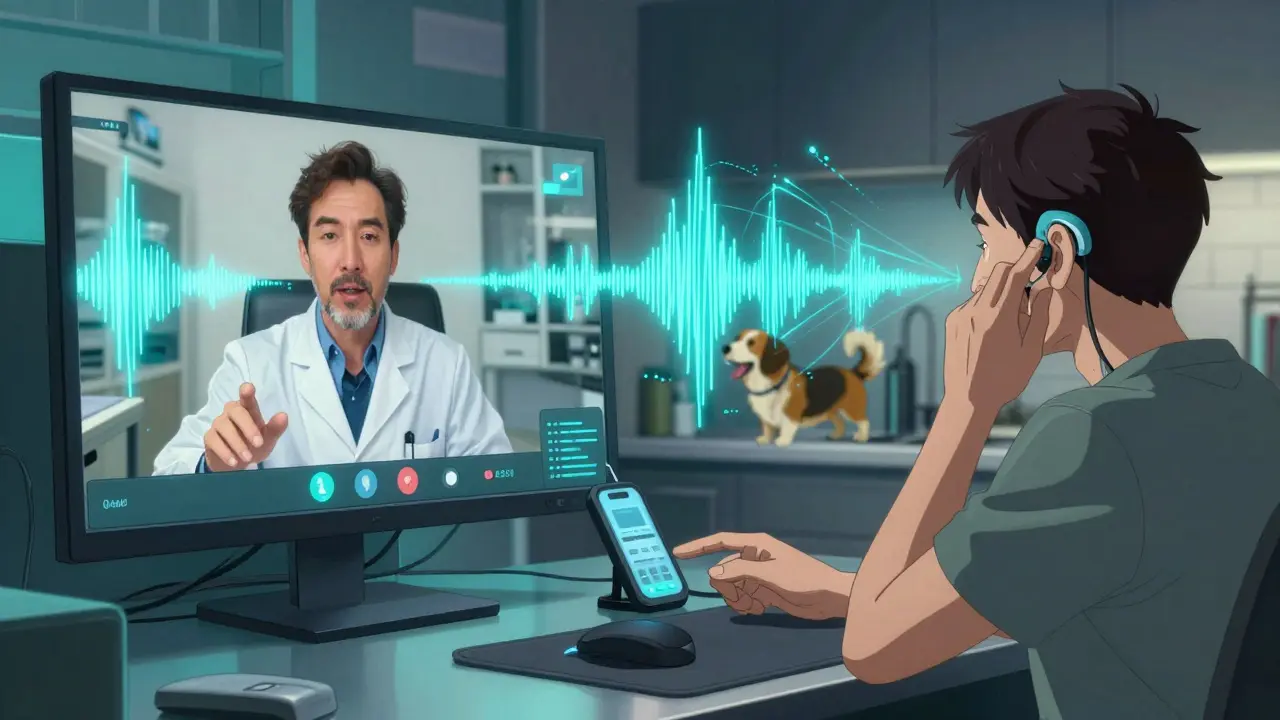
Synchronous is live. You hop on a video call with your audiologist, who can control your hearing aids remotely while you’re in your kitchen, car, or favorite chair. Some systems even let the audiologist trigger specific sounds in your environment-like a TV or a coffee shop noise-to test how your devices handle real-world listening. Tools like hear.com’s Clinic-in-a-Box® let the provider run full audiometry tests over video, using calibrated headphones and background noise controls.
Most people use a mix of both. Initial diagnosis? Often still in-person. But follow-ups? That’s where teleaudiology shines.
Why It Works Better Than You Think
People assume remote care means lower quality. But studies show otherwise. In controlled home environments, remote hearing tests match in-clinic accuracy at 92-95%. Even in less-than-perfect rooms, they’re still 78-85% accurate-close enough for routine adjustments.
And here’s the real win: you’re being tested in your actual environment. An audiologist can’t replicate your noisy kitchen or your granddaughter’s voice over the phone in a clinic. With teleaudiology, they can adjust your hearing aids while you’re sitting at your dinner table, listening to the TV, or walking through a grocery store. One 2023 study found this led to a 31% improvement in real-world comfort for users.
Patients report higher satisfaction too. Average ratings for remote hearing aid adjustments hit 4.6 out of 5, compared to 4.2 for in-person visits. Why? No travel. No waiting. Faster fixes. One 72-year-old in rural Montana avoided four 4-hour round trips over six months by resolving feedback issues in three 15-minute video calls.
What It Can’t Do
Teleaudiology isn’t magic. It can’t replace everything.
It can’t check for earwax blockages. It can’t look inside your ear canal with an otoscope. That’s a problem. About 12-15% of patients who start with remote care turn out to have medically treatable issues-like infections or wax buildup-that require an in-person exam. One California user spent three failed remote sessions trying to fix a buzzing sound, only to find a packed ear canal that needed professional removal.
It also struggles with noisy homes. About 37% of remote tests are affected by background noise-barking dogs, running dishwashers, or noisy HVAC systems. That’s why audiologists now recommend using wired headphones, closing windows, and turning off appliances during tests.
And while most major manufacturers support remote adjustments, not all hearing aids do. You need Bluetooth-enabled prescription devices from brands like Phonak, ReSound, Oticon, Starkey, or Widex. OTC hearing aids are starting to catch up, but they still lag in remote support features.
Cost and Accessibility
Teleaudiology is cheaper. A remote adjustment typically costs $120-$150, compared to $140-$180 for an in-office visit. That’s a 15-20% savings per appointment. For people making multiple visits a year, that adds up.
But there are hidden costs. Some manufacturers charge subscription fees-Phonak’s Remote Support, for example, runs $29.99 a month. Independent clinics often bundle it into their service plans, but you need to ask.
Accessibility? Huge win. In rural areas, 78% of patients now get care they couldn’t before because they lived over 50 miles from the nearest clinic. Average travel time dropped from 2.3 hours to zero. For people with mobility issues, chronic pain, or no car, this is life-changing.
Still, not everyone can use it. About 18% of negative reviews mention difficulty with apps or Bluetooth pairing. Older adults, especially those over 75, sometimes struggle with smartphone navigation-even though 82% of users 65+ can manage it after one 30-minute tutorial.
Getting Started: Simple Steps
If you have Bluetooth-enabled hearing aids, here’s how to start:
- Download your hearing aid manufacturer’s app (e.g., myPhonak, ReSound Smart, Oticon ON).
- Create a secure patient account using your email and hearing aid serial number.
- Pair your hearing aids to your phone via Bluetooth-this usually takes under five minutes.
- Call your audiologist’s office and ask to schedule your first teleaudiology appointment.
- Before the call, find a quiet room, turn off fans or TVs, and have your phone and charger ready.
Most people are up and running in 20-45 minutes. If you get stuck, most major brands offer 24/7 tech support with average response times under 10 minutes. Independent providers usually respond within a few hours during business days.
What’s Next? AI, OTC, and the Future
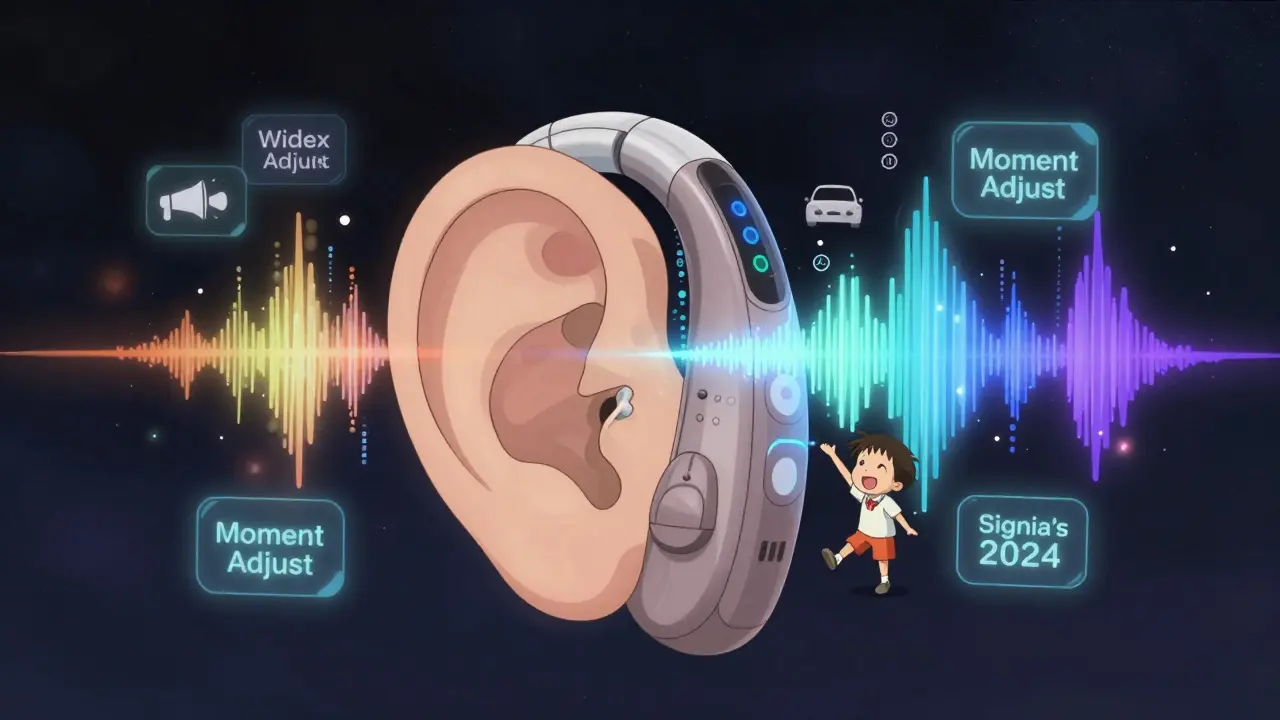
The field is moving fast. In late 2023, Widex launched “Widex Moment Adjust,” which uses AI to automatically detect your environment-like a restaurant or car-and adjust your hearing aids without you lifting a finger. Signia’s early 2024 update now lets users of their OTC hearing aids access remote support, opening teleaudiology to millions who bought devices online without a prescription.
The FDA’s April 2024 update cleared the way for more OTC hearing aids to include tele-audiology features. That could expand access to 40 million Americans who’ve never seen an audiologist.
By 2027, analysts predict over half of all hearing aid follow-ups will be done remotely. AI will handle 30-40% of routine adjustments automatically, freeing up audiologists for complex cases.
But the biggest driver? A global shortage. The World Health Organization estimates we’ll need 200,000 more hearing care professionals by 2030. Teleaudiology isn’t just convenient-it’s necessary to fill the gap.
Final Thoughts: Hybrid Is the New Normal
Teleaudiology doesn’t replace in-person care. It complements it. Most experts agree: start with a full in-person evaluation. Then, use remote visits for adjustments, troubleshooting, and ongoing support.
The best outcomes come from a hybrid model. You get the precision of a clinical exam when you need it-and the speed, comfort, and cost savings of remote care for everything else.
If you’re tired of long drives, long waits, and feeling stuck with hearing aids that don’t quite work in real life, teleaudiology is no longer a luxury. It’s the new standard.