
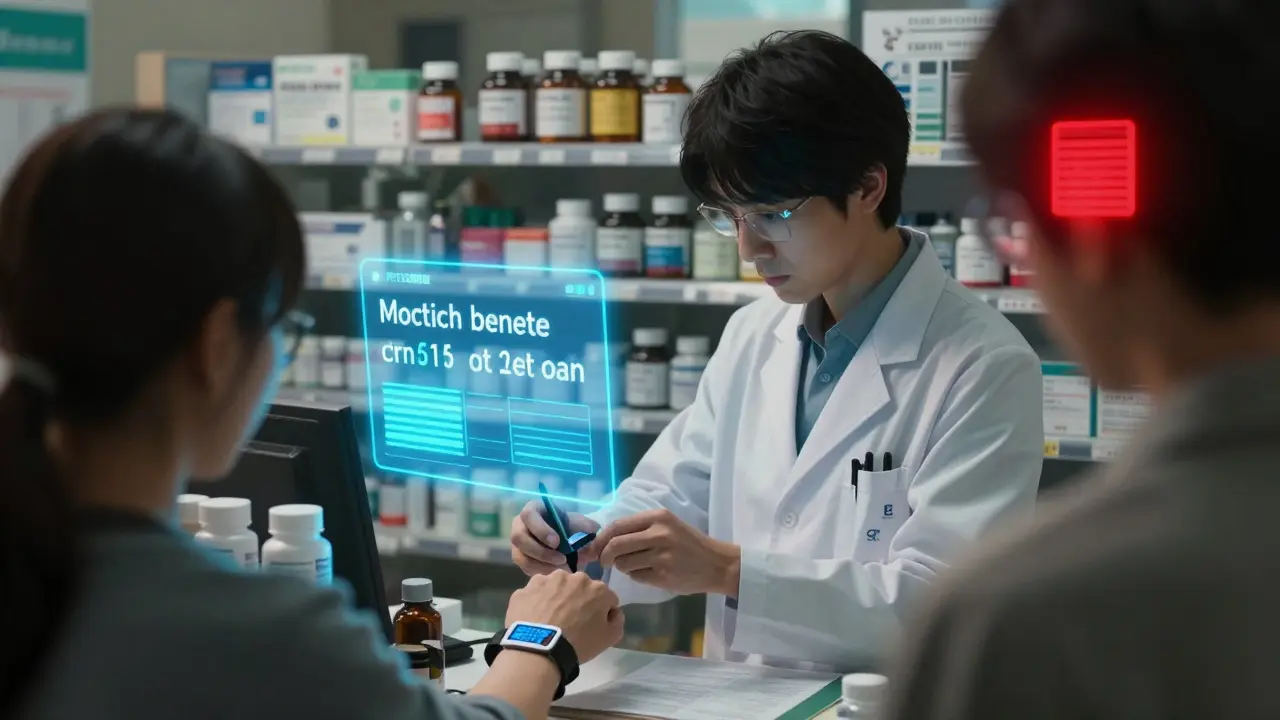
Every year, thousands of patients in the U.S. receive the wrong medication because pharmacists accidentally matched a prescription to the wrong person. It’s not because pharmacists are careless. It’s because patient identification is often done wrong - or not done at all. In pharmacies, where hundreds of prescriptions are filled daily, a simple mix-up between two patients with similar names can lead to a life-threatening error. That’s why using two patient identifiers isn’t just a rule - it’s the last line of defense before a drug goes into someone’s hands.
Why Two Identifiers? The Science Behind the Rule
The requirement to use two patient identifiers comes straight from The Joint Commission’s National Patient Safety Goal (NPSG.01.01.01), which was put in place in 2003. It’s not optional. It’s mandatory for any healthcare facility that wants to keep its accreditation - and its Medicare and Medicaid payments. The goal is simple: never rely on just one piece of information to confirm who a patient is. Think about it. What if two patients in your pharmacy have the same last name? Or both are named John Smith, born on the same day? Or worse - one patient has a duplicate record because their middle name was entered differently in another clinic? A single identifier like a name or date of birth can’t catch those mistakes. But when you cross-check two distinct identifiers - like name + medical record number, or name + phone number - you dramatically reduce the chance of error. A 2020 study in JMIR Medical Informatics found that up to 10% of serious drug interaction alerts in the U.S. go undetected because systems can’t link prescriptions to the right patient. That means roughly 6,000 people each year get a drug they shouldn’t - and many don’t even know until it’s too late.What Counts as a Valid Identifier?
Not every piece of patient info qualifies. The Joint Commission is very clear: room number and location are not acceptable. Why? Because those change. A patient might be moved from Room 304 to Room 306. Their phone number might be outdated. Their insurance ID might be shared across family members. Valid identifiers include:- Full legal name
- Assigned medical record number
- Date of birth
- Telephone number
- Unique patient ID from an EMPI system
Manual Verification vs. Technology: What Actually Works?
Many pharmacies still rely on pharmacists asking patients: “What’s your full name? When were you born?” Then they check it against the screen. This sounds simple. But it’s flawed. A 2023 survey by the American Society of Health-System Pharmacists (ASHP) found that 63% of pharmacists admit to occasionally cutting corners during busy hours. In community pharmacies, 42% of verification happens verbally - with no documentation. That means if something goes wrong, there’s no record. No proof. No accountability. Technology changes everything. Barcodes on patient wristbands and prescription labels cut medication errors by 75%, according to a 2012 study in the Journal of Patient Safety. Here’s how it works: the pharmacist scans the patient’s wristband. The system checks the ID against the prescription. If they don’t match? An alarm sounds. No guesswork. No memory. No human error. Even better? Biometric systems. Imprivata’s palm-vein scanners, used in hospitals across the U.S., match patients to records with 94% accuracy - compared to just 17% in places without a unified patient index. One case from 2023 showed a patient transferred from another hospital was almost given a dangerous drug because the receiving hospital created a new record. The original record had his allergies listed - under his middle name. A biometric scan would have caught it instantly.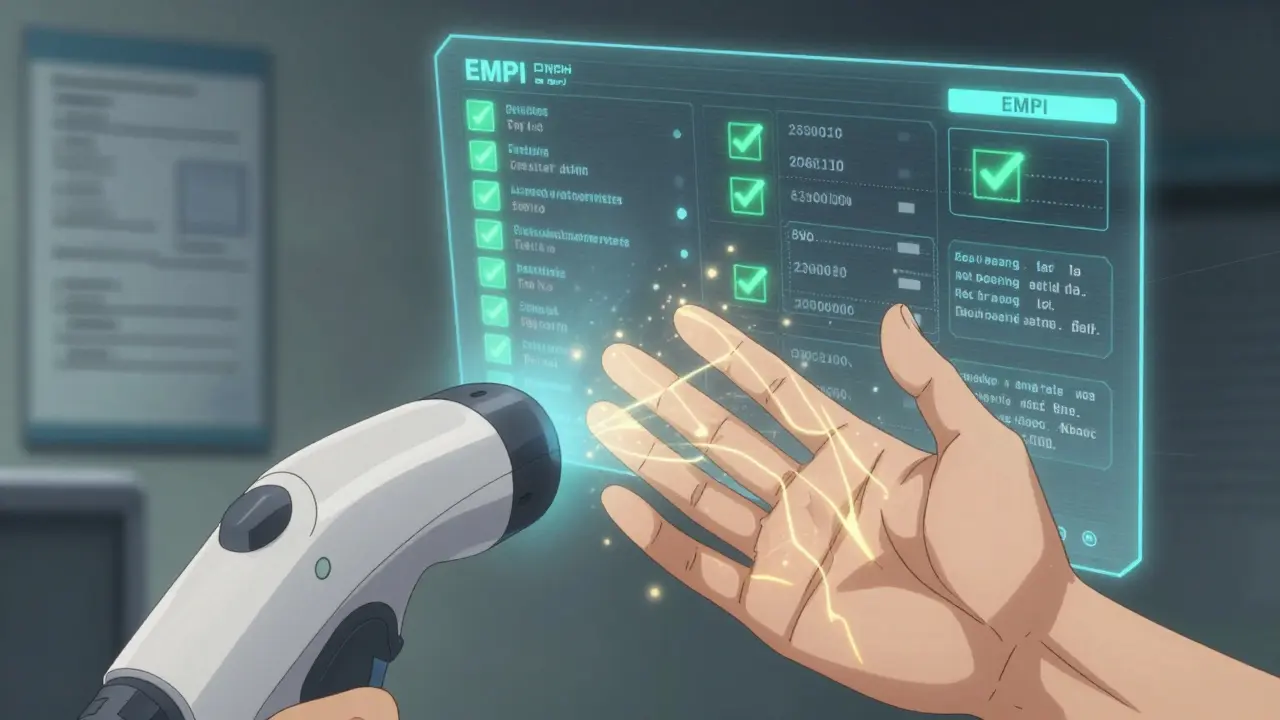
The Hidden Danger: Duplicate Records and EMPI Systems
One of the biggest silent killers in patient safety is duplicate medical records. A patient might see a cardiologist, a dermatologist, and a pain clinic - each using a different system. Each system creates a new record. Suddenly, one person has three files. One says they’re allergic to penicillin. Another says they’re not. A third doesn’t mention it at all. Enterprise Master Patient Index (EMPI) systems fix this. They act like a central hub - linking every record, no matter where it was created, under one unique patient ID. When a pharmacy pulls up a prescription, the EMPI pulls in every allergy, every interaction, every past reaction - from every provider. Without EMPI, duplicate records affect 8-12% of patients. That’s not a small number. It’s a systemic flaw. And it’s why the Office of the National Coordinator for Health IT says accurate identification is the foundation of nationwide interoperability. In 2023, one large hospital system lost $40 million a year just cleaning up these errors.Why Double-Checking Doesn’t Always Help
You might think: “Why not have two pharmacists check every prescription?” That’s a common fix. But research says it doesn’t work as well as you’d expect. A 2020 systematic review in BMJ Quality & Safety found no solid proof that double-checking reduces errors. Why? Because both pharmacists often look at the same screen. They see the same name. They miss the same mismatch. It’s not independent verification - it’s confirmation bias. The real solution isn’t more people. It’s better technology. A barcode scan doesn’t get tired. It doesn’t assume. It doesn’t trust memory. It just says: “Match? Yes or no.”Real Stories from the Front Lines
A Reddit post from a hospital pharmacist in March 2024 said: “We rolled out barcode scanning six months ago. Near-miss errors dropped by 60%.” Another community pharmacist wrote: “We’re swamped at 5 p.m. Sometimes I just ask for name and DOB - no scan. I know I shouldn’t. But the line is out the door.” These aren’t exceptions. They’re the norm. And they’re dangerous. A patient in a rural clinic once got a high-dose opioid because the pharmacist confused her with another woman who had the same first name and birth year. The patient went into respiratory arrest. She survived - but only because a nurse noticed her breathing was too shallow. The error was caught - not by the system, not by a second check - but by instinct.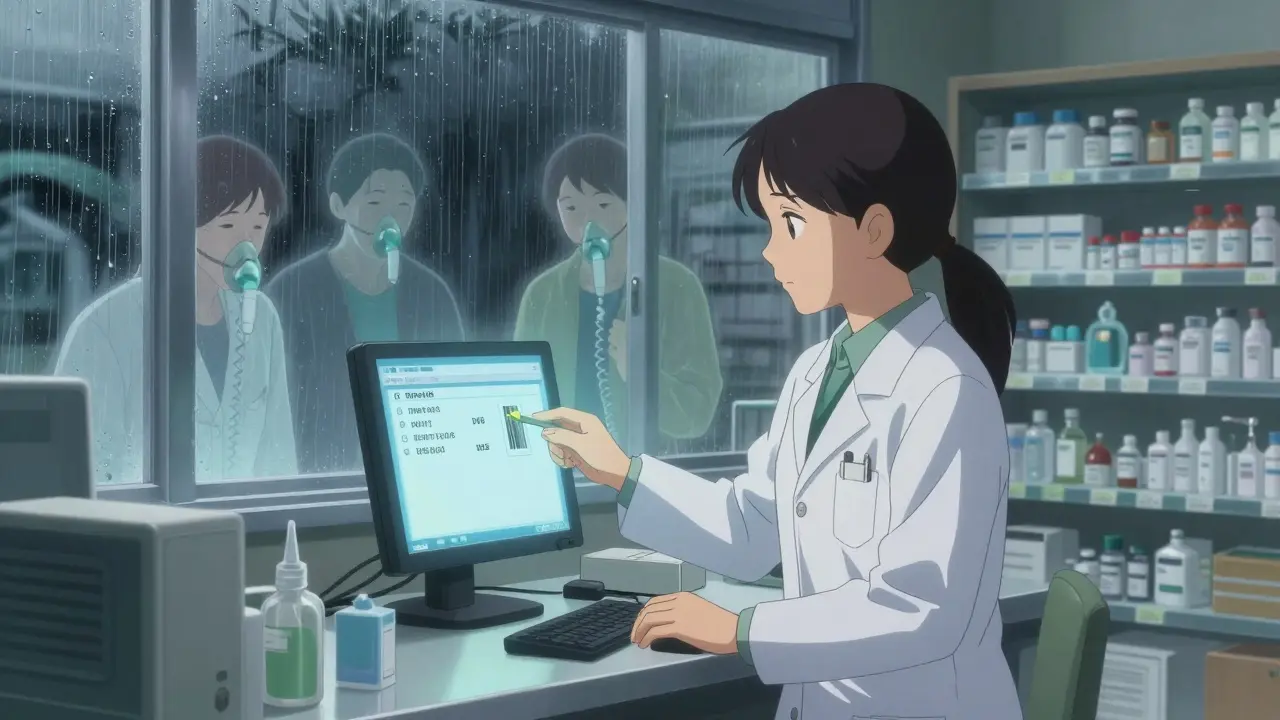
How to Implement It Right
If you’re setting up a two-identifier system in your pharmacy, here’s what works:- Start with policy: Define exactly which two identifiers you’ll use - and make sure everyone agrees.
- Train staff: Don’t assume they know why it matters. Show them real cases where errors were prevented.
- Pilot it: Try it in one area first - say, the high-alert medication zone.
- Use tech: Barcode scanning + EMPI integration is the gold standard. Biometrics are the future.
- Document everything: The Joint Commission found that 37% of non-compliant pharmacies didn’t record the verification. That’s a compliance failure waiting to happen.
12 Comments
March 24, 2026 Danielle Arnold
Ugh, another post about two identifiers like it's some revolutionary breakthrough. We've been doing this since 2003. Meanwhile, my pharmacy still uses a sticky note with a patient's name and a doodle of a cat as their 'MRN'. It's not incompetence-it's systemic neglect. And don't even get me started on the EMPIs that cost more than my car.
March 25, 2026 James Moreau
This is one of those topics where the solution is obvious but the implementation is messy. I work in a rural clinic, and we don't have barcode scanners or biometrics. We use name + DOB religiously. It's not perfect, but it's what we've got. Training matters more than tech sometimes. If the staff understand why they're doing it, they'll do it right-even when the line is out the door.
March 25, 2026 Jesse Hall
YES!! This is so important!! 🙌 I work in a hospital pharmacy and since we went full barcode + EMPI integration, our near-misses dropped like crazy. I used to dread the 5 p.m. rush, but now I actually feel safe sending meds out. Tech isn't magic, but it's the closest thing we have to a safety net. Also, biometrics? Game changer. My coworker got flagged because her duplicate record had a different allergy list-palm scan caught it. Mind blown. 🤯
March 27, 2026 Sean Bechtelheimer
Let’s be real-this isn’t about patient safety. It’s about liability. Hospitals don’t care if you live or die. They care if they get sued. That’s why they enforce two identifiers. The real danger? The EMPI system is owned by a private company that sells your health data to insurers. They’re not fixing duplicates-they’re monetizing them. And the national ID? That’s just the first step to a government health tracker. 👁️👁️ #BigPharmaBigBrother
March 28, 2026 Seth Eugenne
I love how this post breaks it down without fluff. Seriously, the barcode thing? It’s not even close to optional anymore. We had a near-miss last month where two patients had the same first name and DOB-different middle names, different MRNs. The system flagged it because the barcode didn’t match. Saved a life. No drama. No heroics. Just tech doing its job. If your pharmacy still does manual checks, please, for the love of all that’s holy, upgrade. 🙏
March 29, 2026 Jefferson Moratin
The fundamental flaw in the current paradigm lies not in the absence of technological infrastructure, but in the epistemological assumption that human verification is inherently reliable. The cognitive load imposed by repetitive, high-volume, low-stakes identification tasks inevitably leads to heuristic substitution-where the brain substitutes accuracy for expediency. This is not negligence; it is cognitive ergonomics failing. The solution, therefore, is not more training, but system redesign that offloads verification to algorithmic certainty. The Joint Commission’s mandate is necessary, but insufficient.
March 31, 2026 Caroline Dennis
EMPI + barcode = gold standard. No debate. Duplicate records = silent killer. 8-12% of patients? That’s not noise-that’s a systemic failure. And the fact that 42% of verifications are undocumented? That’s not laziness. That’s a compliance time bomb. If you’re not logging your two identifiers, you’re not just breaking policy-you’re exposing your org to liability. Stop treating safety like a suggestion.
April 1, 2026 Zola Parker
Two identifiers? That’s so 2003. Why not just use a QR code linked to your DNA? Or better yet-why are we still using names at all? Names are cultural constructs. What if someone changes theirs? What if they’re non-binary and their ID doesn’t match their gender? This whole system is built on heteronormative, capitalist, colonial assumptions. We need to deconstruct patient identity entirely. Maybe just assign everyone a number and let AI guess who they are. 🤷♀️
April 2, 2026 florence matthews
I’m from a country where we don’t have EMPIs or barcode scanners, and we still manage to avoid errors by talking to patients like humans. We ask for their name, we look them in the eye, we confirm their meds. It’s not perfect, but it’s personal. Maybe tech helps, but don’t forget: medicine is about trust. Not just scans. 🌍❤️
April 3, 2026 Kenneth Jones
Stop making excuses. If you're too busy to scan a barcode, you're too busy to be a pharmacist. That's it. No drama. No 'the line is long.' Your job is to prevent death. Not to be nice. Not to be 'understood.' Scan. Or get out.
April 3, 2026 Mihir Patel
OMG I just read this and my jaw dropped 😱 I work in a pharmacy in India and we use name + phone number because we dont have MRNs. But guess what? Last week a lady got the wrong pill because her phone number was saved as +91-789 and the system had +91789 (no dash). We almost killed her. I cried. I fixed it. But this is insane. We need tech. NOW.
April 4, 2026 Kevin Y.
Thank you for this comprehensive, well-researched piece. It’s refreshing to see a topic that is so critical to patient safety addressed with such clarity and evidence-based insight. The data on barcode implementation reducing errors by 75% is particularly compelling, and the emphasis on documentation as a compliance imperative is spot-on. I’d like to add that ongoing staff education, paired with leadership accountability, is the multiplier that turns policy into practice. Well done.
Write a comment