
When you hear the word biosimilar, you might think it’s just another generic drug. But it’s not. Biosimilars aren’t copies like the pills you pick up for $5 at the pharmacy. They’re complex, living-molecule drugs designed to match expensive biologic treatments - like those for rheumatoid arthritis, cancer, or Crohn’s disease - as closely as science allows. And they’re saving billions. But not as much as they could.
Why Biosimilars Aren’t Like Generics
Generic drugs are simple. They’re chemically identical to brand-name pills. If you switch from brand-name Lipitor to generic atorvastatin, you’re getting the exact same molecule. Biosimilars? Not even close. They’re made from living cells - yeast, bacteria, or animal cells - grown in huge vats. Tiny changes in temperature, pH, or nutrient mix can alter the final product. That’s why regulators don’t call them “identical.” They call them “highly similar.” This complexity is why biosimilars cost way more to develop than generics. A generic can be made for under $1 million. A biosimilar? Often over $100 million. That’s why you don’t see 80-90% price drops like you do with generics. Instead, you get 15-35% off the list price - sometimes more, sometimes less.How Much Are Biosimilars Actually Saving?
The numbers tell a clear story. In 2024 alone, biosimilars saved the U.S. healthcare system $20.2 billion. Since the first one hit the market in 2015, that total hits $56.2 billion. That’s not pocket change. That’s enough to cover free insulin for millions of patients for years. Take Humira, the top-selling drug in the world for over a decade. Before biosimilars, a single month’s supply could cost over $7,000. In January 2025, with 10 FDA-approved biosimilars on the market - including several labeled “interchangeable” - the list price dropped by up to 85%. That’s huge. But here’s the catch: the real price you pay isn’t always what’s on the sticker. Pharmaceutical companies use rebates and discounts to keep their drugs on pharmacy benefit managers’ (PBMs) formularies. So even if a biosimilar lists at $1,000 a month, the originator drug might be priced at $7,000 - but after rebates, the net price is $2,200. That’s still higher than the biosimilar, but not by much. This “rebate trap” means savings aren’t automatic. They depend on who’s negotiating, how contracts are structured, and whether the payer pushes for biosimilars.Real-World Savings: Patients, Employers, and Medicare
Patients aren’t just seeing lower list prices - they’re paying less out of pocket. A 2025 report from CSRxP found that average patient copays for biosimilars were 23% lower than for the original biologics. For some, that meant going from $400 a month to $300. For others, it meant dropping from $1,200 to $650. That’s life-changing for someone on a fixed income. Employers are saving too. One study found that if every employee switched from a brand-name biologic to its biosimilar, an average employer saved $1.53 million per year. Across all self-insured U.S. companies, switching just two biologics to biosimilars saved $1.4 billion in 2024. Medicare Part B, which covers drugs given in clinics, saw consistent price drops after biosimilars entered the market. Prices fell over time - not just once, but steadily - as more competitors joined. In Europe, the savings are even more dramatic. In Norway, 86% of patients using a specific biologic now get the biosimilar version within three years of launch. In the U.S., that number is still under 10% for most drugs. Why? Because the system isn’t built to push biosimilars. Doctors aren’t always trained on them. Patients are scared they’re “less safe.” PBMs don’t always prioritize them.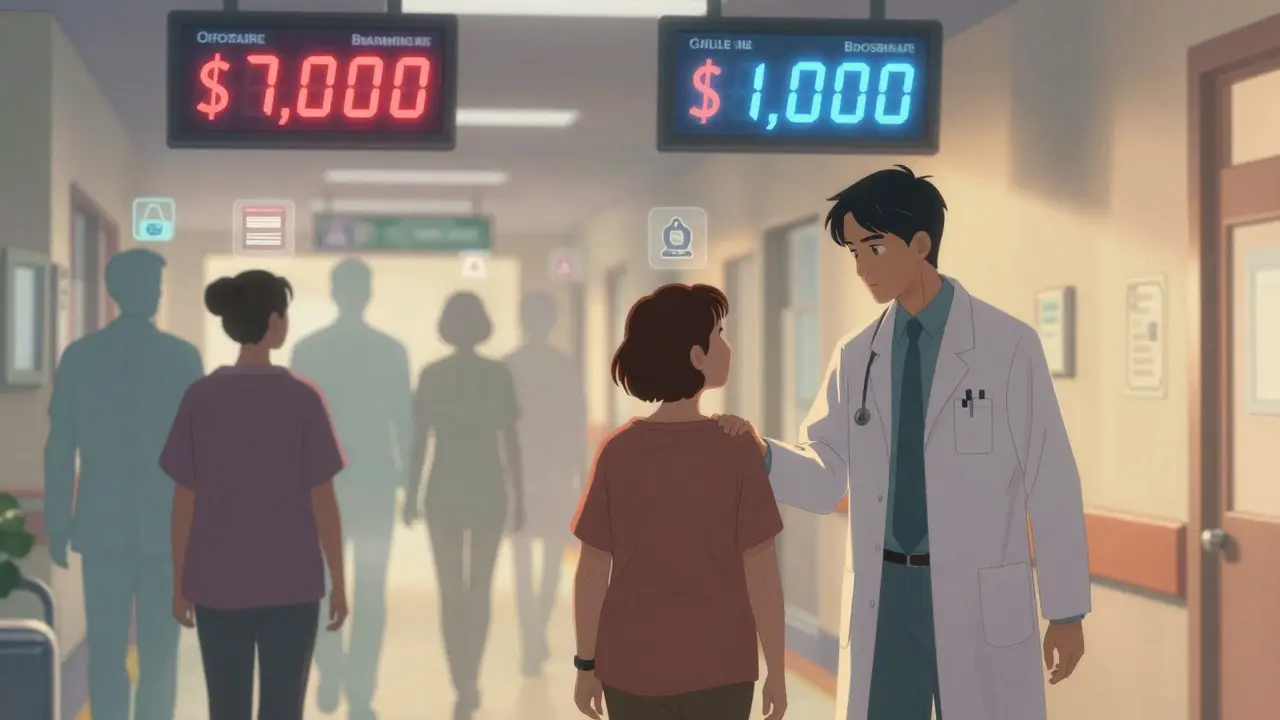
The Humira Effect: A Case Study in Savings
Humira’s story is the best example of what biosimilars can do. Before 2023, AbbVie held a monopoly. No competition. Prices stayed high. Then, in January 2023, the first biosimilars arrived. By January 2025, ten were approved. The list price dropped 85%. But here’s what really happened: AbbVie’s net revenue didn’t crash. Why? Because they offered bigger rebates to PBMs. The biosimilars didn’t get those rebates - at least not all of them. But here’s the twist: even with rebates, the biosimilars still won. Why? Because when you add up all the costs - administration, hospital visits, side effect management - the biosimilars came out cheaper overall. And when patients switched, fewer stopped treatment because they couldn’t afford it. That’s the real win: more people got the medicine they needed.The Biosimilar Void: Why Most Biologics Still Have No Competition
Here’s the scary part: only 12 of the 118 biologics set to lose patent protection in the next 10 years have biosimilars in development. That means 90% of future savings are sitting on the shelf - waiting for someone to build them. Why? Because it’s risky. It takes 7-10 years and over $100 million to get one biosimilar approved. And if the originator company sues you for patent infringement - which they often do - you could be stuck in court for years. In Europe, governments step in and push biosimilars. In the U.S., no one’s pushing. Companies wait. Investors hesitate. The pipeline dries up. Compare that to the EU, where 73% of high-sales biologics have biosimilars in the works. In the U.S., it’s 23%. That gap isn’t accidental. It’s policy.
How to Get the Most Savings - For Patients and Payers
If you’re an employer, a health plan, or even a patient, here’s how to unlock more savings:- Push for formulary preference. Make sure biosimilars are listed first in your drug plan. If the plan covers the biosimilar at a lower tier, people will switch.
- Use step therapy. Require patients to try the biosimilar before getting the originator. Not to deny care - to save money so more people can get treated.
- Ask for transparency. Demand to see net prices, not just list prices. Rebates matter. If your PBM is hiding them, you’re not getting the full savings.
- Educate providers and patients. Many doctors still think biosimilars are “second-rate.” They’re not. Studies show no difference in safety or effectiveness. Patients need to hear that too.
What’s Next? The Future of Biosimilar Savings
The Biden administration’s 2024 executive order on drug pricing is a start. The FDA is speeding up approvals. Some PBMs are building dedicated biosimilar formularies. But without policy changes - like banning anti-competitive rebates or funding biosimilar development - the U.S. will keep falling behind. If the 90% of biologics without biosimilars in the pipeline get developed, the U.S. could save $234 billion over the next decade. That’s more than the entire annual budget of the CDC. That’s enough to cover cancer care for 2 million more people. But right now, we’re not even trying. Biosimilars aren’t magic. They’re not perfect. But they’re the best tool we have to bring down the cost of life-saving drugs. And if we use them right - with smart policies, transparent pricing, and real competition - they can change everything.Are biosimilars as safe as the original biologics?
Yes. Every biosimilar approved by the FDA must prove it has no clinically meaningful differences in safety, purity, or effectiveness compared to the original. Over 3.3 billion days of patient use since 2015 have shown no unique safety issues. Patients switching from originators to biosimilars experience the same outcomes.
Why aren’t biosimilars cheaper if they’re similar?
Because they’re not simple chemicals. Biosimilars are made from living cells, which makes manufacturing extremely complex and expensive. Developing one costs $100 million or more, compared to under $1 million for a generic pill. That’s why savings are 15-35%, not 80-90%.
Do insurance plans cover biosimilars?
Yes, most do - but not always equally. Many plans favor biosimilars because they’re cheaper. But some still push the original biologic due to rebates from manufacturers. Check your plan’s formulary or ask your pharmacy benefit manager for net pricing details.
Can I ask my doctor to prescribe a biosimilar?
Absolutely. You have the right to ask. Many doctors are still unfamiliar with biosimilars, but they’re just as effective. Bring up the cost difference - it could save you hundreds or thousands a year. If your doctor says no, ask why - and if it’s based on science or just habit.
Why are biosimilars slower to adopt in the U.S. than in Europe?
Europe uses price controls, public procurement, and strong government push to encourage biosimilar use. The U.S. relies on market competition, but the system is broken by rebates, patent lawsuits, and payer inertia. Also, U.S. manufacturers often delay biosimilar entry with legal tactics. Europe doesn’t.
What’s the biggest barrier to biosimilar savings?
The rebate system. Originator companies pay huge rebates to pharmacy benefit managers (PBMs) to keep their drugs on formularies. These rebates often make the net price of the original drug close to the biosimilar’s list price - hiding the real savings. Without transparency and policy reform, patients and payers won’t see the full benefit.
9 Comments
December 23, 2025 Abby Polhill
Biosimilars are a classic case of regulatory complexity masking economic inefficiency. The FDA’s ‘highly similar’ standard isn’t just semantics-it’s a liability shield for manufacturers who can’t replicate the glycosylation patterns of the originator. And yet, the real bottleneck isn’t science-it’s the rebate architecture. PBMs get paid to keep the expensive biologic on formulary, so even when a biosimilar lists at 30% less, the net price difference is negligible. We’re not saving money-we’re just moving it around the balance sheet.
December 24, 2025 Bret Freeman
This whole biosimilar thing is a scam dressed up as progress. Big Pharma doesn’t want competition-they want you to believe they’re being altruistic by letting you pay $1,200 instead of $7,000. Meanwhile, they’re still raking in billions through rebates, patents, and legal threats. And don’t get me started on how doctors are still scared to switch patients because they don’t understand the data. It’s not about safety-it’s about inertia, greed, and a system that rewards obstruction.
December 24, 2025 niharika hardikar
It is imperative to recognize that the structural impediments to biosimilar adoption in the United States are not merely technical or economic, but deeply institutional. The absence of centralized procurement mechanisms, coupled with the proliferation of patent evergreening strategies, has effectively stifled market entry. In contrast, the European Union’s mandatory substitution policies and transparent pricing frameworks have enabled uptake rates exceeding 80% in several therapeutic classes. The U.S. must adopt analogous regulatory interventions if it is to realize the projected $234 billion in savings over the next decade.
December 25, 2025 Rachel Cericola
Let me break this down for anyone still skeptical: biosimilars aren’t ‘cheap knockoffs’-they’re scientifically validated alternatives that have been used by over 3.3 billion patient-days without a single clinically meaningful safety deviation. The real issue isn’t efficacy-it’s access. Insurance plans still prioritize originators because of hidden rebate deals with manufacturers. Employers? They’re paying for branded drugs while their employees skip doses because they can’t afford the copay. Step therapy should be mandatory, not optional. Formularies should list biosimilars first. Patients need to be educated, not scared. And PBMs need to be forced to disclose net prices, not just list prices. This isn’t rocket science-it’s basic healthcare ethics. If we can’t fix this, we don’t deserve to call ourselves a healthcare system.
December 25, 2025 EMMANUEL EMEKAOGBOR
It is indeed a matter of profound significance that the United States, despite its technological prowess, lags behind in biosimilar adoption. The cultural and systemic resistance to change, particularly among prescribers and payers, is a barrier that transcends economics. In Nigeria, where access to biologics is severely limited, the potential of biosimilars to expand therapeutic reach is immense. However, without investment in local manufacturing capacity and regulatory harmonization, even affordable options remain out of reach. Global collaboration, rather than competition, must be the guiding principle.
December 26, 2025 CHETAN MANDLECHA
Man, I read this whole thing and I’m still confused. So biosimilars are expensive to make but cheaper than originals? But then the rebates make them not cheaper? So who actually saves money? The insurance company? The patient? Or just the guy who wrote the rebate contract? I’m just trying to figure out why my co-pay didn’t drop when they switched me to the biosimilar.
December 27, 2025 Ajay Sangani
what if the real problem isnt the biosimilars but the entire model of drug pricing? we treat medicine like a luxury good instead of a public good. the fact that we need to argue whether a $1000 drug is ‘better’ than a $7000 one… that’s the tragedy. the science is solid. the system is broken. and we’re all just arguing over crumbs while the real winners are the ones who own the patents and the rebates.
December 28, 2025 Gray Dedoiko
My mom switched to a biosimilar for her RA last year. She used to pay $450 a month. Now it’s $280. She didn’t even notice a difference in how she felt. The only thing that changed? She stopped worrying about whether she could afford her next dose. That’s the real win here. Not the billions saved by insurers-though that’s nice-but the fact that someone who was one missed payment away from going off her meds can now breathe easier. That’s what this is really about.
December 29, 2025 Aurora Daisy
Oh wow, the U.S. is ‘falling behind’ Europe again? Shocking. Next you’ll tell me we’re also bad at healthcare outcomes, life expectancy, and not having a single-payer system that doesn’t require a PhD to navigate. At least the Brits don’t pretend their market ‘works’ when it’s just a cartel with extra steps. Biosimilars? Sure. But only after we fix the fact that a pill can cost more than a car here. Until then, keep your ‘savings’-we’ll take real affordability instead.
Write a comment