
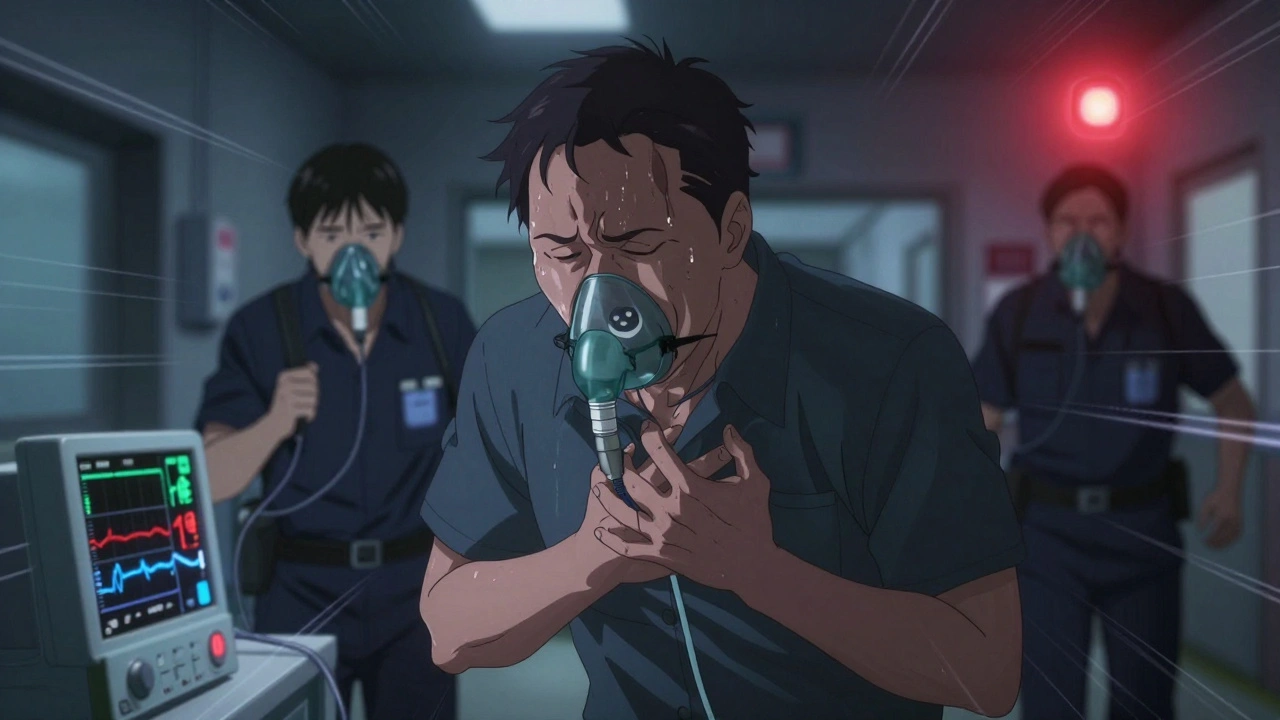
When your chest hurts, your mind races. Is it heartburn? A pulled muscle? Or something life-threatening? The truth is, chest pain isn’t always what it seems-and waiting too long can cost you your life. Every year in the U.S., millions of people show up to emergency departments with chest discomfort. Only about 1 in 10 of them are having a heart attack. But that 10%? They need help now.
What Counts as Dangerous Chest Pain?
Chest pain isn’t just a sharp stab or crushing pressure in the middle of your chest. It can show up as tightness, heaviness, or a dull ache that spreads to your jaw, neck, shoulders, arms, or even your upper belly. Some people feel like they’ve been punched in the chest. Others just feel exhausted, nauseous, or short of breath with no pain at all. These are called anginal equivalents-and they’re just as serious. The key isn’t the exact feeling. It’s the context. If you’ve never had this before, it’s sudden, and it doesn’t go away with rest or antacids, treat it like an emergency. The 2021 American Heart Association guidelines say any new, unexplained discomfort in the chest or upper body lasting more than a few minutes should be evaluated immediately.When to Call 999 (or 911) Right Now
Don’t drive yourself. Don’t wait to see if it gets better. If you’re experiencing any of these, call emergency services immediately:- Chest pain that lasts more than 5-10 minutes and doesn’t improve with rest
- Pain that spreads to your left arm, jaw, neck, or back
- Breaking out in a cold sweat, especially if you’re not hot or exercising
- Shortness of breath with chest discomfort
- Nausea, vomiting, or sudden dizziness
- Feeling like you’re going to pass out
- Heart rate over 100 beats per minute with chest pressure
- Low blood pressure (below 90 systolic) or trouble breathing
What Happens When You Arrive at the ER?
The first thing they do? Get an ECG within 10 minutes of your arrival. That’s not a suggestion-it’s a national standard. The electrocardiogram shows whether your heart is getting enough oxygen. A simple 10-second test can reveal if you’re having a STEMI-a type of heart attack where a major artery is completely blocked. If it’s there, they’ll rush you to the cath lab for a procedure to open the artery. The goal? Get the balloon in and the blood flowing again within 90 minutes of walking through the door. They’ll also draw blood for a high-sensitivity troponin test. Troponin is a protein that leaks into your blood when heart muscle is damaged. Two blood tests-taken one to two hours apart-are now standard. If both come back normal and your symptoms are mild, you might be sent home the same day. That’s right. About 70-80% of chest pain patients in modern ERs are ruled out for heart attack within two hours.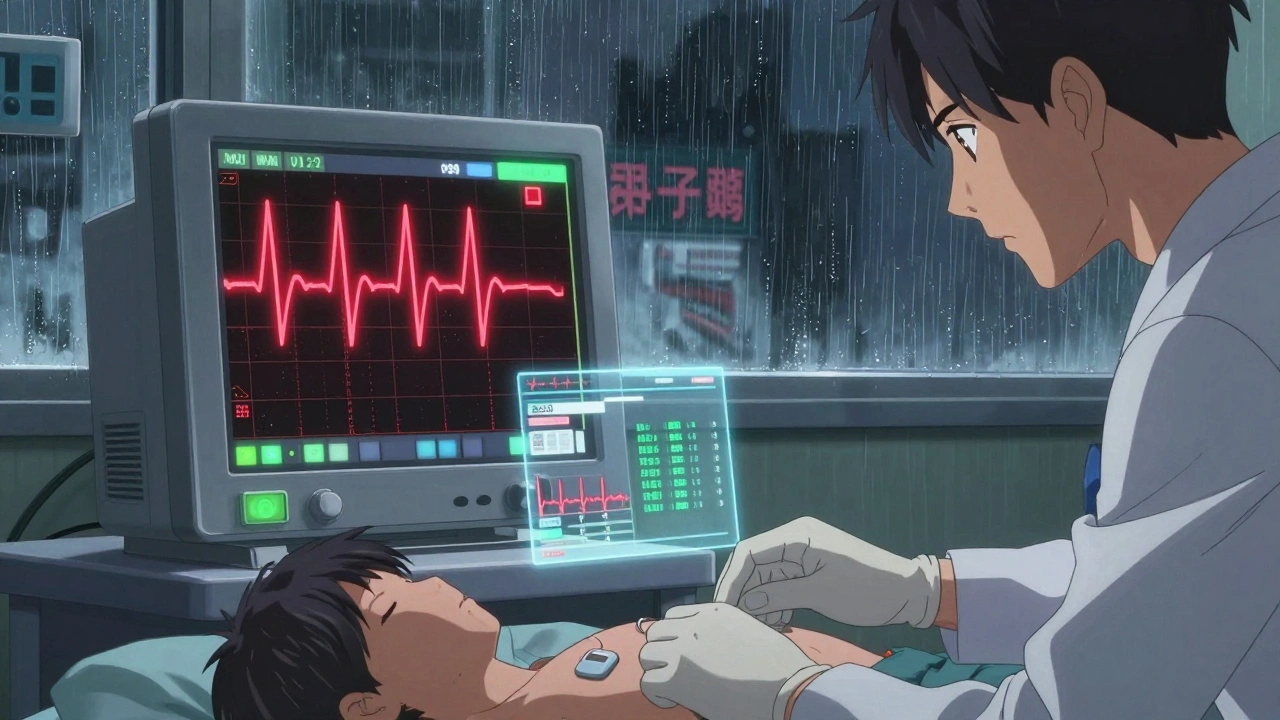
What If the ECG and Blood Tests Look Normal?
That doesn’t mean you’re off the hook. Some people have non-obstructive coronary artery disease-where arteries are narrowed but not blocked. This is called INOCA. It’s not a heart attack, but it still means your heart isn’t getting enough blood under stress. It’s often missed by standard tests. If your symptoms are ongoing and tests are unclear, you might get a CT angiogram. It’s a detailed scan of your heart arteries. Or you might be sent for a stress test, where you walk on a treadmill while your heart is monitored. But here’s the catch: if you’re unstable, short of breath, or have abnormal vital signs, you’re not going home. You’re staying for observation.What Doesn’t Count as an Emergency?
Not every twinge means you need an ambulance. If you’ve had stable chest pain for months-like after exercise or stress, and it goes away with rest or nitroglycerin-you’re likely dealing with chronic stable angina. That’s still serious, but it doesn’t need an ER visit. Talk to your GP. Schedule a stress test. Get your cholesterol checked. Also, if your pain is sharp, localized, and gets worse when you press on it or take a deep breath, it’s probably musculoskeletal. Costochondritis-swelling in the rib cartilage-is common and harmless. Heartburn feels like burning behind the breastbone and gets worse after eating or lying down. Neither needs emergency care.
Why Timing Matters More Than Anything
Every minute counts. If a major artery is blocked, heart muscle dies. The longer you wait, the more damage you do. Studies show that patients who arrive by ambulance get treatment 20-30 minutes faster than those who drive themselves. And delays increase the risk of death by 25-30%. Even if you’re wrong, it’s better to be safe. Emergency departments are designed for this. They have protocols, teams, and equipment ready. Your doctor’s office doesn’t. That’s why the American Heart Association says: When in doubt, call 999.What About AI and New Technology?
Hospitals are starting to use artificial intelligence to read ECGs. Early results show AI spots subtle changes humans miss-like tiny ST-segment shifts that signal early ischemia. By 2025, three-quarters of U.S. hospitals will use AI-assisted tools. In the UK, adoption is slower but growing. The goal isn’t to replace doctors. It’s to speed up diagnosis. Faster reading means faster treatment. And that saves lives.What You Can Do Today
You don’t have to wait for a crisis to act. If you’re over 40, have high blood pressure, diabetes, high cholesterol, or smoke:- Know your numbers: BP, cholesterol, blood sugar
- Keep aspirin in your medicine cabinet (75mg daily if advised by your doctor)
- Teach your family what to look for
- Keep a list of medications and allergies in your wallet
Can chest pain be caused by anxiety?
Yes, anxiety can cause chest tightness, rapid heartbeat, and shortness of breath that mimic a heart attack. But you can’t tell the difference on your own. Even if you think it’s anxiety, if the symptoms are new or severe, get checked. The ER can rule out heart problems in under two hours. Missing a heart attack because you assumed it was stress is a risk no one should take.
Do women experience chest pain differently than men?
Yes. While men often report crushing chest pain, women are more likely to have symptoms like fatigue, nausea, jaw pain, back discomfort, or sudden shortness of breath without classic chest pressure. This is why women’s heart attacks are often missed or delayed. If you’re a woman and feel unusually tired, nauseous, or short of breath with no clear cause-don’t ignore it. Call for help.
Is it safe to take aspirin before the ambulance arrives?
If you suspect a heart attack and aren’t allergic to aspirin, chew one 300mg tablet (or four 75mg tablets) as soon as possible. Aspirin helps thin the blood and can reduce damage to the heart. But only do this if you’re fully alert and not vomiting. If you’re unsure, wait for paramedics. They’ll know what to give you.
Can I go to my GP instead of the ER for chest pain?
Only if your symptoms are mild, stable, and you’ve had them before with a known diagnosis-like stable angina. If it’s new, worsening, or you have any risk factors (smoking, diabetes, high blood pressure), go to the ER. GPs don’t have the equipment or staffing to rule out a heart attack quickly. Emergency departments do.
What if I call 999 and it turns out to be nothing?
That’s okay. Emergency services exist to handle uncertainty. Thousands of people call 999 every year for chest pain that turns out to be indigestion, muscle strain, or anxiety. You’re not wasting anyone’s time. You’re doing exactly what you should. Saving a life is worth one false alarm.
9 Comments
December 6, 2025 Carole Nkosi
Let me tell you something real-human beings are wired to ignore pain until it’s too late. We’ve been conditioned by capitalism to push through, to ‘tough it out,’ to ‘not be dramatic.’ But your heart doesn’t care about your productivity metrics. It doesn’t care if you’re late for work or if you’re ‘just stressed.’ It’s just a muscle that stops working when you delay. And when it does? You don’t get a second chance. The system wants you to wait. Don’t let it win.
December 8, 2025 Stephanie Bodde
THIS. 😭 I had a friend who waited 3 hours because she thought it was ‘just acid reflux.’ She almost didn’t make it. Now she wears a medical alert bracelet that says ‘IF I’M SWEATING AND NOT HOT, CALL 911.’ Please, if you’re reading this and you’re scared-just call. You’re not overreacting. You’re being smart. 💪❤️
December 8, 2025 Philip Kristy Wijaya
Let me be clear this is not medical advice but the empirical data suggests that the 1 in 10 statistic is misleading because it excludes asymptomatic ischemia which is far more prevalent in populations with metabolic syndrome and the American Heart Association is funded by pharmaceutical interests that benefit from overdiagnosis and emergency interventions which are astronomically more profitable than preventive lifestyle medicine which is essentially unpatentable
December 8, 2025 luke newton
You people are so weak. You call 911 for a burp? My grandpa worked in a steel mill for 40 years, had chest pain every Tuesday, and he never called an ambulance. He drank whiskey and kept working. Now he’s 94 and still drives a pickup. You think you’re saving lives by being dramatic? You’re just draining resources. If your heart’s gonna give out, let it. You’re not special. Stop treating your body like a fragile porcelain doll.
December 10, 2025 Ali Bradshaw
My brother-in-law is a paramedic in Manchester. He told me the most common thing he hears from patients who call for chest pain? ‘I didn’t want to bother anyone.’ That’s not bravery. That’s fear masquerading as stoicism. The ER isn’t judging you. The ambulance crew isn’t annoyed. They’ve seen it all. And they’d rather deal with 100 false alarms than miss one real one. Just call. It’s the most responsible thing you can do.
December 10, 2025 an mo
AI-assisted ECGs are a Trojan horse. The FDA cleared 12 AI tools in 2023 without independent validation. The algorithms are trained on biased datasets-mostly white male patients. Women, Black patients, and elderly folks are misclassified at 3x the rate. This isn’t innovation. It’s algorithmic eugenics disguised as efficiency. And you’re all just cheerleading it because it’s shiny.
December 11, 2025 aditya dixit
There is a profound truth here that transcends medicine: human beings fear what they do not understand. Chest pain triggers existential dread because it speaks to mortality. We rationalize it as heartburn, stress, or fatigue because facing our own fragility is terrifying. But the real courage is not in enduring pain-it is in acknowledging vulnerability and seeking help without shame. The body does not lie. Listening to it is the first act of true self-respect.
December 11, 2025 Lynette Myles
They’re tracking your ECG data through your smartwatch and selling it to insurers. The ER is a trap. They’ll charge you $12,000 for a 10-minute test, then deny your claim because ‘pre-existing condition.’ Don’t go. Don’t call. Just take magnesium and pray. They want you dependent. Wake up.
December 12, 2025 Annie Grajewski
Wait so you’re telling me I should call 911 because my chest feels like I did 50 pushups after a burrito? Bro. I had that last Tuesday. Turned out it was just the nacho cheese. You people are gonna bankrupt the system with your ‘better safe than sorry’ nonsense. I mean c’mon. 😑
Write a comment