

When you pick up a bottle of generic blood pressure medication, you assume it works just like the brand-name version. But behind that simple pill is a high-stakes battle against invisible threats-dust, chemicals, microbes, and even trace residues from previous batches. In generic drug manufacturing, contamination control isn’t just a checklist item. It’s the line between a life-saving medicine and a dangerous product.
Why Contamination Control Matters More Than Ever
In 2022, the FDA issued 37.2% of all its Warning Letters to pharmaceutical companies over contamination issues. That’s not a small number. It’s the top reason regulators shut down production lines, recall millions of pills, and sue manufacturers. The 2020 Valsartan recall is a chilling example: nitrosamine contamination affected 22 generic makers worldwide, costing over $1.2 billion in lost product and trust. These aren’t theoretical risks. They’re real, documented failures that put patients at risk. The FDA defines a drug as adulterated if it’s made under unsanitary conditions that could make it harmful. That’s not vague language. It’s the law. And for generic manufacturers-companies that produce drugs after patents expire and compete on price-getting this right is even harder. They don’t have the billions that innovator companies spend on facilities. So they have to be smarter, tighter, and more disciplined.How Clean Is Clean Enough?
Cleanrooms aren’t just fancy labs with white walls. They’re engineered environments with strict particle limits. For sterile filling lines, you need ISO Class 5 (Grade A), meaning no more than 3,520 particles larger than 0.5 micrometers per cubic meter of air. That’s like counting every grain of sand in a small sandbox-and making sure none of it gets near your medicine. Airflow matters too. HVAC systems must push 20 to 60 air changes per hour, depending on the zone. Pressure differentials between rooms can’t drop below 10 Pascals. If air flows the wrong way-even slightly-it can carry contaminants from dirty areas into clean ones. That’s why modern plants use unidirectional flow: air moves in one direction, like a conveyor belt for cleanliness, from cleanest to least clean zones. For non-sterile products like tablets, the bar is lower but still strict. Cleaning validation must prove residues are below 10 parts per million (ppm) and microbial counts under 10 colony-forming units (CFU) per 25cm² surface. That’s less than a speck of dust. And you can’t just guess-you have to prove it with swabs, rinses, and modern rapid testing that gives results in 24 hours instead of waiting a week.Human Error Is the Biggest Threat
You might think contamination comes from faulty equipment or dirty raw materials. But the data says otherwise. Industry experts agree: 83% of contamination events start with people. Gowning procedures-putting on protective suits, masks, gloves-are supposed to keep human skin cells and bacteria out. But studies show compliance drops 40% after an 8-hour shift. Workers get tired. They rush. They skip steps. One Teva Pharmaceuticals facility saw a 30% spike in gowning violations after switching to reusable gowns. They had to spend $185,000 on better air showers to fix it. Even simple things like foot traffic matter. A Reddit post from a Pfizer generics engineer praised Dycem CleanZone mats-sticky floor mats that trap dirt from shoes. They cut foot-borne contamination by 72%. Sounds basic, right? But most plants still use regular flooring. Color-coded equipment helps too. If your tablet press for Metformin is red and your Lisinopril press is blue, you won’t accidentally use the wrong one. One study showed color-coding reduced mix-ups by 65%. No software, no fancy tech-just clear visual cues.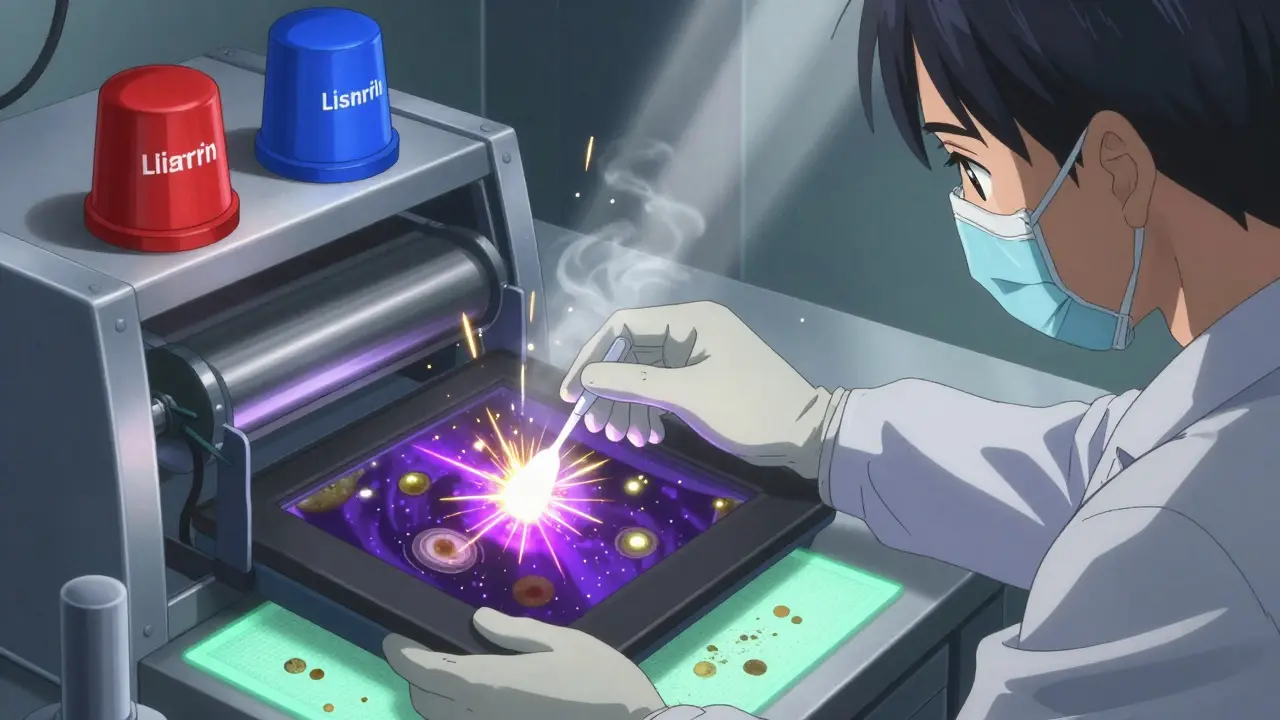
Technology Is Changing the Game
Old-school contamination control meant taking swabs, sending them to a lab, and waiting days for results. By then, the batch might already be shipped. Now, real-time particle counters like the MetOne 3400+ monitor air quality continuously. They cost $15,000 to $25,000 each, but facilities that use them cut contamination incidents by 63%. Why? Because they catch transient events-like someone opening a door or a technician brushing against a surface-that manual checks miss 78% of the time. ATP bioluminescence systems give you microbial results in five minutes instead of five days. They’re 95% as accurate as traditional cultures. That means you can stop production immediately if something’s wrong, not after the fact. Even AI is stepping in. Honeywell’s Forge Pharma system uses machine learning to predict contamination risks based on historical data, equipment performance, and environmental trends. In a Merck pilot, it cut false alarms by 68%. That’s huge. Too many false alerts mean workers ignore them. AI helps focus attention where it’s needed.The Cost of Doing Nothing
Contamination controls aren’t cheap. Implementing EU GMP Annex 1 updates takes 18 to 24 months and eats up 35-45% of project time. Real-time monitoring systems can cost $500,000 to $2 million. But the cost of failure is worse. A single recall can wipe out months of profit. Regulatory delays add up: facilities using continuous monitoring get approved 40% faster. That’s 10 to 12 weeks of revenue gained. Smaller generic makers, especially those relying on low-cost raw materials from regions with higher contamination rates, are at greater risk. EDQM data shows Indian suppliers report 22% more contaminated raw materials than EU sources. And the rules are getting tighter. FDA’s new draft guidance requires health-based exposure limits (HBELs) for all products by 2025. That means every drug, even low-risk ones, must have a scientifically proven safety threshold for cross-contamination. Setting these limits costs an estimated $1.2 million per facility. For small players, it’s a make-or-break investment.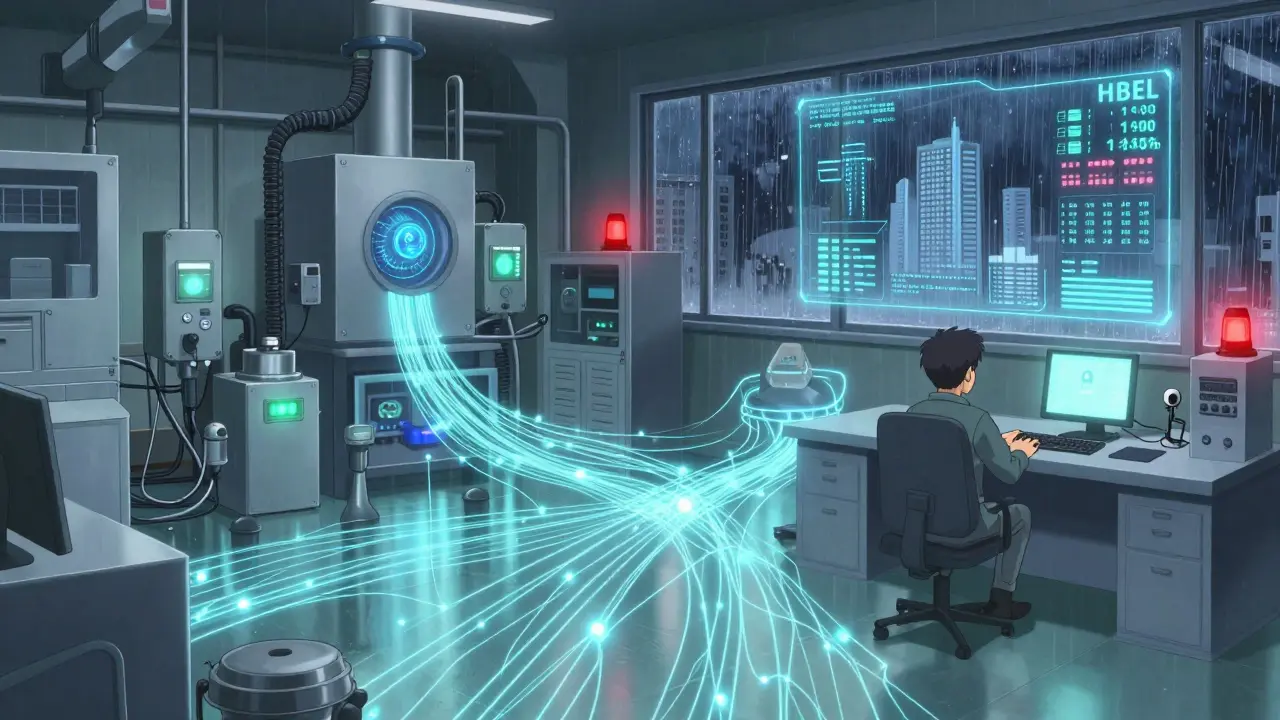
What Works: Practical Solutions
You don’t need to build a NASA-grade lab to stay compliant. Here’s what actually moves the needle:- One batch at a time: Stop running multiple products through the same line. A case study in Pharmaceutical Engineering found this cut cross-contamination by 53%.
- Color-code everything: Equipment, tools, even cleaning cloths. If it looks different, you won’t confuse it.
- Use sticky mats: Dycem mats cost less than $500 each. They’re not glamorous, but they work.
- Train daily, not annually: Short, frequent refreshers beat one-hour yearly lectures. Compliance fades fast.
- Adopt rapid testing: If you’re still waiting a week for microbial results, you’re playing Russian roulette.
The Future Is Integrated
The next big shift isn’t just better equipment-it’s integrated systems. Think of contamination control as a single nervous system: sensors monitor air, surfaces, and equipment. Software alerts staff in real time. Data feeds into risk models that predict failures before they happen. Waterless cleaning technologies are emerging too. One GlaxoSmithKline facility cut utility costs by 22% by eliminating water-based cleaning cycles. That’s not just省钱-it’s sustainability. McKinsey says facilities with full contamination management systems get 3.2x ROI over five years. That’s not a guess. It’s based on reduced batch failures, faster approvals, and fewer regulatory headaches. But here’s the hard truth: if you’re a small generic manufacturer and you’re still using manual swabs, outdated HVAC, and paper logs-you’re not just behind. You’re at risk of being shut down. The FDA is increasing inspection frequency by 27% for facilities with past violations. EMA rejects 41% of generic applications over contamination controls. There’s no shortcut. There’s no magic bullet. Just discipline, data, and the will to do it right-even when no one’s watching.What is the biggest cause of contamination in generic drug manufacturing?
Human error is the leading cause, accounting for 83% of contamination events. This includes improper gowning, incorrect cleaning procedures, equipment mix-ups, and failure to follow protocols-especially during long shifts when fatigue sets in. While equipment and raw materials play a role, the biggest risks come from people breaking or bypassing procedures.
How do you prove a cleaning process is effective?
Cleaning validation requires swabbing surfaces, rinsing equipment, and testing for chemical residues and microbial contamination. Residues must be below 10 ppm for chemicals and under 10 CFU per 25cm² for microbes. Modern methods like ATP bioluminescence give results in minutes, while traditional cultures take 5-7 days. Validation must be repeated after any change to the process or equipment.
Are real-time monitoring systems worth the cost?
Yes, for facilities producing high-risk or high-volume products. Real-time particle counters reduce contamination incidents by 63% and catch transient events that manual checks miss 78% of the time. While they cost $15,000-$25,000 per unit, they prevent costly recalls, speed up regulatory approvals, and reduce batch rejections. For small manufacturers, starting with targeted placement in critical zones is a smart compromise.
What’s the difference between contamination control for brand-name and generic drugs?
Brand-name companies often spend 2.3x more on facility design-$185 million vs. $80 million for equivalent capacity. Generic manufacturers compensate by focusing on operational excellence: tighter procedures, better training, and smarter use of technology. They can’t afford luxury cleanrooms, so they rely on discipline, validation, and real-time monitoring to close the gap.
What happens if a generic drug manufacturer fails contamination controls?
The FDA can issue a Warning Letter, halt production, or ban imports. In severe cases, the company faces recalls, fines, or criminal charges. A single contamination violation can cost millions in lost product and damage to reputation. With FDA inspection frequency increasing by 27% for past violators, the risk of shutdown is real-especially for small or under-resourced facilities.
Is there a deadline for implementing new contamination rules?
Yes. The FDA’s draft guidance on cross-contamination controls requires all generic drug manufacturers to implement health-based exposure limits (HBELs) by 2025. Failure to comply means regulatory action, including rejection of new product applications. The estimated cost to implement HBELs is $1.2 million per facility, making it a major financial and operational challenge for smaller companies.