
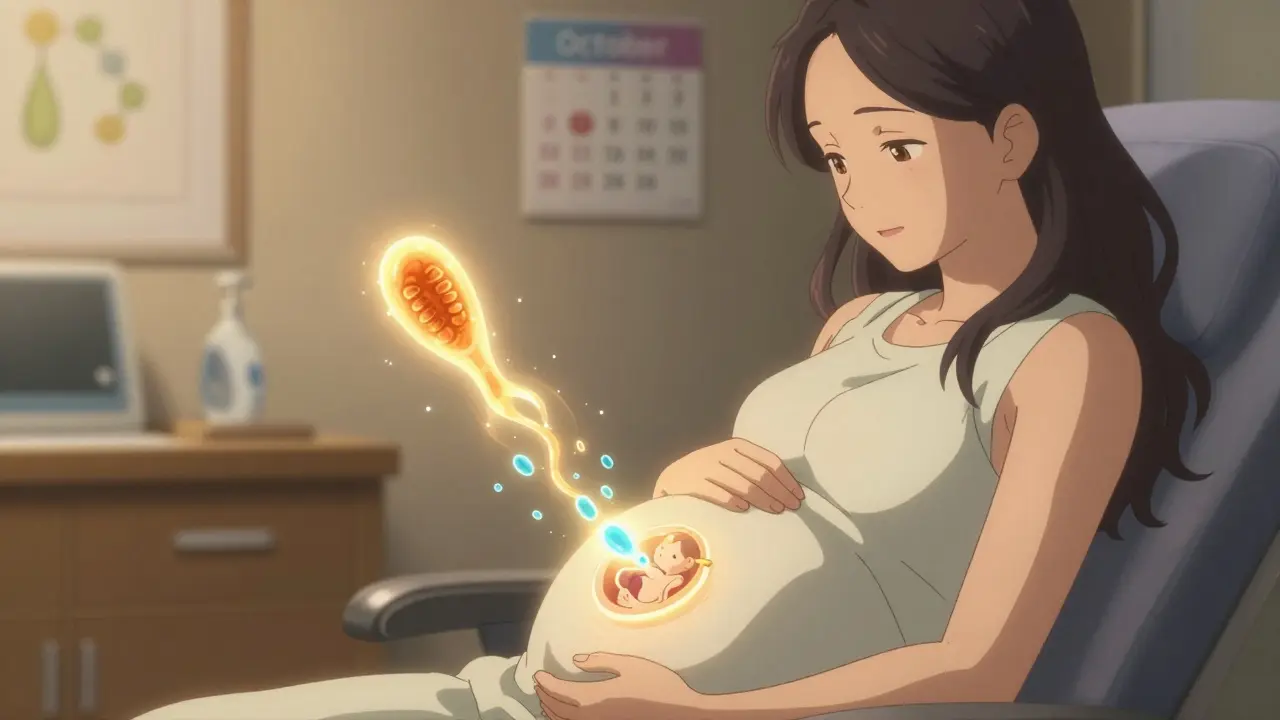
When you’re pregnant, every decision feels bigger. Should you eat sushi? Is it safe to dye your hair? What about vaccines? The truth is, getting vaccinated while pregnant isn’t just okay-it’s one of the most powerful ways you can protect your baby before they’re even born.
Why Vaccines Matter During Pregnancy
Your immune system changes during pregnancy. It doesn’t shut down, but it shifts. That makes you more vulnerable to infections like the flu, whooping cough, and COVID-19. And when you get sick, it’s not just you who’s at risk. Your baby is too. Babies under six months can’t get most vaccines yet. They’re too young. That’s why your body becomes their first line of defense. When you get a vaccine, your immune system makes antibodies. Those antibodies cross the placenta and give your baby protection from day one. Studies show this transfer works well-antibody levels in newborns can be as high as 82% of what’s in your blood. This isn’t theoretical. In 2021, 96% of pregnant people hospitalized with severe COVID-19 in the U.S. were unvaccinated. Babies born to moms who got the flu shot during pregnancy were 63% less likely to catch the flu in their first six months. And when moms got the Tdap shot, their babies were 78% less likely to get whooping cough-a disease that can be deadly for newborns.Which Vaccines Are Safe During Pregnancy?
Not all vaccines are created equal. Some are safe. Some are not. Here’s what the CDC, ACOG, and WHO agree on as of 2026:- Influenza (flu) vaccine - Safe in any trimester. Given as a shot, not the nasal spray. Best when you get it by October, but anytime during flu season (October to May) helps.
- Tdap (tetanus, diphtheria, pertussis) - Recommended between 27 and 36 weeks of pregnancy. Every pregnancy. Even if you got it last time. This one gives your baby the strongest protection against whooping cough.
- COVID-19 mRNA vaccines (Pfizer-BioNTech, Moderna) - Safe at any stage. Updated versions are recommended as they become available. Data shows 89% effectiveness against infection and 96% against hospitalization in pregnant people.
- RSV vaccine (Abrysvo) - Approved in 2023. Given between 32 and 36 weeks during September through January. Reduces severe RSV lung infections in babies by 82% in the first 90 days after birth.
Vaccines to Avoid During Pregnancy
Live vaccines are off-limits while you’re pregnant. These contain weakened versions of the virus, and while they’re safe for most people, the risk to a developing baby isn’t zero.- MMR (measles, mumps, rubella) - Get this at least 28 days before conception.
- Varicella (chickenpox) - Same rule: wait until after pregnancy.
- Nasal flu vaccine (LAIV) - This is a live vaccine. Stick with the shot.
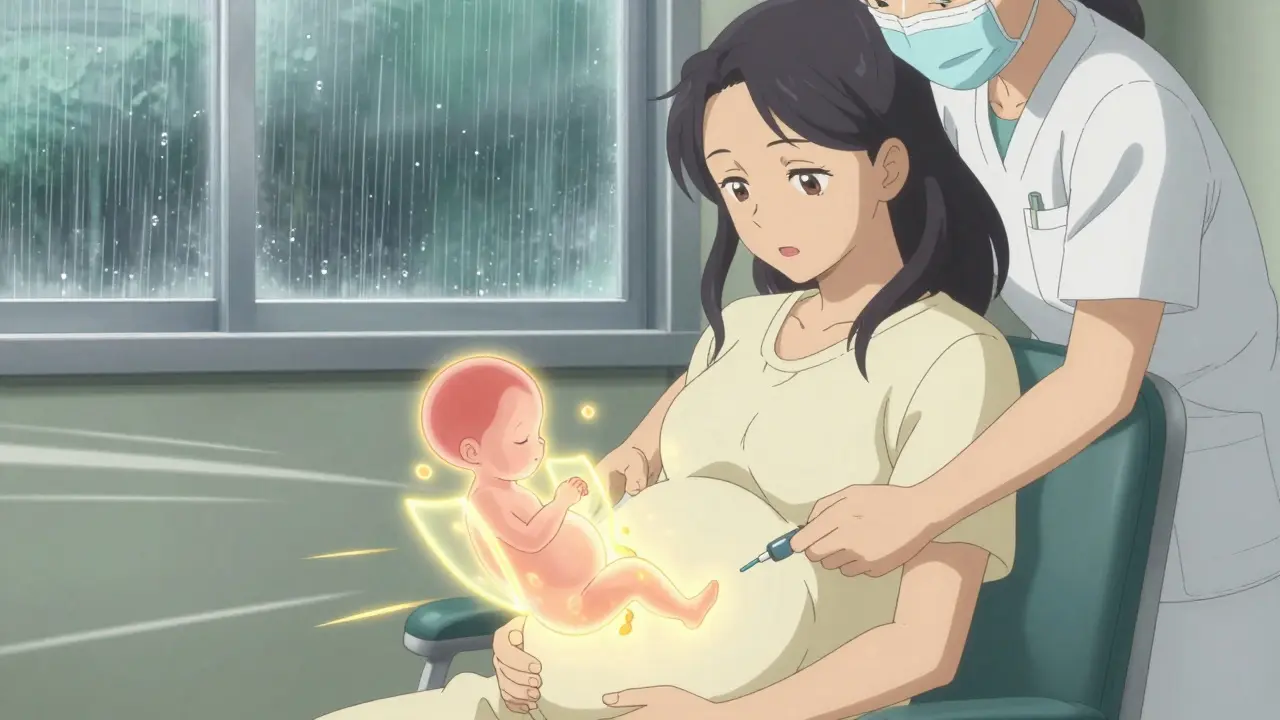
When to Get Each Vaccine
Timing matters. It’s not just about safety-it’s about maximizing protection for your baby.Flu shot: Get it as soon as it’s available, usually in late summer. You want protection when flu season peaks between December and February. Even if you get it in January, it still helps.
Tdap: Aim for 27 to 30 weeks. That’s the sweet spot. If you get it at 20 weeks, your baby gets only about 63% of the antibodies they would if you got it at 28 weeks. Wait until after 36 weeks, and you risk not giving them enough time to build up protection.
RSV vaccine: Only given between 32 and 36 weeks, and only during the RSV season (September to January). It’s a one-time shot per pregnancy. No boosters needed unless you’re in a high-risk group with prolonged exposure.
COVID-19 vaccine: Stay up to date with the latest version. If you’re pregnant in early 2026 and the updated vaccine just came out, get it-even if you had a booster last year. Immunity fades, and new variants emerge.
What About Breastfeeding?
You can get all the same vaccines while breastfeeding. None of them affect your milk supply or harm your baby. In fact, some antibodies pass into breast milk, giving your baby extra protection. The flu shot, Tdap, RSV vaccine, and COVID-19 vaccines are all safe and recommended while nursing.Side Effects and Safety
The most common side effects? Sore arm. Maybe a headache. A little fatigue. That’s it. Over 1.5 million pregnant people in the U.S. have gotten the flu shot since 2010. More than 1.2 million got Tdap. The CDC tracked them all. No link to miscarriage, preterm birth, or birth defects. The same goes for the mRNA COVID-19 vaccines-over 139,000 pregnant people enrolled in the v-safe registry. 84.6% had no pregnancy complications. A 2023 survey of 2,500 pregnant people found that 78% got at least one recommended vaccine. The biggest reason people hesitated? Fear of harming the baby. But when they talked to their provider, 92% changed their mind.
What If You Missed the Window?
If you didn’t get Tdap between 27 and 36 weeks? Get it right after delivery. You’ll still protect yourself from passing whooping cough to your newborn. But you won’t give your baby the same level of protection in the first weeks of life. Same with the flu shot-if you didn’t get it before delivery, get it right after. You’ll reduce your chance of getting sick and passing it to your baby. The RSV vaccine? If you missed the 32-36 week window, you can’t get it after birth. That’s why timing is so important.What’s Next?
The future of pregnancy vaccines is promising. A vaccine for Group B Streptococcus (GBS) is in late-stage trials. GBS causes deadly infections in newborns. If approved, it could be given between 24 and 34 weeks-similar to RSV and Tdap. A universal flu vaccine is also in development. Current flu shots need to be updated every year because the virus changes. A universal version could protect against all strains, even new ones, and might be given just once per pregnancy. The goal? To get 70% of pregnant people worldwide protected by 2030. Right now, coverage in the U.S. is around 60% for Tdap and 59% for flu. In low-income countries, it’s under 25%.What to Do Now
If you’re pregnant or planning to be:- Ask your provider about all recommended vaccines at your first prenatal visit.
- Write down the dates you need each shot. Set phone reminders.
- Don’t wait until your last appointment. Vaccines work best when given on time.
- If you’re unsure about a vaccine, ask for the data. You’re not being difficult-you’re being responsible.
Getting vaccinated during pregnancy isn’t about risk. It’s about reducing risk-for you, and for your baby. It’s one of the few times in parenting where you can act before your child is born to keep them safe. And it’s one of the most effective things you can do.
Is it safe to get the flu shot while pregnant?
Yes. The flu shot (inactivated vaccine) is safe during any trimester. It’s recommended every year during flu season. Studies show it reduces your risk of flu by 60-70% and cuts your baby’s risk of flu in the first six months by 41-63%. Over 1.5 million pregnant people have received it since 2010 with no safety concerns.
Can I get the COVID-19 vaccine if I’m pregnant?
Yes. The mRNA vaccines (Pfizer and Moderna) are safe during pregnancy. They reduce your risk of severe illness by 96% and lower your chance of preterm birth if you get infected. Data from over 139,000 pregnant people in the CDC’s v-safe registry showed no increased risk of miscarriage, birth defects, or complications. Updated boosters are recommended as they become available.
Why is Tdap given between 27 and 36 weeks?
That’s when your body makes the most antibodies and passes them to your baby through the placenta. If you get it before 27 weeks, antibody transfer drops by up to 37%. Waiting past 36 weeks means your baby may not get enough protection before birth. The ideal window is 27-30 weeks for maximum benefit.
What if I got Tdap before I was pregnant?
You still need it during each pregnancy. Antibodies from past shots fade over time. Even if you got Tdap in 2020, you need another one in 2026 if you’re pregnant. Each pregnancy requires a new dose to ensure your baby gets strong, fresh protection.
Can I get vaccines while breastfeeding?
Yes. All recommended vaccines-flu, Tdap, COVID-19, and RSV-are safe while breastfeeding. They don’t affect milk supply or harm your baby. Some antibodies even pass into breast milk, giving your baby extra defense. You can get them right after delivery if you missed them during pregnancy.
Are there any vaccines I should avoid during pregnancy?
Yes. Live vaccines like MMR (measles, mumps, rubella), varicella (chickenpox), and the nasal flu spray (LAIV) should be avoided. These contain weakened live viruses and carry a theoretical risk. Get them at least 28 days before conception if you need them. All other vaccines are safe.
What if I didn’t get the RSV vaccine during pregnancy?
If you missed the 32-36 week window, you can’t get the RSV vaccine after birth. It’s only approved for use during pregnancy. But your baby can still get a monoclonal antibody shot (nirsevimab) after birth, which provides immediate protection. Talk to your pediatrician about this option.
8 Comments
January 18, 2026 Paul Barnes
There’s a grammatical error in the third paragraph: 'That’s why your body becomes their first line of defense. When you get a vaccine, your immune system makes antibodies. Those antibodies cross the placenta and give your baby protection from day one.' The pronoun 'their' doesn't agree with 'your body'-it should be 'its.' Minor, but it’s 2026. We can do better.
January 18, 2026 Andy Thompson
lol so now the gov wants us to inject nano-bots into pregnant women?? 😏 next they'll say 'vaccines are love' and we'll all have to hug a syringe. i heard the CDC uses baby DNA to power their servers. 82% antibody transfer? yeah right. i got my kid in 2020 with no shots and he's a genius. #BigPharmaLies 🤡💉
January 20, 2026 sagar sanadi
lol why you trust america science? they made covid from lab. why you give baby poison? you think doctor care about you? no. they get paid. you get sick, they get rich. my cousin in india, she no vaccine, baby healthy. you dumb?
January 21, 2026 thomas wall
It is frankly alarming that so many expectant mothers are still misled by misinformation. The data is unequivocal: maternal immunization is not merely safe-it is a moral imperative. To decline a vaccine that reduces neonatal whooping cough mortality by 78% is not a choice rooted in caution; it is negligence dressed as autonomy. The CDC, ACOG, and WHO have issued consensus guidelines for a reason: because lives depend on it. When you choose ignorance, you don’t just risk your own health-you endanger the most vulnerable among us: infants who cannot speak for themselves. This isn’t politics. It’s pediatrics. And it’s past time we stopped treating it like a debate.
January 22, 2026 kumar kc
Get the shots. Your baby’s life depends on it. No excuses.
January 22, 2026 Thomas Varner
Okay, so... I got the Tdap at 29 weeks, the flu shot in November, and the updated Moderna booster last month... and honestly? My arms were sore for a day. That’s it. No fever. No weird vibes. No mysterious rashes. My OB said it’s like giving your baby a shield before they’re even out. And now I’m breastfeeding and I just... feel better? Like, I know I’m not gonna accidentally kill my newborn with the flu? 🤷♂️ It’s weird how simple it is, but also how much people freak out about it. I mean... we vaccinate toddlers for chickenpox. Why is pregnancy suddenly the scary part? 🤔
January 23, 2026 Edith Brederode
I’m 34 weeks and just got my RSV shot today! 🥹 I was so nervous, but my midwife showed me the stats and honestly? I cried. Not from fear-from relief. My sister lost her first baby to RSV in 2018. I didn’t know any of this back then. I’m so glad I have this chance now. 🤱💙 Also, if you’re scared, talk to your provider. They’re not pushing a agenda-they’re giving you tools. And if you miss the window? Nirsevimab for baby is still a thing. ❤️
January 24, 2026 Art Gar
While the empirical evidence supporting maternal vaccination is statistically robust and methodologically sound, it is nonetheless prudent to acknowledge the epistemological limitations inherent in longitudinal observational studies, particularly those reliant on self-reported data and confounding variables such as socioeconomic status, access to prenatal care, and comorbidities. The absence of documented adverse outcomes does not, in strict logical terms, constitute affirmative proof of universal safety. Therefore, while I do not oppose vaccination per se, I maintain that individualized risk-benefit analysis, conducted under the supervision of a qualified clinician, remains the only ethically defensible approach to perinatal medical intervention.
Write a comment