
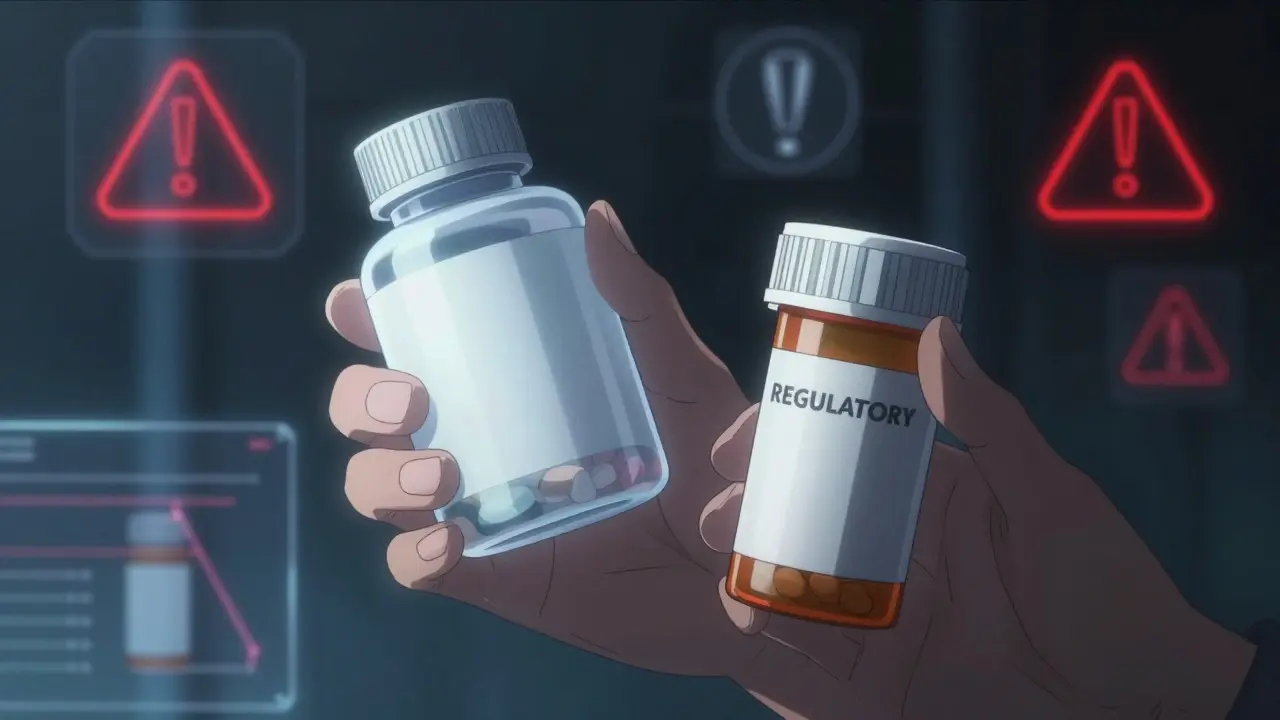
Supplement Interaction Risk Checker
Select a common supplement and a prescription medication to check for potential high-risk interactions based on clinical data.
Imagine this: you’re taking a blood thinner prescribed by your doctor. You feel fine. Then, you decide to start taking a green tea extract supplement for energy. Within weeks, your INR levels drop dangerously low, increasing your risk of a clot. Why? Because the supplement label didn’t warn you about the interaction.
This isn’t a rare edge case. It’s a systemic gap in how we regulate what we put into our bodies. While prescription drugs come with detailed warning labels, dietary supplements often do not. Understanding how to read these labels is no longer just about health optimization-it’s about survival.
The Regulatory Gap: Why Supplement Labels Are Different
To understand why reading a supplement label is trickier than reading a pill bottle, you have to look at the rules that govern them. In the United States, the Dietary Supplement Health and Education Act (DSHEA) of 1994 created a distinct category for supplements, separating them from conventional foods and drugs.
Here is the critical difference:
- Prescription Drugs: Must undergo rigorous pre-market approval by the U.S. Food and Drug Administration (FDA). Manufacturers must prove safety and efficacy before they can sell a single unit. Labels include mandatory interaction warnings.
- Dietary Supplements: Operate under a post-market regulatory system. Manufacturers are responsible for ensuring safety *before* marketing, but the FDA does not review them for safety or effectiveness beforehand. There is no legal requirement to list potential drug interactions on the label.
This creates a significant information vacuum. According to an analysis of FDA data by the National Center for Health Research, 28% of the 1,960 supplement-related adverse events reported in 2022 involved potential drug interactions. Yet, only 12.7% of popular supplement products include any drug interaction warnings, compared to nearly 100% of prescription drugs.
Anatomy of a Label: What to Look For
When you pick up a bottle, you need to know where to look. The layout differs significantly between drugs and supplements.
Prescription and OTC Drug Labels
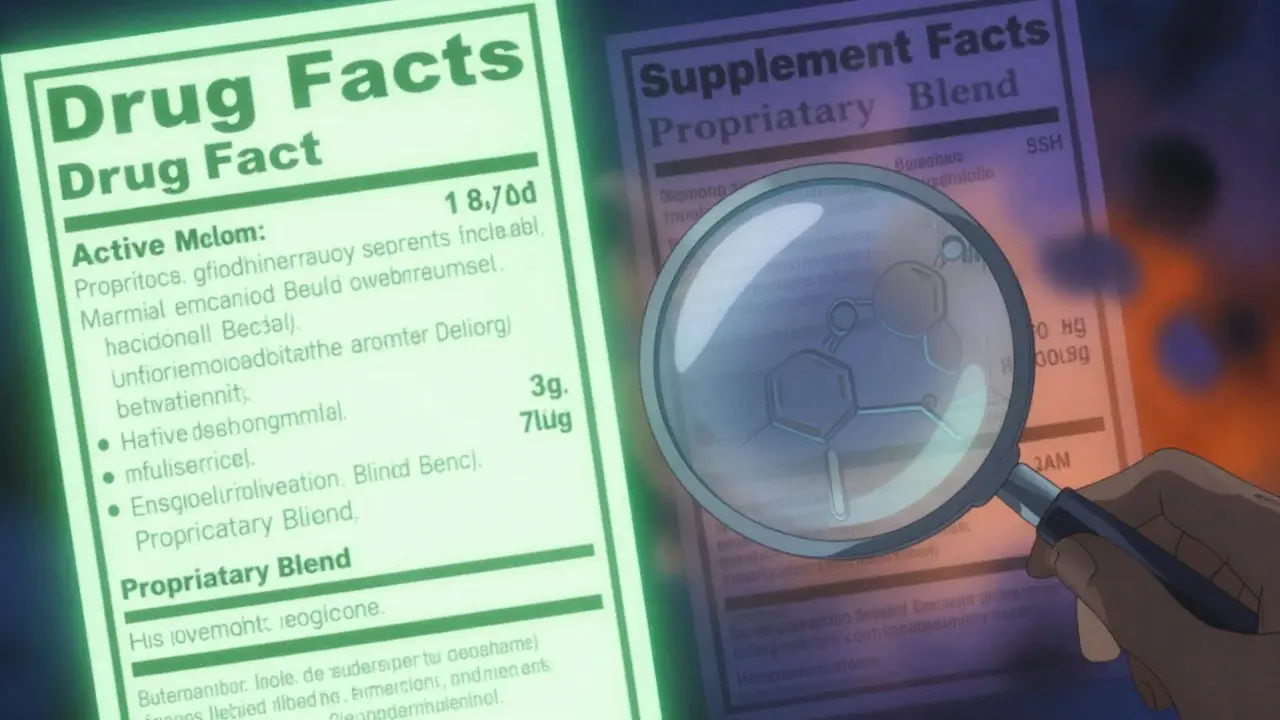
Over-the-counter (OTC) drugs follow a standardized "Drug Facts" format mandated since 1999. Prescription drugs feature "Highlights of Prescribing Information." Both include specific sections designed to protect you:
- Active Ingredients: Lists names and milligram amounts. This tells you exactly what chemical is entering your body.
- Warnings: Contains contraindications and, crucially, drug interaction alerts. If a drug interacts with alcohol, other medications, or specific conditions, it will be here.
- Black Box Warning: Found on approximately 500 prescription medications as of 2023, this is the FDA’s most serious safety alert, indicating a risk of death or serious injury.
Supplement Labels
Supplements must display a Supplement Facts panel. This box must show serving size, amount per serving, and percent daily value. However, look closely at the fine print:
- Proprietary Blends: This is a major red flag. A proprietary blend groups ingredients together without listing individual amounts. ConsumerLab.com’s 2023 analysis found that 38% of supplements contain undisclosed ingredient quantities in these blends. If you don’t know the dose, you can’t assess the interaction risk.
- Allergen Declarations: Required by law for eight major allergens (milk, eggs, fish, shellfish, tree nuts, peanuts, wheat, soy). This is for allergies, not drug interactions.
- Missing Interaction Data: Unlike drugs, there is no required section for "Interactions." You will rarely see a statement like "Do not take with Warfarin" unless the manufacturer voluntarily adds it.
| Feature | Prescription Drugs | OTC Drugs | Dietary Supplements |
|---|---|---|---|
| Pre-market Safety Approval | Required | Required | Not Required |
| Mandatory Interaction Warnings | Yes (97.3% coverage) | Yes (89% coverage) | No (12.7% voluntary) |
| Standardized Ingredient Dosage | Yes | Yes | Often Hidden (Proprietary Blends) |
| FDA Authority to Mandate Label Changes | High (217 changes in 2022) | Medium | Low (Manufacturer-initiated) |
High-Risk Interactions: Real-World Examples
The absence of warnings doesn’t mean the risks aren’t real. Several common supplements interact dangerously with standard medications. Here are specific examples backed by clinical data:
- Vitamin K & Warfarin: Vitamin K helps blood clot. Warfarin thins blood. Taking high-dose Vitamin K supplements (or green tea extract, which contains Vitamin K) can reduce warfarin’s effectiveness by 30-50%, leading to dangerous clots.
- St. John’s Wort & Digoxin: Often used for mood support, St. John’s wort decreases blood levels of digoxin (a heart medication) by 26% on average. This can cause treatment failure in patients with heart conditions.
- CoQ10 & Warfarin: The FDA’s Center for Drug Evaluation and Research noted that CoQ10 can shorten prothrombin time by 15-25%, reducing warfarin’s efficacy.
- Vitamin C & Antiretrovirals: High doses of Vitamin C (>1,000 mg/day) can alter gastrointestinal pH, decreasing the efficacy of certain HIV medications by 22%.
- Milk Thistle & Metformin: Users on diabetes forums have reported severe hypoglycemic episodes (blood glucose dropping to 42 mg/dL) when combining milk thistle with metformin, a common diabetes drug.
Dr. Paul Offit, Director of the Vaccine Education Center at Children's Hospital of Philadelphia, stated in a 2022 JAMA commentary that "the absence of mandatory drug interaction warnings on supplement labels represents one of the most significant patient safety gaps in modern medicine."
How to Safely Navigate Supplement Use
Since the label won’t save you, you need a strategy. Here is a step-by-step approach to minimizing risk:
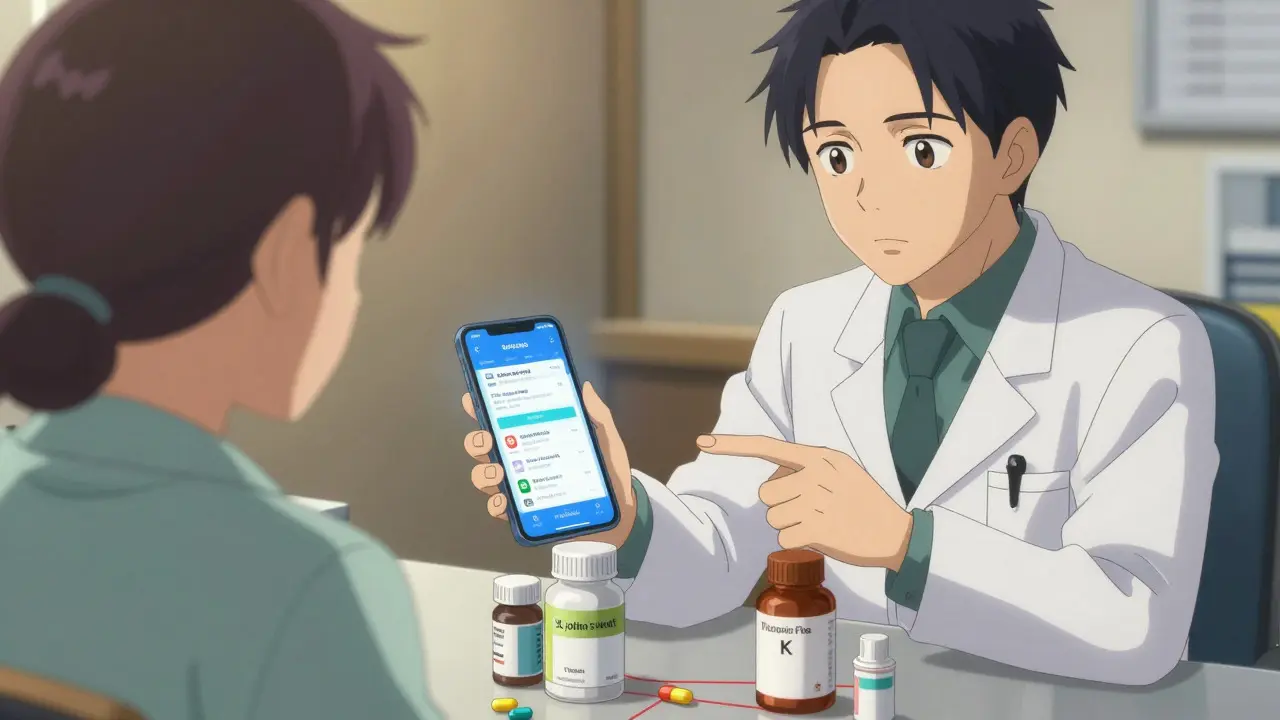
- Photograph Every Label: Before you buy, take a clear photo of the Supplement Facts panel and the full ingredient list. Show this to your pharmacist or doctor. They can cross-reference it with your current medications.
- Avoid Proprietary Blends: If a label says "Energy Blend: 500mg" without breaking down the individual ingredients, put it back. You cannot calculate interaction risks if you don’t know the dosage of each component.
- Use Digital Tools: Don’t rely on memory. Use free resources like the Medscape Drug Interaction Checker, which analyzes over 24,000 drug pairs. Input your prescription meds and the supplement ingredients to check for conflicts.
- Check for Third-Party Certification: Look for seals from organizations like USP (United States Pharmacopeia). As of 2023, only 18% of brands carry this mark, but USP-certified products showed 92% accuracy in ingredient labeling versus 67% for non-certified products. Accurate labeling is the first step to safety.
- Disclose Everything to Your Doctor: During annual exams, spend 3-5 minutes reviewing your supplement use. The American Medical Association now recommends this practice, projecting it could prevent 28,000 emergency department visits annually.
The Future of Supplement Safety
The landscape is slowly shifting. The FDA released draft guidance in March 2024 titled "Improving Supplement Labeling for Consumer Safety," proposing voluntary inclusion of drug interaction warnings using standardized language. Additionally, a 2024 pilot program is testing QR codes on supplement labels that link to real-time interaction databases.
However, legislative progress has stalled. The Dietary Supplement Listing Act of 2022, which would have required mandatory pre-market notification, failed in Congress in June 2023. Until laws change, the burden remains on the consumer.
Remember: "Natural" does not mean "Safe." Red yeast rice contains monacolin K, the exact same active ingredient as the prescription drug lovastatin. Taking both without knowing this can lead to overdose symptoms. Always read the label, verify the ingredients, and ask your healthcare provider before adding anything new to your routine.
Are supplement labels regulated by the FDA?
Yes, but loosely. The FDA regulates supplement labeling under 21 CFR Part 101, requiring a "Supplement Facts" panel and allergen declarations. However, unlike drugs, supplements do not require pre-market approval for safety or efficacy, and manufacturers are not legally required to list drug interaction warnings.
What is a proprietary blend on a supplement label?
A proprietary blend is a mixture of ingredients listed together with a total weight, but without individual dosages for each component. This makes it difficult to determine if a specific ingredient is present in a safe or effective amount, and obscures potential drug interaction risks.
Which supplements commonly interact with prescription drugs?
Common high-risk supplements include Vitamin K (interacts with blood thinners like Warfarin), St. John’s Wort (interacts with heart medications and antidepressants), CoQ10 (interacts with Warfarin), and Milk Thistle (can lower blood sugar too much when taken with diabetes medications).
How can I check for drug-supplement interactions?
You can use online tools like the Medscape Drug Interaction Checker or WebMD’s interaction checker. Additionally, photograph your supplement labels and bring them to your pharmacist or doctor for a professional review against your current medication list.
Does "natural" mean a supplement is safe?
No. Many natural substances have potent pharmacological effects. For example, red yeast rice contains monacolin K, which is chemically identical to the prescription drug lovastatin. Combining them can lead to toxicity. Always treat supplements with the same caution as medications.