
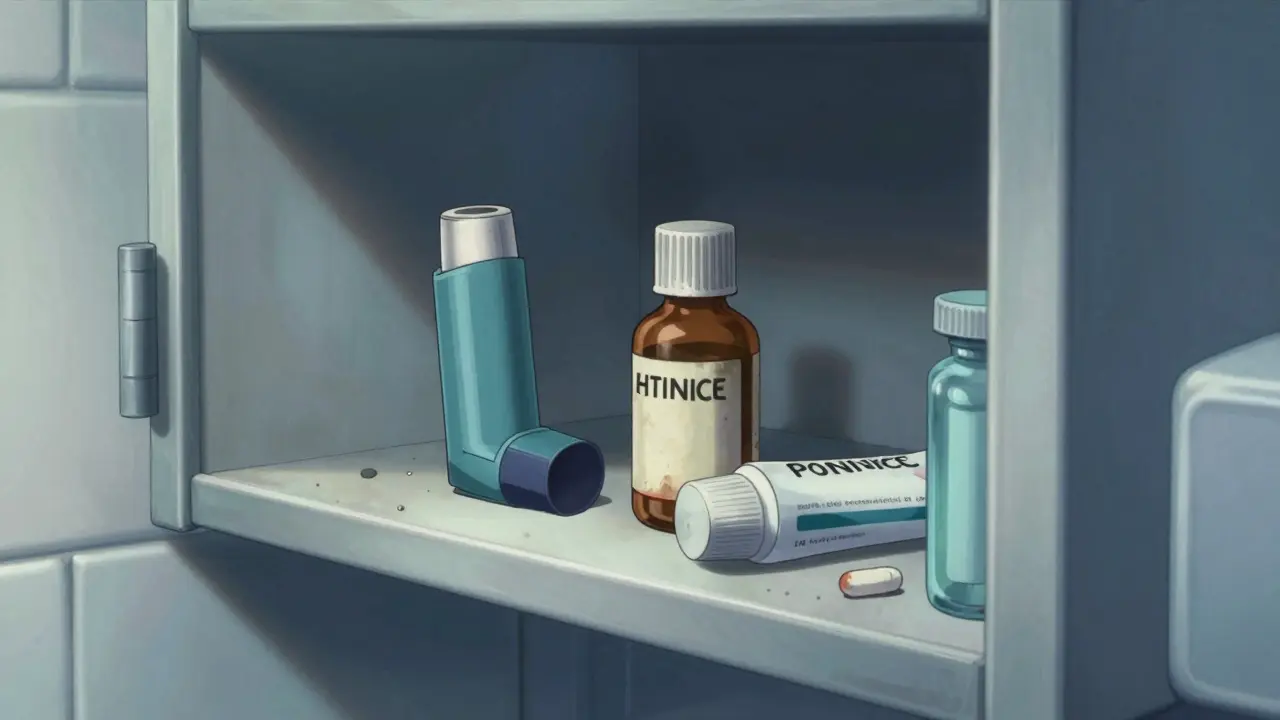
Check your medicine cabinet right now. Do you see an old asthma inhaler from last winter? Maybe a bottle of eye drops that’s been sitting in the bathroom for two years? Most of us keep these items "just in case," but keeping them past their expiration date isn't just wasteful-it can be dangerous. Using expired medication doesn't just mean it might not work; it can fail when you need it most, like during an asthma attack or an allergic reaction.
You are not alone in this habit. A 2020 survey by the U.S. Food and Drug Administration (FDA) found that about 80% of Americans have used medication after the expiration date passed. But here is the hard truth: expiration dates exist for a reason. They mark the last day the manufacturer guarantees the drug will be safe and effective. For some medicines, like albuterol inhalers, going past that date means the device might deliver only half the dose you need to breathe properly. That is a risk no one should take.
Why Expiration Dates Matter More Than You Think
The FDA mandated expiration dating on prescription drugs in 1979. This wasn't arbitrary. Manufacturers run rigorous stability tests to determine how long a drug retains its potency. For most medications, this window is 12 to 24 months after manufacturing. However, the clock starts ticking differently depending on the type of medication and how you store it.
Think of the expiration date as a guarantee of performance. When you use a fresh Ventolin inhaler, you know exactly how much medication hits your lungs. But once that date passes, things get unpredictable. According to Dr. Robert Citard, a Professor of Pharmacy Practice at Purdue University, the variance in dose delivery for expired albuterol inhalers can jump from 5% in new devices to 35% in those 12 months past expiration. Imagine trying to stop a severe asthma attack with a device that might give you too little-or too much-medication. That unpredictability is what makes expired respiratory meds so risky.
While the FDA's Shelf Life Extension Program (SLEP) found that 88% of certain solid pills maintained potency years past their date under ideal conditions, this program explicitly excludes pressurized inhalers. Why? Because the mechanics of inhalers are fragile. The propellants degrade, the valves stick, and the spray pattern changes. You cannot rely on SLEP data for your rescue inhaler.
The Hidden Dangers of Expired Inhalers
Inhalers are complex medical devices, not just containers of medicine. There are three main types, and each degrades differently:
- Metered-Dose Inhalers (MDIs): These are the classic puffer-style inhalers like Ventolin HFA. They contain pressurized gas. Once removed from their foil packaging, they start losing effectiveness. Some specific devices, like the ProAir RespiClick, are labeled for only 13 months after the pouch is opened. If you keep an MDI past its date, the pressure inside may drop, meaning you get less medicine per puff.
- Dry Powder Inhalers (DPIs): Devices like Advair Diskus rely on your breath to disperse the powder. Humidity is their enemy. A 2021 study in the Journal of Aerosol Medicine showed that DPIs exposed to humidity above 60% lose 15-20% of their potency within six months of expiration. If you live in a humid climate, your expired DPI is likely useless.
- Soft Mist Inhalers (SMIs): These use mechanical energy rather than gas propellants. However, studies show their internal pressure mechanisms become unstable post-expiration, with pressure dropping by 25% at 18 months beyond the date.
The American Lung Association states clearly: using an expired inhaler during an asthma attack could be life-threatening. In 2023, the American College of Allergy, Asthma, and Immunology reported that improper management of expired respiratory meds contributed to 12% of avoidable asthma-related emergency room visits. That is a staggering number of preventable crises caused by holding onto old devices.
Eye Drops and the Bacterial Risk
If inhalers pose a mechanical risk, eye drops pose a biological one. Ophthalmic solutions, including artificial tears and antibiotic drops, are sterile when sealed. But once opened-and especially after expiration-they become breeding grounds for bacteria.
A 2022 study published in Clinical Ophthalmology found significant microbial growth in eye drops stored at room temperature within just seven days of expiration. Contamination rates hit 38%. The American Academy of Ophthalmology reports that 42% of expired eye drop samples tested positive for microbes at 30 days past expiration, compared to only 8% in unexpired products. Putting contaminated drops into your eyes can lead to serious infections, corneal ulcers, or even vision loss. Never use eye drops past their expiration date, and always discard any open bottle older than 28 days, regardless of the printed date.
Topical Medications: Creams and Lotions
Topical medications, such as hydrocortisone cream for rashes or antifungal ointments, seem safer because they aren't injected or inhaled. However, their efficacy still declines. Hydrocortisone creams retain about 90% of their potency for six months past expiration if stored below 25°C (77°F). But if stored in a hot bathroom or car, potency can drop to 65% at 30°C (86°F).
Using weak topical medication might not kill you, but it won't help you either. You’ll be treating a rash or infection with a product that has lost its strength, prolonging your discomfort and potentially allowing the underlying condition to worsen. Furthermore, the preservatives in these creams break down over time, which can also lead to bacterial growth on the surface of the cream itself.
How to Dispose of Expired Medications Safely
Now that you’ve cleared out the expired items, do not flush them down the toilet or throw them loosely in the trash. Flushing contaminates water supplies, and loose trash poses a risk to children, pets, or sanitation workers. Here is the correct way to handle different types of expired meds:
1. Use Drug Take-Back Programs
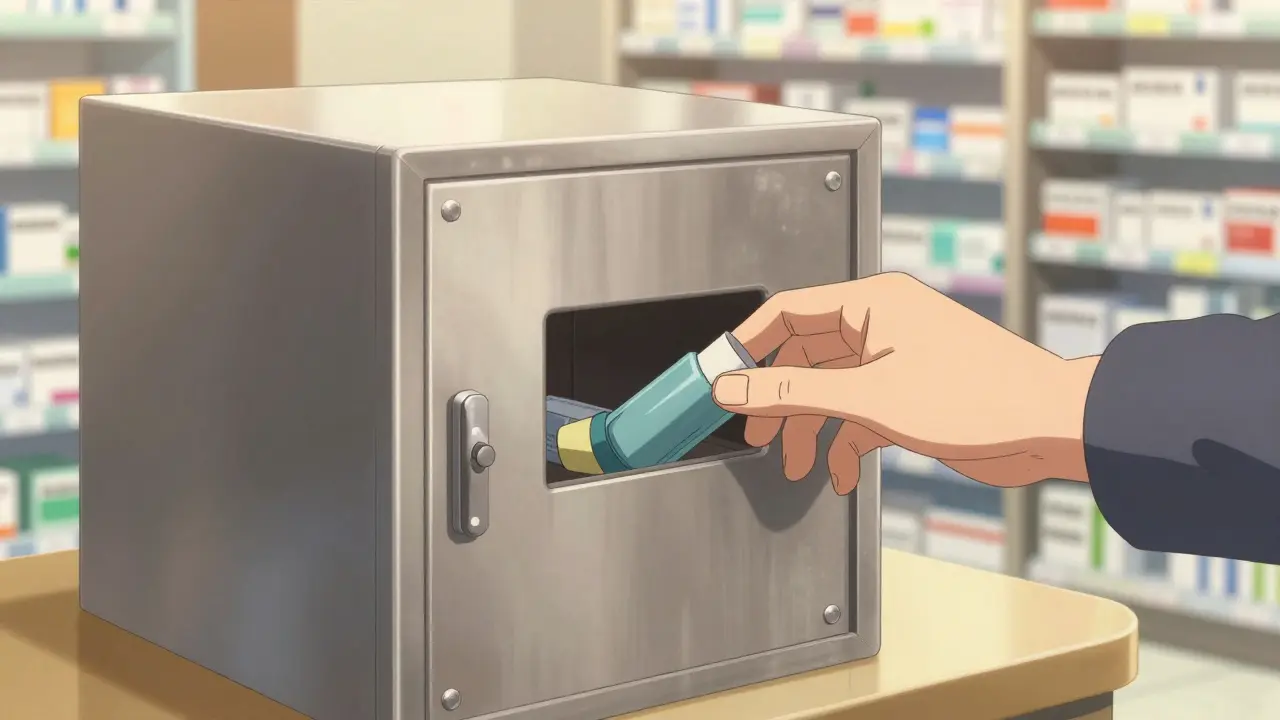
This is the gold standard. The DEA’s National Prescription Drug Take Back Day program has registered over 11,000 collection sites across all 50 states as of early 2024. Many pharmacies, like CVS and Walgreens, offer permanent drop-boxes. Look for a secure lockbox in your local pharmacy lobby. You can simply drop off your expired inhalers, drops, and creams there. It’s free, easy, and environmentally responsible.
2. Mail-Back Services for Inhalers
Inhalers are hazardous waste because of their pressurized canisters. Up to 29% of the medication remains in an expired device, creating explosion risks if crushed or punctured in regular trash. Washington State and many other regions offer free, prepaid mailers specifically for inhaler disposal. Amazon Pharmacy also launched a free mail-back program for expired inhalers in late 2023. Check with your insurance provider or local health department for similar kits.
3. At-Home Disposal (If No Take-Back Is Available)
If you truly cannot access a take-back site, the FDA provides guidelines for home disposal:
- Remove the medication from its original container if possible (for liquids/powders).
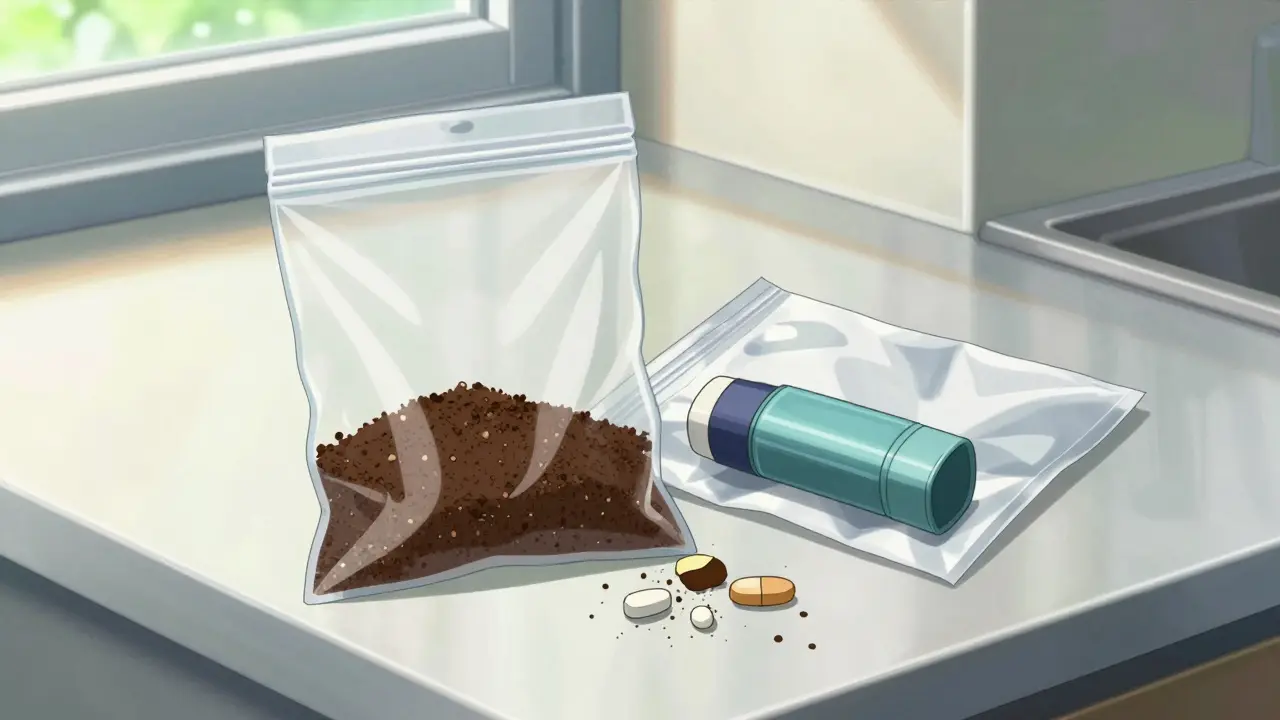
- Mix the drugs with an undesirable substance like used coffee grounds, cat litter, or dirt. This makes them unappealing to kids or pets.
- Place the mixture in a sealed plastic bag or container.
- Throw the sealed container in your household trash.
- Scratch out all personal information on the prescription label before recycling or trashing the empty box/bottle.
Comparison of Disposal Methods
| Method | Best For | Environmental Impact | Accessibility |
|---|---|---|---|
| Pharmacy Drop-Box | All medications, especially controlled substances | Low (Incinerated safely) | High (Most major chains) |
| Mail-Back Kit | Pressurized inhalers, remote areas | Low | Medium (Requires ordering kit) |
| Household Trash (Mixed) | Non-controlled, non-hazardous meds | Medium (Landfill leakage risk) | Very High |
| Toilet/Sink Flush | None (Except specific high-risk opioids listed by FDA) | High (Water contamination) | Very High |
Preventing Future Waste
Managing expired meds is easier if you prevent them from expiring in the first place. Start by reviewing your cabinet every six months. Mark calendars for refill dates. For inhalers, consider smart caps like Propeller Health’s GPS-enabled cap, which alerts you 30 days before expiration. Finally, don’t buy bulk supplies unless you’re sure you’ll use them. Keeping a clean, current medicine cabinet saves money, protects your health, and keeps our environment safe.
Can I use my inhaler one month after the expiration date?
It is not recommended. While some studies suggest slight potency retention, the dose delivery becomes inconsistent. For a rescue inhaler used in emergencies, relying on an expired device can be life-threatening due to potential under-dosing. Always replace it before the date passes.
What happens if I flush expired eye drops?
Flushing medications contaminates waterways. The U.S. Geological Survey detected medication residues in 80% of U.S. waterways tested. This harms aquatic life and can enter drinking water supplies. Use a pharmacy drop-box instead.
Do topical creams expire?
Yes. Topical medications like hydrocortisone lose potency over time, especially if stored in warm places. They may also develop bacterial growth as preservatives break down. Discard them according to FDA disposal guidelines.
Where can I find a drug take-back location near me?
You can search for locations on the DEA’s Diversion Control Division website or call the Medicine Safe Disposal Hotline at 1-800-222-1222. Most major pharmacy chains like CVS and Walgreens also have permanent drop boxes.
Is it illegal to throw away prescription medication in the trash?
In most places, it is not illegal, but it is discouraged due to environmental and safety risks. Some states have stricter laws regarding hazardous waste. Always check local regulations, but prioritize take-back programs whenever possible.
9 Comments
May 27, 2026 Grace Gayle McMullen
honestly this is such a good reminder because i always forget to check the dates on my eye drops
the part about bacteria growing in them after they expire is kinda scary but true
i think most people just toss them in the bin without thinking about where it goes
thanks for sharing the info on take back programs cause i didnt know cvs had those drop boxes
May 28, 2026 Angela Niculescu
people are way too sensitive about expiration dates
i have been using my inhaler for three years past the date and im fine
why do we need all these rules when we used to just throw things away or keep them forever?
it feels like corporate greed to make us buy new ones every single year
just use your common sense instead of listening to fear mongers
May 29, 2026 Nivetha Narayanan
hey everyone lets not fight about this ok
i found some really cool smart caps that remind you when meds are expiring so maybe try that?
it helps me stay organized and i feel much better knowing my stuff is safe
we can all be eco friendly together by using the mail back kits for inhalers
let's spread the love and keep our water clean guys!!!
May 31, 2026 Frank Arlyss
i threw my old pills in the toilet last week and nothing happened
why does it matter if a little bit gets in the water
my neighbors complain about everything now days
stop trying to control what i do with my own trash
it is none of your business really
May 31, 2026 Tim Reynolds
The FDA is lying to you,; the expiration dates are fake;; they want you to buy more drugs;; the SLEP program proves it;; they hide the truth;; don't trust the government;; flush nothing;; burn it all;; stay safe out there;;
June 1, 2026 Groman Neta
This article is painfully obvious and yet here we are explaining basic hygiene to adults.
It is truly embarrassing how many people still flush their medications despite clear warnings everywhere.
The fact that you need a blog post to tell you not to put expired eye drops in your eyes says a lot about modern society.
I suppose we should also write guides on how not to eat paint chips.
Please educate yourselves before commenting on topics you clearly do not understand.
June 1, 2026 Ryan Jones
they dont want you to know the real reason inhalers expire
its a conspiracy to drain your wallet
i bet the propellants are actually harmless but they say otherwise
why do you listen to them anyway
you are all sheep following the herd
trust no one especially the doctors
June 3, 2026 Lisa Russo
you idiots really think mixing coffee grounds with meds makes them safe
that is stupid
just burn them in your backyard like normal people did in the past
all this recycling talk is nonsense
trash is trash and it belongs in the ground
stop overthinking simple problems
June 3, 2026 Gareth Tyler
i live in australia and we have different rules here but the point stands
humid weather kills dry powder inhalers fast so be careful
maybe look into local disposal options instead of flushing
it is easy to find a pharmacy box nearby
just do it properly
Write a comment