
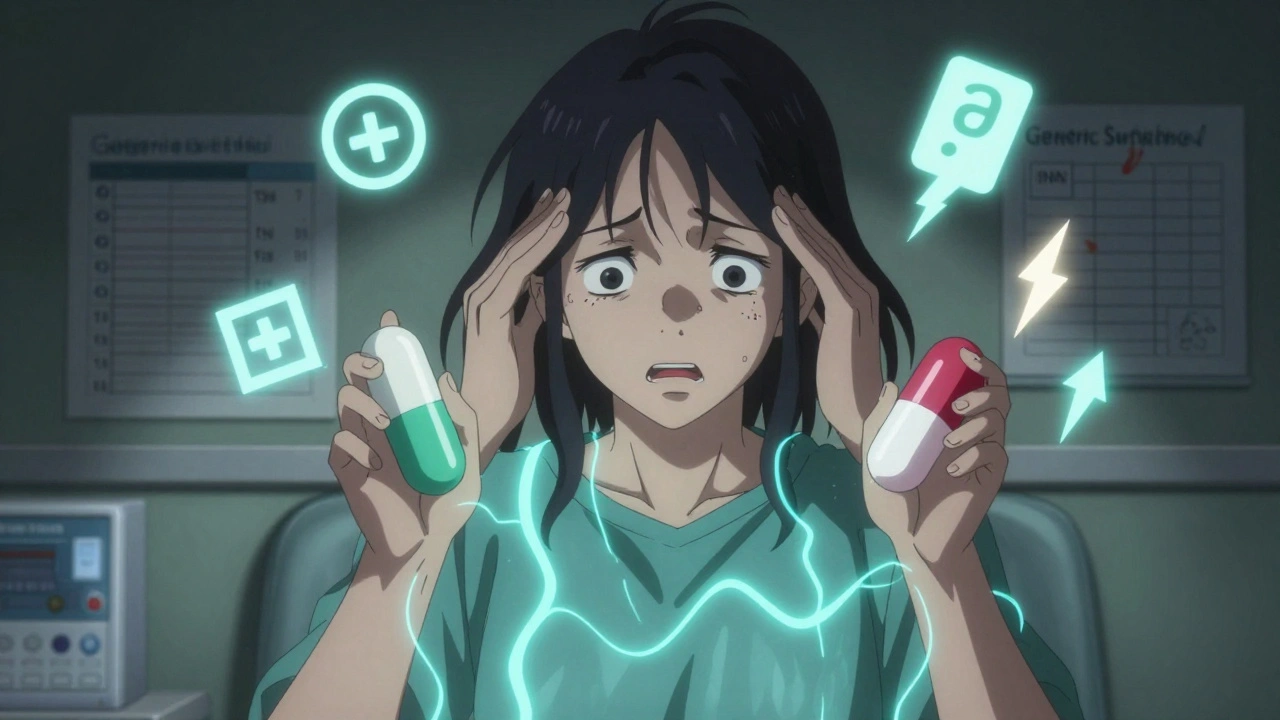
Switching from a brand-name drug to a generic version is supposed to save money - not cause new symptoms, worsen your condition, or send you back to the ER. But for many people, that switch isn’t harmless. It can trigger headaches, anxiety, seizures, or even dangerous drops in medication effectiveness. If you’ve noticed something off after your pharmacy gave you a different pill - same name, different color, different shape - you’re not imagining it. And you’re not alone.
Why a Generic Isn’t Always the Same
The FDA says generics are bioequivalent to brand-name drugs. That means they must deliver the same active ingredient at the same rate and amount, within a 20% margin. Sounds fair, right? But here’s the catch: that 20% variation is allowed between the brand and the generic. Between two different generics? The difference can be as high as 45%. That’s not a typo. Two pills with the same name, from two different manufacturers, could have wildly different absorption rates. For most drugs - like statins or antibiotics - this doesn’t matter. Your body adjusts. But for drugs with a narrow therapeutic index (NTI), even a tiny shift in blood levels can cause serious problems. These are medications where the difference between a therapeutic dose and a toxic one is razor-thin. Think thyroid meds, blood thinners, seizure drugs, and certain psychiatric medications.When Switching Can Be Dangerous
Five drug classes are known to cause real trouble when switched:- Levothyroxine (for hypothyroidism): A 2021 study found patients switched between generic brands had up to a 25% higher chance of abnormal thyroid levels. Symptoms? Fatigue, weight gain, heart palpitations - all signs your dose is off.
- Warfarin (a blood thinner): Even small changes in absorption can spike your INR, leading to dangerous bleeding or clots. One patient reported a near-fatal stroke after switching generics.
- Phenytoin and other antiepileptics: A 2021 survey of neurologists showed 68.7% believed switching generics increased seizure risk. One patient went from zero seizures for 3 years to 4 in a week after a new generic refill.
- Tacrolimus (after organ transplant): A 10% drop in blood levels can trigger organ rejection. Transplant centers often refuse to allow generic switches without strict monitoring.
- Extended-release ADHD meds (like Adderall XR): Different manufacturers use different bead-release systems. One patient described it as “a switch from steady focus to crashing anxiety within hours.”
What Patients Are Reporting
Real people are noticing changes - and they’re speaking up. A 2023 analysis of over 1,400 patient records found that 63% could identify their meds by color and shape, not by name. When those changed, they knew something was wrong. On Reddit’s r/ADHD forum, hundreds of posts describe sudden crashes in focus, new insomnia, or panic attacks after switching to a different generic version of methylphenidate or amphetamine. One user wrote: “I was stable for 5 years. Then my pharmacy switched me. Within 48 hours, I couldn’t sleep, my heart raced, and I couldn’t finish a sentence. I thought I was losing my mind. It was the pill.” A MedShadow survey of 1,247 people taking generic ADHD meds found:- 63.2% noticed decreased effectiveness
- 41.7% developed new side effects
- 28.4% got headaches
- 22.1% had increased anxiety
- 19.3% suffered stomach issues
The Hidden Reason You Keep Getting Different Pills
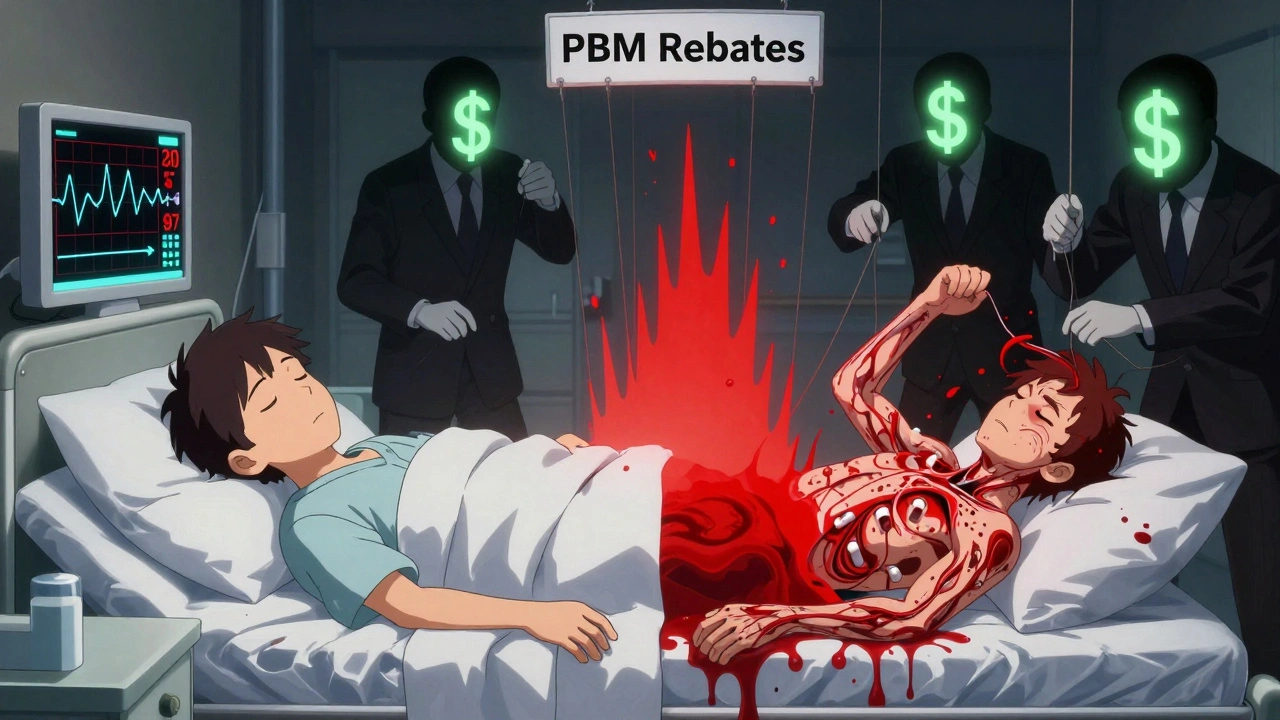
You might think your pharmacist is choosing the cheapest option. They’re not. It’s your pharmacy benefit manager (PBM) - companies like CVS Caremark or Express Scripts - that’s pulling the strings. PBMs get kickbacks from generic manufacturers. The higher the rebate, the more they push that brand. A 2022 Senate investigation found PBMs switch preferred generic manufacturers an average of 4.7 times per year per drug. That means you could get a different version every few months. For someone on levothyroxine? That’s 4-5 dose changes a year. No wonder their TSH levels are all over the place. And it’s not just ADHD or thyroid meds. In 2023, IQVIA reported:- 89.3% of cardiovascular generics switched annually
- 82.7% of diabetes generics switched
- 76.4% of psychiatric generics switched
What You Can Do
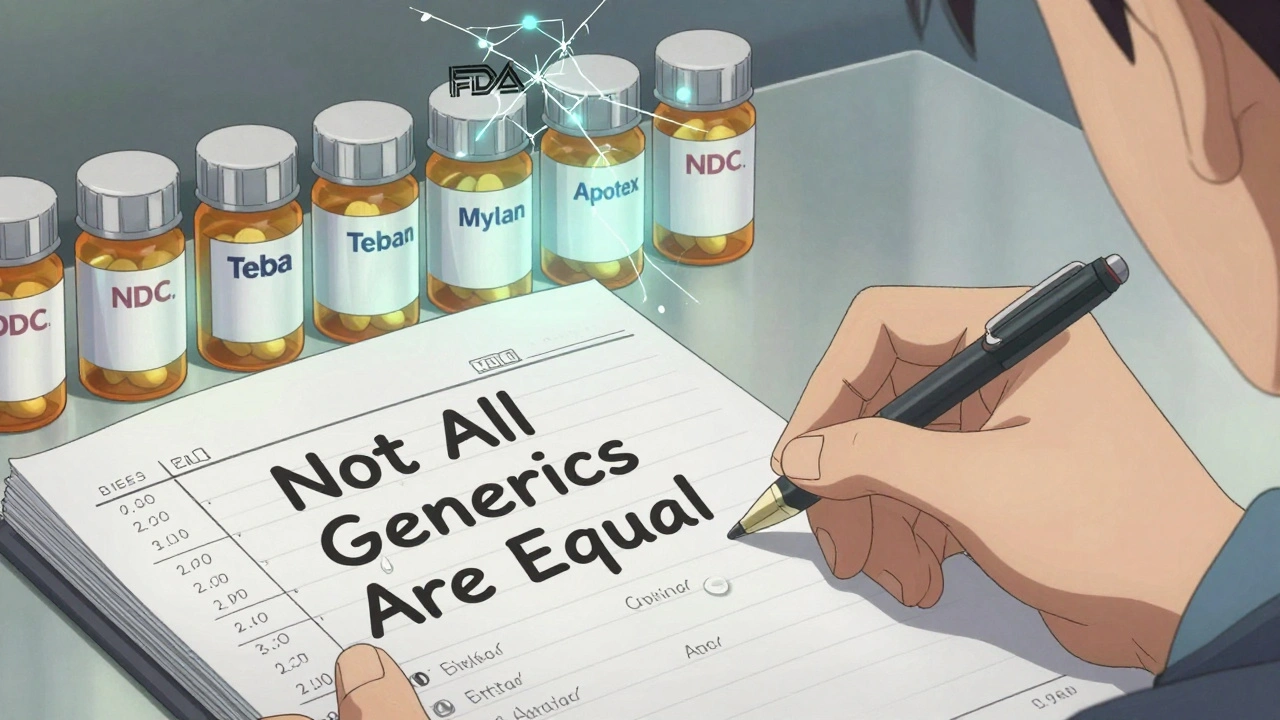
You don’t have to accept this. Here’s what works:- Check the NDC code on your pill bottle. It’s a 10-digit number. Write it down. Next time you refill, compare it. If it’s different, ask why.
- Ask for “dispense as written” (DAW-1) on your prescription. This tells the pharmacy: no substitutions. It’s especially important for NTI drugs. In 2022, 23.7% of levothyroxine prescriptions used DAW-1 - you can too.
- Request the manufacturer name. Say: “Can I get the version made by Teva?” or “I need the one with the blue capsule.” Many pharmacies can accommodate this if they have stock.
- Keep a log. Note the date, drug name, manufacturer, and any new symptoms. If you feel worse after a switch, you’ll have proof.
- Talk to your pharmacist. Ask if they’ve seen others have issues with this switch. Many pharmacists know which generics cause problems - they just aren’t always allowed to say.
When to Call Your Doctor
Don’t wait. If you notice any of these after switching generics, call your provider:- New or worsening side effects (headaches, dizziness, nausea, anxiety)
- Return of symptoms you had under control (seizures, mood swings, fatigue)
- Unexplained changes in lab results (INR, TSH, drug levels)
- Feeling “off” without a clear cause
The Bigger Picture
The FDA still insists generics are interchangeable. But clinical evidence and patient stories tell a different story. In 2024, the American Society of Health-System Pharmacists updated its guidelines to recommend against automatic substitution for 17 specific drugs - including tacrolimus, bupropion XL, and phenytoin. And it’s not just about safety. A 2023 study in JAMA Internal Medicine estimated that preventable hospitalizations from bad generic switches cost the U.S. system $2.1 billion a year. That’s more than the savings from the switches themselves. The system is built to cut costs. But when patients get sicker, the real cost skyrockets.What’s Changing
Good news: change is coming. In 2023, CMS (Centers for Medicare & Medicaid Services) limited generic switches to no more than twice a year for Medicare Part D patients. That’s a start. The FDA’s Complex Generic Products Initiative is developing better testing for extended-release and complex drugs. And researchers are finding genetic links - like CYP2D6 poor metabolizers - who are 4.2 times more likely to fail on switched generics. The message is clear: not all generics are created equal. And for some people, the difference isn’t just noticeable - it’s life-changing.Can switching to a generic drug make my condition worse?
Yes, for certain medications - especially those with a narrow therapeutic index like levothyroxine, warfarin, antiepileptics, and extended-release ADHD drugs. Even small changes in how the drug is absorbed can lead to reduced effectiveness or new side effects. Many patients report seizures returning, anxiety spikes, or unstable thyroid levels after a switch, even though the active ingredient is the same.
Why do I feel different when my generic pill looks different?
The active ingredient is the same, but the inactive ingredients - like binders, coatings, and fillers - can vary between manufacturers. These affect how quickly the drug dissolves and enters your bloodstream. For extended-release pills, different bead-release systems can cause the medication to hit your system too fast or too slow. Your body may have adapted to one version, and a new one disrupts that balance.
How do I know which generic manufacturer I’m getting?
Look at the NDC code on your prescription label - it’s a 10-digit number. You can search it online using the FDA’s NDC Directory or ask your pharmacist for the manufacturer name. Many pharmacies will let you request a specific brand if you ask. Keep a note of which one works best for you.
Can I ask my doctor to prevent generic switches?
Yes. Ask your doctor to write “dispense as written” or “DAW-1” on your prescription. This legally prevents the pharmacy from substituting a different generic without your consent. It’s especially important for NTI drugs. Many doctors are unaware of this option - so bring it up directly.
Is it safe to switch generics for blood pressure or cholesterol meds?
For most people, yes. Statins and common blood pressure drugs like lisinopril or metoprolol have wide therapeutic windows, meaning small absorption differences don’t usually cause harm. But if you notice new side effects - like muscle pain, dizziness, or fatigue - after a switch, it’s worth checking in with your doctor. About 15.7% of patients report worsened muscle symptoms after switching statins.
Why do pharmacies keep switching my generic meds?
It’s not about you - it’s about money. Pharmacy benefit managers (PBMs) get rebates from generic drug makers. The higher the rebate, the more they push that brand. So your pharmacy may switch you monthly to whichever generic offers the biggest kickback. This happens even if your current version works perfectly. You’re being moved for profit, not health.
9 Comments
December 3, 2025 Doug Hawk
Been on levothyroxine for 8 years. Switched generics last fall and my TSH went from 1.8 to 5.2 in 3 weeks. No idea why my doc didn't warn me. I had to beg for my old brand. Now I check the NDC every time. It's wild how little most docs know about this stuff.
Also noticed my anxiety spiked hard after switching from Teva to Mylan. Same pill, different filler. My body just went haywire.
December 4, 2025 John Morrow
Let’s be clear: the FDA’s bioequivalence standard is a joke. A 20% variance in Cmax and AUC for drugs with a narrow therapeutic index is not just statistically permissible-it’s clinically reckless. The assumption that pharmacokinetic equivalence translates to clinical equivalence ignores interindividual variability, polymorphic metabolism, and formulation-dependent dissolution kinetics. This isn’t anecdotal-it’s pharmacovigilance 101. And yet, the system continues to prioritize rebate structures over patient outcomes. The real scandal? The same PBMs that drive these switches are often subsidiaries of the very pharmaceutical conglomerates that profit from brand-name drug patents. It’s a regulatory capture masquerading as cost containment.
December 5, 2025 Kristen Yates
I’m a nurse and I’ve seen this over and over. Patients come in confused, scared, saying they feel like a different person. We don’t always have time to dig into the pill bottle-but when we do, the NDC mismatch is usually there. I tell everyone to write down the numbers. It’s simple, but it saves lives.
December 5, 2025 Saurabh Tiwari
bro this is wild but also so real 😔
i have a friend in india who takes phenytoin and they switched generics twice last year-he had two seizures. no joke. the doctors here don’t even know about this problem. why does money always come before people? 🤦♂️
December 7, 2025 Michael Campbell
Big Pharma and the government are in bed together. You think this is about savings? Nah. It’s about control. They want you dependent on the system. Your body’s not broken-you’re just being poisoned by corporate greed.
December 8, 2025 Victoria Graci
It’s like your body is a finely tuned instrument, and the generic switch is someone swapping out the strings without telling you. You’re still playing the same song, but now it’s off-key, and the dissonance is screaming inside your bones. We’ve been trained to trust the label, but the label doesn’t tell you about the glue holding the pill together. And that glue? It’s got a personality.
I used to think side effects were in my head. Turns out, they were in the coating.
December 10, 2025 Saravanan Sathyanandha
This issue transcends borders. In India, where generics are the backbone of healthcare access, the lack of standardized formulation transparency creates a silent crisis. Patients often cannot afford to switch back, even when symptoms arise. We need global advocacy-not just for labeling, but for independent bioequivalence audits across manufacturers. The patient’s voice must be codified into regulatory policy, not treated as an afterthought. This is not merely a pharmaceutical concern-it is a human rights issue.
December 12, 2025 alaa ismail
My mom’s on warfarin. She switched generics and her INR went from 2.4 to 4.9. Ended up in the ER. Now we only take the blue one. No questions asked. I wish more people knew this.
December 14, 2025 ruiqing Jane
You’re not imagining it. You’re not crazy. You’re not overreacting. You’re a survivor of a broken system that treats your body like a cost center. Keep your NDC log. Demand DAW-1. Tell your pharmacist you’re not a number. And if they push back? Find a new one. Your health isn’t negotiable.
Write a comment