
When a brand-name drug’s patent runs out, prices don’t just drop-they collapse. Often by 80% or more within three years. If you’re a pharmaceutical company holding that patent, not knowing exactly when generics will hit the market isn’t just risky-it’s expensive. In 2023, one top-10 pharma firm lost $220 million in revenue because their internal model predicted generic entry 11.4 months later than it actually happened. That’s not a mistake. That’s a failure to read the signs.
Why Timing Matters More Than You Think
Generic drugs aren’t just cheaper versions of brand-name drugs. They’re market disruptors. The moment the first generic hits, the price ceiling shatters. By the time six generics are on the shelf, the drug often sells for just 15% of its original price. That’s not speculation. That’s what happened with Lipitor after its patent expired in 2011. The brand lost 92% of its U.S. sales within 18 months. But here’s the catch: you can’t just wait for the patent expiration date on the FDA’s Orange Book and assume that’s when generics will appear. That’s like guessing when the next train arrives by looking at the schedule without checking for delays, strikes, or detours. The real timeline is a maze of patents, lawsuits, FDA approvals, and strategic moves by both brand and generic companies. Some patents expire on paper but stay in force for years because of legal maneuvers. Others fall faster than expected because a generic manufacturer filed a Paragraph IV certification-essentially a legal challenge saying the patent is invalid or won’t be infringed.The Core Tools: Orange Book, ANDAs, and Paragraph IV Certifications
The FDA’s Orange Book is your starting point. It lists every approved drug, its patents, and any exclusivity periods. But it’s not a crystal ball-it’s a map. You need to know how to read it. Each drug entry includes patent numbers and expiration dates. But the real signal comes from the Paragraph IV certifications. When a generic company files an ANDA (Abbreviated New Drug Application) with a Paragraph IV certification, they’re telling the brand: "We think your patent is invalid, and we’re ready to launch." This triggers a 45-day window for the brand to sue. If they do, the FDA is legally blocked from approving the generic for 30 months-or until the court rules, whichever comes first. That 30-month stay is why some drugs stay brand-only for years after their core patent expires. Humira’s main patent expired in 2016. But because AbbVie filed over 130 follow-up patents, generic entry didn’t begin in earnest until 2023. That’s seven years of delay-mostly legal.How Forecasting Models Actually Work
Simple models just plug in patent expiration dates. They’re wrong about half the time. The best models use game theory, econometrics, and real-world data to predict behavior. Take the FTC’s instrumental variables approach. It doesn’t just look at when the patent ends-it looks at how big the market is, how many competitors are already in the space, and whether the drug is a new chemical entity (NCE). Drugs with annual sales over $1 billion attract generic entries 11.3 months faster than smaller ones. Why? Because the profit potential is huge. Another key variable: patent clusters. If a drug has five or more patents covering different uses, dosages, or delivery methods, each extra patent adds about 4.2 months to the delay. That’s why oncology drugs-often protected by complex patent thickets-take 32% longer to go generic than cardiovascular drugs. The most accurate models also track FDA approval timelines. The median time from ANDA submission to approval is 38 months. But that’s the average. If the FDA is backlogged (like it was during the pandemic), that can stretch to 45 months. And if the generic fails bioequivalence testing-meaning it doesn’t absorb the same way in the body-the submission gets rejected. About 18-22% of first-time ANDAs fail this test. That’s why some companies use Drug Patent Watch’s dissolution testing predictors to avoid costly mistakes.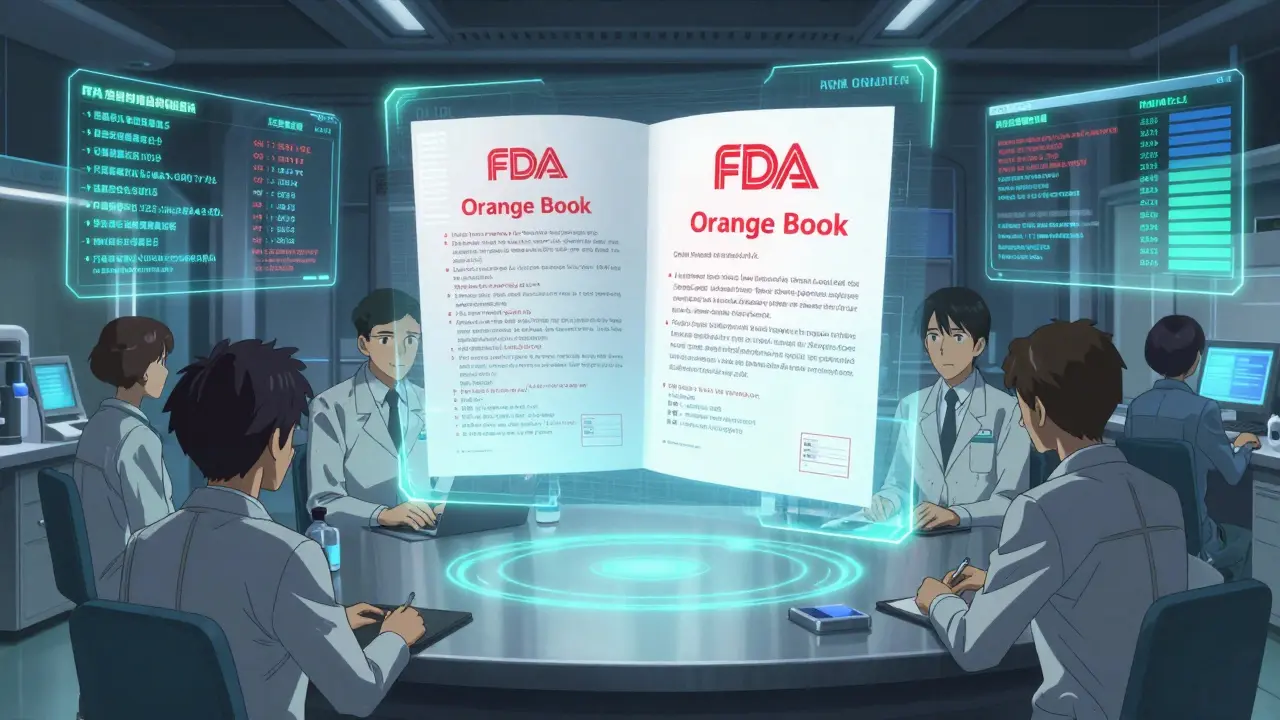
The Hidden Delayers: Product Hopping, Pay-for-Delay, and REMS
Brand companies don’t just wait. They fight. One tactic: product hopping. That’s when a company switches patients from the original drug to a new version-say, a pill to a tablet with a different coating-just before the patent expires. The FDA still considers the original drug the same product, so generics can’t jump in immediately. This tactic delayed generic entry by 18-24 months in 63% of the top 100 drugs, according to Commonwealth Fund data. Then there’s pay-for-delay. In these shady deals, the brand pays a generic company to delay its launch. The FTC has blocked dozens of these since 2010, but they still happen in about 7.4% of cases. They’re hard to predict because they’re often hidden in settlement agreements. And don’t forget REMS programs-Risk Evaluation and Mitigation Strategies. These safety programs can require special distribution systems or patient monitoring. If the generic maker can’t meet the REMS requirements, entry is delayed by an average of 14.3 months. Many forecasting models ignore this entirely.Biologics vs. Small Molecules: A Different Game
Not all drugs are created equal. Small-molecule drugs (like statins or antibiotics) are chemically synthesized and easier to copy. Their generics follow a clear pattern: first entrant cuts price by 39%, second by 54%, sixth by 85%. Biologics-complex proteins made from living cells-are a different story. The 2010 BPCIA gave them 12 years of data exclusivity. Even after that, biosimilars (the biologic equivalent of generics) take 12-18 months to develop and face stricter approval rules. Only 38% of eligible biologics have biosimilar competition, compared to 92% of small molecules. And price drops? Slower. After three biosimilars enter, prices fall only 25-35%. Why? Limited substitution laws, higher manufacturing costs, and physician hesitation. Forecasting models that treat biologics like regular drugs are off by 40% or more.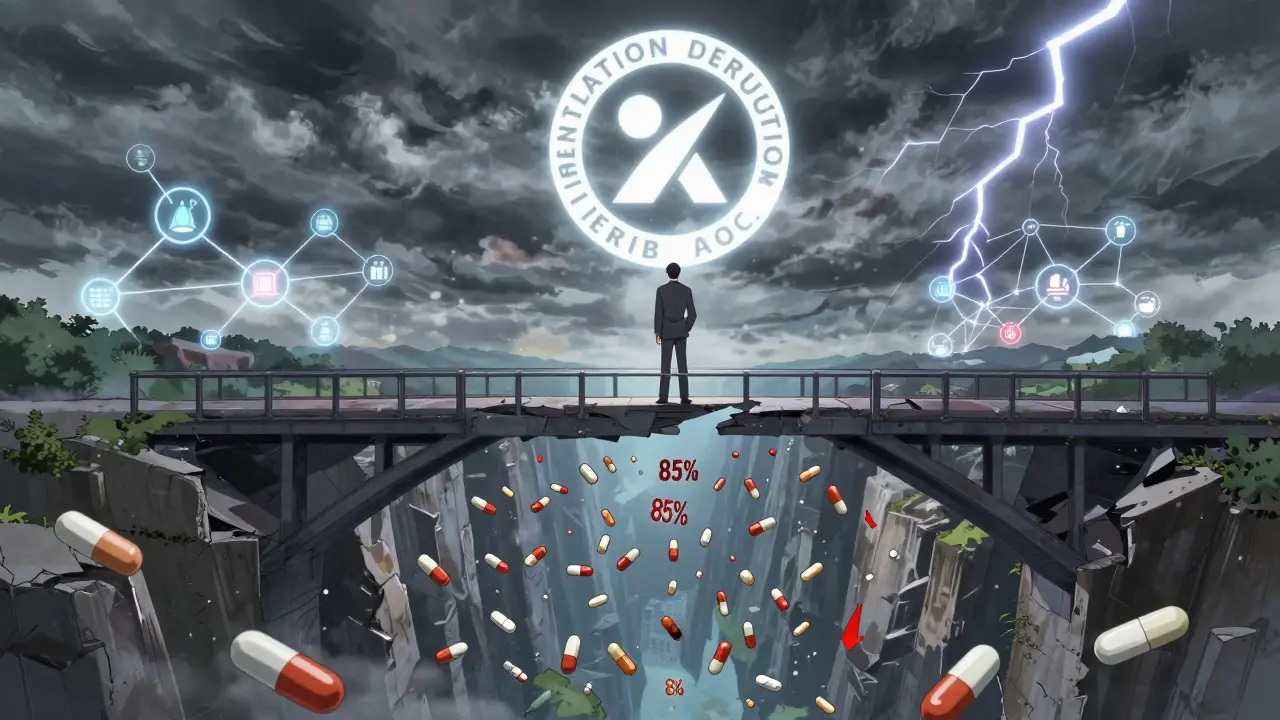
What Works in Practice: Tools, Teams, and Tactics
If you’re serious about forecasting, you need more than software. You need a team. Top-performing forecasting teams include:- A patent attorney (75% of high-performing teams)
- A regulatory specialist who knows FDA processes inside out (68%)
- A game theory economist who can model competitor behavior (52%)
What’s Changing in 2026
The game is shifting. The FDA’s new Competitive Generic Therapy (CGT) pathway gives 180-day exclusivity to generics for drugs with little or no competition. Early adopters are using this to predict which drugs will be targeted next. It’s already improving accuracy by 82% in pilot tests. AI is coming. Natural language processing tools are now scanning patent litigation documents and FDA correspondence to spot patterns humans miss. By 2026, AI-driven models are expected to cut prediction errors from 11.4 months to 6.8 months. But even AI can’t predict everything. Humira’s shift to Skyrizi-a new drug from the same company-reduced potential biosimilar market share by 35%. No algorithm could have known patients would be moved so effectively. And now, the Inflation Reduction Act’s Medicare drug price negotiation rules (starting in 2025) may change incentives. If the government negotiates prices for high-cost drugs, will generics still rush in? Or will they wait for better margins elsewhere?What You Should Do Now
If you’re managing a drug with a patent expiring in the next 3-5 years:- Check the Orange Book for Paragraph IV certifications-those are your early warning signs.
- Count the patents. More than five? Expect delays.
- Look for product hops. Did the brand switch formulations in the last two years?
- Track FDA approval timelines. Are they slowing down?
- Know your state’s substitution laws. California, New York, and Texas have different rules.
- Don’t rely on a single model. Use at least two: one for patent expiration, one for competitive behavior.
How accurate are generic entry forecasts?
Top-tier models using multiple data sources-patents, litigation, FDA timelines, market size-can predict first generic entry within a 6-8 month window with 80-85% accuracy. Simple models based only on patent expiration dates are only about 40-50% accurate. Accuracy drops for biologics and drugs with complex patent thickets.
What’s the biggest mistake companies make in forecasting?
Assuming patent expiration = generic entry. Many companies ignore Paragraph IV certifications, patent litigation, product hopping, and REMS requirements. One top pharma firm lost $220 million because their model didn’t account for a 14-month FDA backlog.
Can a brand company delay generic entry legally?
Yes, but within limits. Filing additional patents on new formulations, delivery systems, or uses can trigger 30-month stays if generics challenge them. But the FTC and courts have cracked down on "evergreening"-especially pay-for-delay deals. Product hopping is legal but increasingly scrutinized.
How long does it take for a generic to get approved after filing an ANDA?
The FDA’s median approval time is 38 months from submission. But it can range from 24 to 52 months depending on complexity. Biosimilars and complex generics (like inhalers) take longer. FDA backlogs and failed bioequivalence tests can add 6-12 months.
Do all generic entries cause the same price drop?
No. Small-molecule generics follow a steep drop: first entrant cuts price by 39%, second by 54%, sixth by 85%. Biosimilars drop only 25-35% after three entrants due to higher costs and limited substitution. Authorized generics (launched by the brand itself) can suppress price drops by 15-20%.
What’s the role of the Hatch-Waxman Act today?
It’s still the foundation. It created the ANDA pathway and the 180-day exclusivity for first filers, which drives competition. But it’s been stretched thin by modern tactics like product hopping and patent thickets. The Act hasn’t changed since 1984, but the industry has.
How do state laws affect generic pricing?
State substitution laws determine whether pharmacists can swap a brand drug for a generic without doctor approval. In states with strict rules (like New York), substitution is slower, which delays price erosion. California’s 2022 law, for example, made price declines 8.2% slower than national models predicted.
Is AI improving generic forecasting?
Yes. AI tools now scan patent filings, court documents, and FDA correspondence to spot hidden patterns. By 2026, models using AI are expected to cut prediction errors from 11.4 months to under 7 months. But they still struggle with strategic moves like patient migration from Humira to Skyrizi.
9 Comments
January 5, 2026 Brendan F. Cochran
Man, this whole system is rigged. Big Pharma buys off the FDA, files 130 patents on a single drug, and calls it innovation. Meanwhile, regular people can’t afford their meds. It’s not capitalism-it’s corporate feudalism. And don’t even get me started on pay-for-delay schemes. Those guys are laughing all the way to the bank while grandma skips her insulin.
Someone needs to burn it all down.
January 6, 2026 jigisha Patel
While the article presents a comprehensive overview of generic entry dynamics, it notably underemphasizes the statistical significance of bioequivalence failure rates in ANDA submissions. The cited 18–22% failure rate is consistent with FDA data from 2020–2023; however, the variance across therapeutic classes-particularly CNS and cardiovascular agents-is underreported. Additionally, the assertion that AI reduces prediction error to 6.8 months lacks empirical validation from peer-reviewed studies. One must question the methodology behind this projection.
January 6, 2026 Jason Stafford
They’re lying to you. Every single word. The FDA doesn’t ‘backlog’ applications-they’re being held up on purpose. Why? Because the same people who run the FDA used to work for Pfizer. The ‘Competitive Generic Therapy’ pathway? A distraction. A smokescreen. The real agenda is to keep prices high until the next election, then pretend they’re fixing it.
And don’t tell me about ‘patent thickets’-that’s just corporate speak for theft. They own the system. You’re just a customer in their game.
They’re watching you read this right now.
January 7, 2026 Justin Lowans
This is one of the clearest breakdowns of generic forecasting I’ve seen in years. The way it ties together patent law, FDA timelines, and behavioral economics is genuinely impressive.
I especially appreciate the emphasis on state-level substitution laws-so many models ignore that, and yet it can swing revenue projections by double digits. The point about biologics being treated like small molecules is spot-on too. We’ve seen entire teams misfire because they applied the same model to Humira and Lipitor.
If you’re in pharma strategy, this isn’t just useful-it’s essential reading. Kudos to the author for not oversimplifying.
January 8, 2026 Stephen Craig
Patents are temporary monopolies. But when monopolies become permanent through legal gymnastics, the social contract breaks.
The real question isn’t how to predict entry-it’s whether we should allow it to be delayed at all.
January 10, 2026 Connor Hale
It’s wild how much of this is invisible to the public. We see the price drop and think ‘market forces.’ But behind it? Lawsuits, FDA delays, secret deals, and doctors being nudged toward new versions of the same drug.
It’s like watching a magician. You know something’s off, but you can’t see how they’re doing it.
Maybe the real innovation isn’t in forecasting-it’s in exposing the system.
January 12, 2026 Abhishek Mondal
While the article is ostensibly informative, it is fundamentally flawed in its epistemological framing: it presumes the legitimacy of the patent system as a neutral arbiter of innovation, when in fact, it functions as a rent-extraction mechanism par excellence. The author’s reliance on FDA timelines as predictive variables ignores the regulatory capture inherent in the agency’s structure. Moreover, the mention of ‘game theory economists’ as a core team component reveals a disturbing fetishization of neoliberal modeling-where human behavior is reduced to utility functions, and moral decay is quantified as ‘market efficiency.’
Furthermore, the omission of international comparative data-particularly India’s generic manufacturing dominance-is not merely an oversight; it is ideological erasure.
January 13, 2026 Joseph Snow
AI will cut prediction errors to 6.8 months? That’s what they said about blockchain in 2017. This is all theater. The real delay isn’t legal or regulatory-it’s political. The government won’t let generics hit fast because they need the drug companies to fund their campaigns. The ‘Inflation Reduction Act’? A gimmick. They’ll negotiate prices for 10 drugs and call it reform while the rest of the market burns.
They don’t want you to know how broken this is. They want you to think you’re getting smart by reading this article. You’re not. You’re being played.
January 14, 2026 melissa cucic
I appreciate the depth here, especially the breakdown of state-level substitution laws. I work in pharmacy benefits management, and California’s 2022 law alone has reshaped our rebate modeling-something no national forecast ever accounted for.
That said, I’d love to see a follow-up on how payer policies (like step therapy and prior authorization) interact with generic entry timelines. Those are often the real gatekeepers-not the FDA or courts. A patient might have a generic available, but if their insurer won’t cover it without trying three brand-name alternatives first, the price drop never reaches them.
Still, this is the most grounded, actionable analysis I’ve seen in a long time. Thank you.
Write a comment