

What Exactly Is Acne?
Acne isn’t just a teenage problem. It’s a skin condition that affects 50 million Americans every year, from 13-year-olds to women in their 40s. It happens when hair follicles get clogged with oil and dead skin cells. Bacteria then move in, causing inflammation. The result? Whiteheads, blackheads, red bumps, or deep, painful cysts.
It’s not about being dirty. It’s about biology. Your skin naturally produces oil (sebum) to keep things lubricated. But when your body makes too much - often due to hormones - and dead skin cells don’t shed properly, things get backed up. That’s when acne starts.
The Six Main Types of Acne
Not all acne looks the same. Knowing the type helps you pick the right treatment.
- Whiteheads (closed comedones): Small, flesh-colored or white bumps. The pore is completely blocked, trapping oil and dead skin under the surface.
- Blackheads (open comedones): Dark spots on the skin. The pore is open, and the oil inside oxidizes when exposed to air, turning black. It’s not dirt.
- Papules: Small, red, tender bumps. No pus, just inflammation. These hurt to touch.
- Pustules: Red bumps with a white or yellow center filled with pus. Often mistaken for pimples.
- Nodules: Hard, painful lumps deep under the skin. They don’t come to a head and can last for weeks.
- Cysts: The most severe type. Large, soft, pus-filled lumps that can cause scarring. Often called cystic acne.
There are also less common forms. Hormonal acne hits the jawline, chin, and neck - usually around your period, during pregnancy, or menopause. Fungal acne (malassezia folliculitis) looks like tiny itchy bumps on the chest and back. It’s not acne at all - it’s yeast overgrowth. Mechanical acne comes from friction: helmets, tight collars, or phone pressure on your cheek.
Why Does Acne Happen?
Four things drive acne - and they all connect.
- Too much oil: Hormones, especially androgens, tell your oil glands to go into overdrive. This kicks in during puberty but can flare up in adults too.
- Clogged pores: Skin cells that should shed every 28 days stick together in acne-prone skin. They mix with oil and block the follicle.
- Bacteria: Cutibacterium acnes (formerly Propionibacterium acnes) thrives in clogged pores. It multiplies and triggers inflammation.
- Inflammation: Your immune system reacts to the bacteria and clogged pore, turning it red, swollen, and painful.
Genetics play a big role. If both your parents had bad acne, your risk goes up by 50%. Medications like lithium, steroids, or testosterone can trigger breakouts. Even high-glycemic foods and dairy might make it worse for some people, though the science isn’t clear-cut for everyone.
Topical Treatments: What Works and What Doesn’t
For mild to moderate acne, topical treatments are the first line of defense. They go right where the problem is - your skin.
- Benzoyl peroxide (2.5-10%): Kills acne bacteria and reduces oil. A 2023 study showed it cuts bacteria by 90% in four weeks. Start with 2.5% - higher strengths don’t work better but irritate more.
- Salicylic acid (0.5-2%): A chemical exfoliant that unclogs pores. Best for blackheads and whiteheads. Takes 6-8 weeks to show results.
- Retinoids (tretinoin, adapalene): These vitamin A derivatives speed up skin cell turnover. They prevent clogs before they form. Adapalene (Differin Gel) is now available over the counter. Users report 78% satisfaction with comedonal acne after 12 weeks.
- Topical antibiotics (clindamycin, erythromycin): Used with benzoyl peroxide to fight bacteria. Alone, they often lead to resistance.
- Winlevi (clascoterone): A newer prescription cream that blocks androgens at the skin level. Shows 45% reduction in inflammation after 12 weeks. More expensive, but avoids systemic side effects.
Don’t expect miracles overnight. Topicals take 6-8 weeks. Many people quit too early because their skin gets red or peels at first. That’s called "purging" - it’s your skin clearing out old clogs. Stick with it.
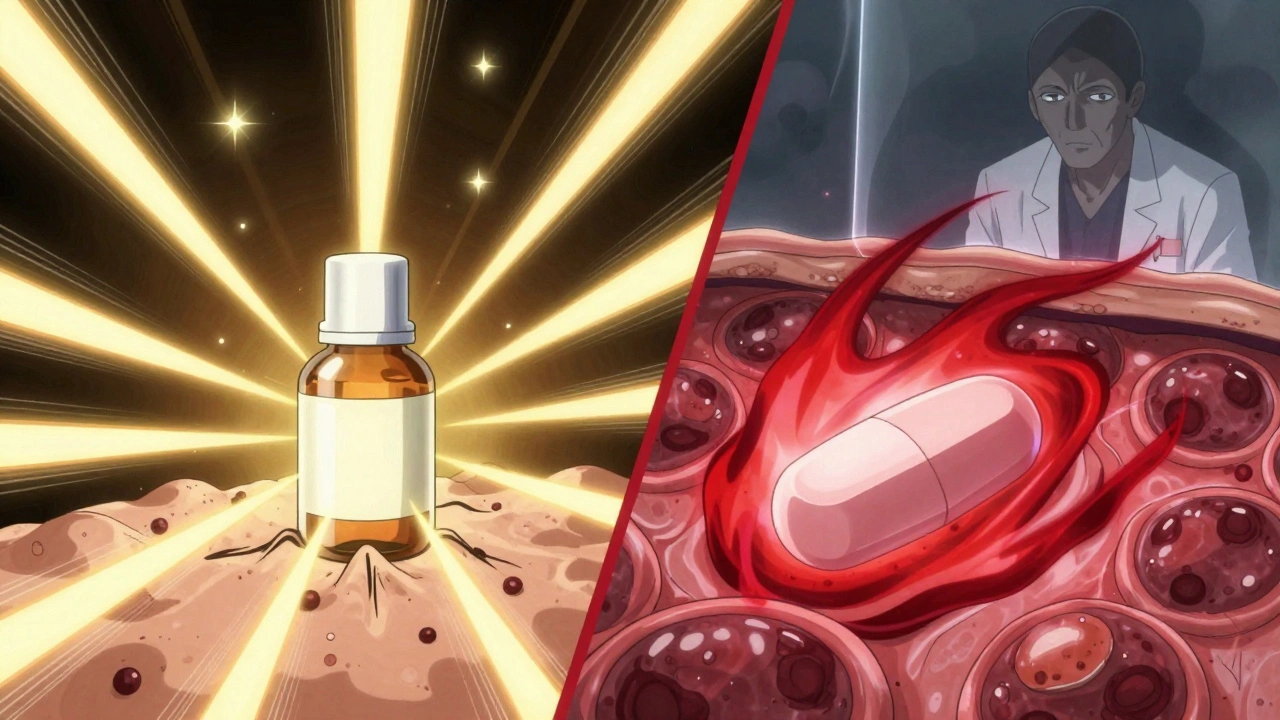
Oral Treatments: When Topicals Aren’t Enough
If your acne is moderate to severe, or if it’s hormonal or cystic, you’ll likely need pills.
- Antibiotics (doxycycline, minocycline): Reduce inflammation and bacteria. Work well for 3-6 months. But 25% of users develop resistance. Not meant for long-term use.
- Oral contraceptives: For women, pills with estrogen and progestin lower androgen levels. Can reduce hormonal acne by 50-60% in 3-6 months. Not an option for men or those who can’t take birth control.
- Spironolactone: A blood pressure drug repurposed for acne. Blocks androgens in women. Works well on jawline cysts. 65% of users see improvement in 4 months. Side effects? Dizziness, irregular periods, increased urination.
- Isotretinoin (Accutane): The most powerful acne treatment. Shrinks oil glands. Clears 80-90% of cystic acne. 60% of users stay clear for good. But it’s serious: causes severe dryness, depression risk, and birth defects. Women must use two forms of birth control during and for a month after treatment.
Oral treatments require a dermatologist. You can’t buy them over the counter. And they’re not quick fixes. It takes 2-3 months to see results.
What About Natural Remedies?
Tea tree oil, zinc, aloe vera - they’re everywhere online. But here’s the truth.
Tea tree oil has about 40% effectiveness compared to 75% for benzoyl peroxide. It’s gentler, so it might help with very mild cases. Zinc supplements (30mg daily) can add a 25% boost when paired with regular treatment. But don’t swap proven meds for herbal teas or lemon juice. They won’t stop cysts. And they can make things worse.
What Doesn’t Work - And What Costs You Time
Many people waste months on the wrong approach.
- Overwashing: Scrubbing your face 3 times a day dries out skin and triggers more oil. Wash twice - morning and night.
- Spot-treating only: If you only put cream on a pimple, you’re ignoring the clogs forming under the surface. Treat your whole face.
- Waiting too long: Delaying treatment increases scarring risk from 15% to 40%. Early action saves skin.
- Buying expensive "miracle" products: A $120 serum won’t fix hormonal acne. Stick to ingredients backed by science.
Real People, Real Results
Reddit’s r/SkincareAddiction has over a million members sharing their acne journeys. Analysis of 5,342 posts in early 2024 showed:
- 78% of people with blackheads were happy with adapalene after 12 weeks.
- Only 42% of cystic acne users saw good results from topicals alone.
- On r/AdultAcne, 65% of women using spironolactone saw improvement - but 32% quit due to side effects.
Amazon reviews for La Roche-Posay Effaclar Duo show 4.2 stars. Most positive reviews mention blackhead control. Most negative ones say it did nothing for cysts. That’s not a bad product - it’s the wrong tool for that type of acne.
How to Get Started
Here’s your simple roadmap:
- Identify your acne type. Is it mostly blackheads? Hormonal cysts? Red bumps?
- Start with OTC. Try benzoyl peroxide or adapalene for 8 weeks. Use it every day, even if your skin feels dry.
- See a dermatologist if no change. Don’t wait 6 months. Average wait time for an appointment is 3-6 weeks in the U.S.
- Be consistent. Missing doses cuts results by half. Use your treatment twice daily.
- Be patient. Skin renews slowly. You won’t see results in 3 days.
What’s Next in Acne Treatment?
The future is personal. New tools are emerging:
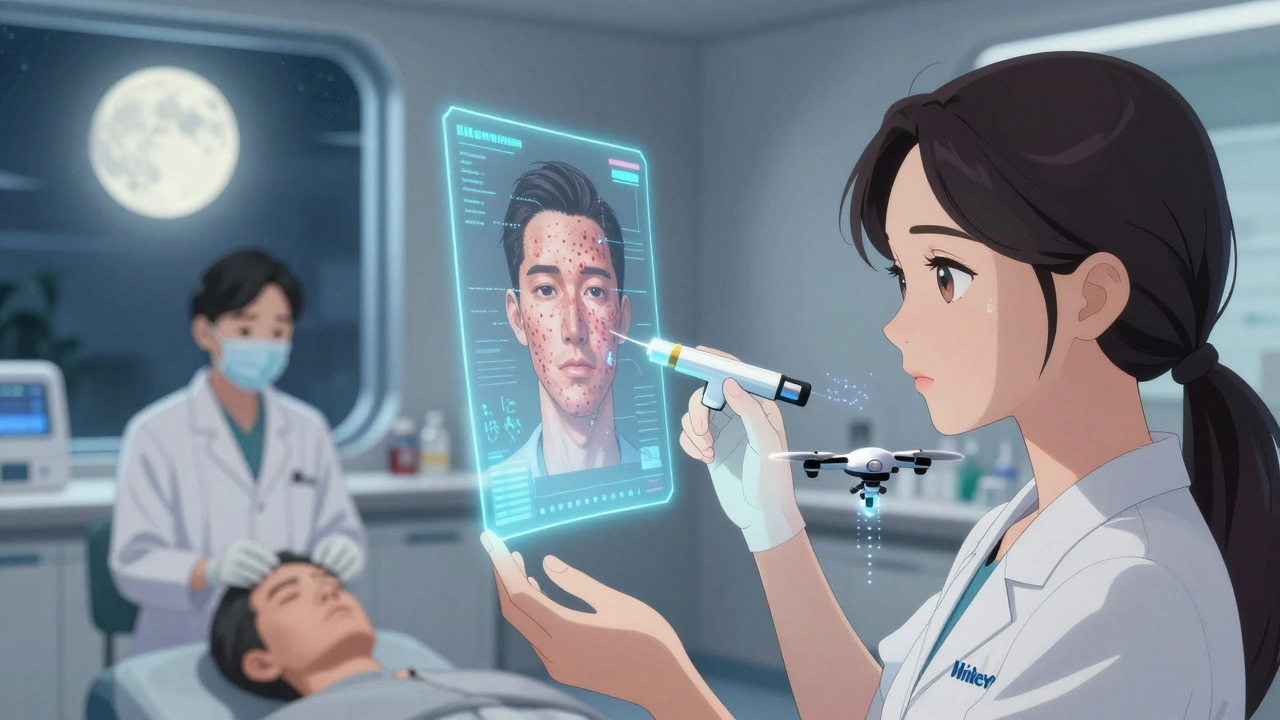
- AI skin analysis: Apps that scan your face and recommend treatment based on your acne type - expected to grow from 5% to 35% use by 2028.
- Microbiome treatments: Drugs like Azitra’s ATR-12 aim to target acne bacteria without wiping out good skin microbes. Clinical trials are underway.
- More targeted hormones: New topical androgen blockers like Winlevi are reducing the need for pills.
But access is still a problem. One in three U.S. patients can’t get a dermatologist appointment within 30 days. And new treatments like Winlevi cost $650 a month without insurance. Insurance coverage is improving, but gaps remain.
Bottom Line
Acne isn’t one-size-fits-all. What works for blackheads won’t fix cystic acne. Topicals are great for mild cases. Oral meds are necessary for deeper, hormonal, or stubborn acne. The key is matching the treatment to your type - and sticking with it long enough to work. Don’t get discouraged by slow progress. With the right plan, clear skin is possible.
What causes acne in adults?
Adult acne is often hormonal. Fluctuations in estrogen and testosterone - during periods, pregnancy, menopause, or due to stress - trigger oil glands. Genetics and certain medications (like lithium or steroids) also play a role. Unlike teenage acne, adult acne tends to show up as deep, painful cysts along the jawline and chin.
Can diet cause acne?
Diet doesn’t cause acne for everyone, but it can make it worse in some people. High-sugar foods and dairy may increase inflammation and hormone spikes linked to breakouts. Cutting them out won’t cure acne, but if you notice a pattern - like breakouts after drinking milk - reducing intake might help. Focus on proven treatments first.
How long does it take for acne treatments to work?
Most treatments take 6 to 12 weeks to show real results. Topicals like retinoids or benzoyl peroxide need time to unclog pores and reduce bacteria. Oral meds like antibiotics or birth control pills take 2-3 months. If you stop too early because your skin looks worse at first (purging), you’ll miss the payoff.
Is isotretinoin safe?
Isotretinoin is highly effective but carries serious risks. It can cause severe dryness, mood changes, and birth defects. Women must use two forms of birth control and get monthly pregnancy tests. Blood tests monitor liver and cholesterol levels. It’s not for everyone, but for severe cystic acne, it’s often the only treatment that prevents lifelong scarring.
Can I use retinoids if I have sensitive skin?
Yes, but start slow. Use adapalene 0.1% (Differin Gel) every other night. Apply a thin layer after moisturizing. Wait 20 minutes before adding other products. Gradually increase to nightly use. If you get redness or peeling, cut back to twice a week until your skin adjusts. Sensitive skin doesn’t mean you can’t use retinoids - it just means you need to ease in.
Why does my acne get worse before it gets better?
This is called "purging." It happens with retinoids and exfoliants that speed up skin cell turnover. Old clogs rise to the surface faster, causing a temporary flare-up. It lasts 2-6 weeks and is a sign the treatment is working. If breakouts keep getting worse after 8 weeks, it’s not purging - it’s a reaction. Stop and consult a dermatologist.
Are expensive skincare brands better for acne?
No. Price doesn’t equal effectiveness. A $15 tube of benzoyl peroxide works just as well as a $75 serum with the same active ingredient. Look at the label - not the brand. Ingredients like adapalene, benzoyl peroxide, salicylic acid, and niacinamide are proven. Fancy packaging, fragrances, and "natural" claims don’t treat acne.
Can I wear makeup if I have acne?
Yes, but choose wisely. Look for "non-comedogenic" or "oil-free" labels. Avoid heavy, greasy formulas. Mineral makeup is often better tolerated. Always wash your face before bed - even if you’re tired. Sleeping in makeup clogs pores and worsens acne.
10 Comments
December 7, 2025 Saketh Sai Rachapudi
This post is pure garbage. In India, we don't need all this Western nonsense. Acne? Just wash your face with neem water and stop eating pizza. My cousin had cystic acne for 5 years, now he's clean because he stopped using 'retinoids' and started praying to Lord Ganesha. Science is overrated.
December 7, 2025 Nigel ntini
Really appreciate how thorough this is. The breakdown of acne types is spot-on - especially clarifying that blackheads aren't dirt. I used to scrub my face raw thinking it was grime. Benzoyl peroxide at 2.5% changed everything. Took 10 weeks, but my skin's clearer than it's been since high school. Patience is the real treatment.
December 7, 2025 Kay Jolie
OMG, I literally cried reading this. As someone who’s been on spironolactone for 7 months, I can confirm: the jawline cysts? Gone. The dizziness? Still there. The irregular periods? Yeah, but worth it. And Winlevi? I tried it. It’s like a luxury spa for your follicles - $650/month for a glow-up? I’d rather sell a kidney. But honestly, this is the most clinically accurate, emotionally intelligent acne explainer I’ve ever seen. Thank you.
December 9, 2025 Max Manoles
I’ve been using adapalene for 14 weeks now. Started with purging - my face looked like a war zone for three weeks. But now? My pores are visibly smaller. I used to think ‘non-comedogenic’ was marketing fluff until I read this. The key is consistency. I miss a day, and I can feel the clogs forming again. This isn’t a quick fix. It’s a lifestyle shift.
December 10, 2025 Myles White
I just want to add something that’s not talked about enough - the psychological toll. Acne isn’t just skin deep, it’s soul deep. I went from being outgoing to avoiding mirrors, skipping social events, and wearing hoodies in 90-degree weather. I didn’t start seeing results until I stopped treating it like a cosmetic issue and started treating it like a chronic inflammatory condition - which, honestly, it is. The science here is solid, but what’s missing is the emotional validation. You’re not broken. Your skin isn’t a failure. You’re just fighting a biological glitch that’s been misunderstood for decades.
December 11, 2025 Brooke Evers
I’m so glad someone finally explained purging properly. I quit retinoids twice because I thought I was allergic. Third time, I read this and stuck with it. It took 6 weeks, but now my skin feels like it’s breathing again. Also, the bit about not spot-treating? Game changer. I used to just dab cream on pimples and wonder why new ones kept popping up. Now I treat my whole face - even the good areas. It’s like flossing your skin. You don’t wait until you have a cavity.
December 12, 2025 joanne humphreys
I’ve been following r/SkincareAddiction for years and this aligns perfectly with what I’ve seen. The 78% satisfaction with adapalene for blackheads? Exactly my experience. I also noticed that people who switched to oil-free makeup saw fewer breakouts - not because the makeup was 'natural', but because it didn’t add more oil to already oily skin. Small tweaks, big results.
December 12, 2025 Mansi Bansal
This article is an affront to traditional Ayurvedic wisdom. In our lineage, acne is caused by imbalanced Pitta dosha, not 'androgens'. We use turmeric paste, aloe vera, and neem leaf decoctions. Your Western pharmaceuticals are merely suppressing symptoms, not addressing the root cause - which is spiritual imbalance, poor digestion, and excessive screen time. The fact that you cite Amazon reviews as evidence is laughable. A $15 tube of benzoyl peroxide? How vulgar. We use gold-infused herbal oils. The ancients knew better.
December 14, 2025 Shayne Smith
I just wanted to say thank you. I’m 32, and I’ve had acne since I was 15. I thought I was doomed. This post made me feel seen. I’m starting adapalene tomorrow. No more hiding.
December 14, 2025 Clare Fox
i think the real issue is we’re all just trying to control something we cant see. skin is alive, its got its own mind. you treat it like a machine, it rebels. you treat it like a friend, it calms down. i dont know if retinoids work, but i know i feel better when i dont stress about every little bump. maybe the cure is just… letting go.
Write a comment