
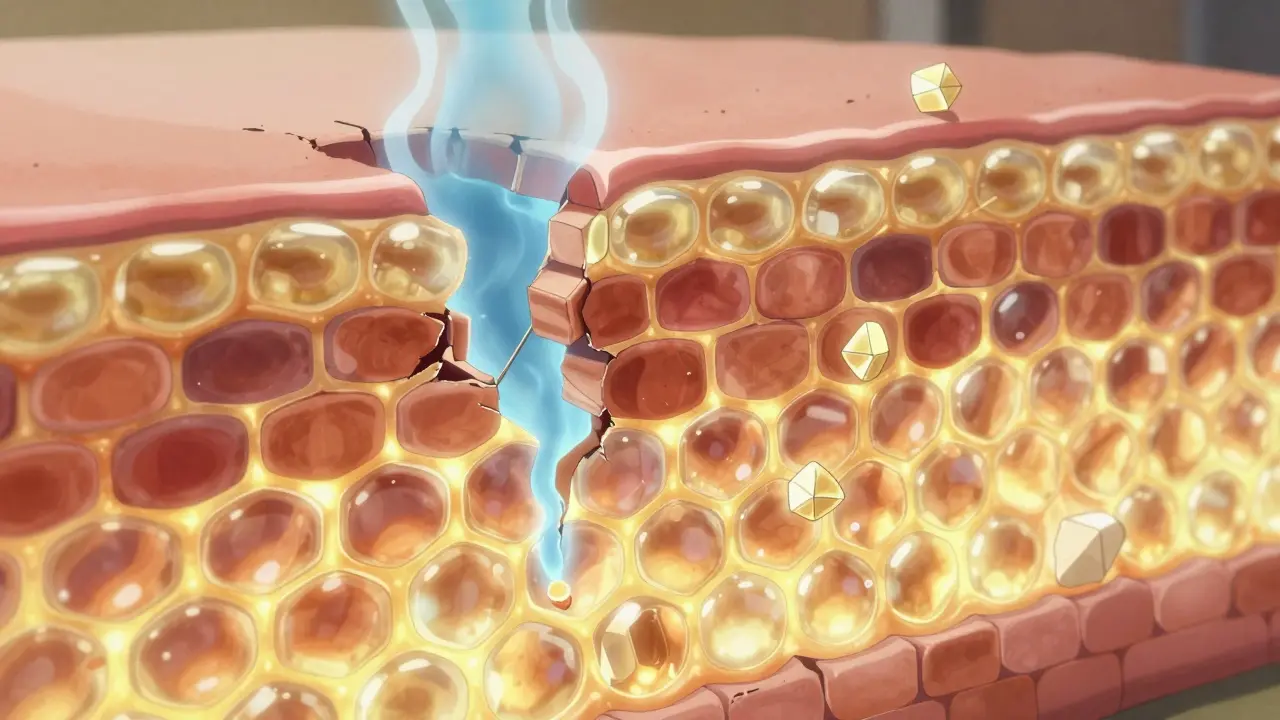
Your skin is supposed to be a fortress. It keeps moisture in and germs out. But if you have eczema, also known as atopic dermatitis, that wall has holes. Water leaks out, and irritants sneak in. This isn't just about dry skin; it's a structural failure of your outermost skin layer called the stratum corneum.
The good news? You can rebuild that wall. The secret lies in two things: putting the right bricks back into place (ceramides) and not washing them away with hot water or harsh soap. Let’s look at how to actually fix your skin barrier, not just cover up the symptoms.
The Brick-and-Mortar System of Your Skin
To understand why eczema hurts, you have to picture your skin like a brick wall. The "bricks" are dead skin cells called corneocytes. The "mortar" holding them together is a mix of lipids (fats). In healthy skin, this mortar is made of three specific ingredients in a precise ratio:
- Ceramides: 50% of the mix.
- Cholesterol: 25% of the mix.
- Free Fatty Acids: 10-15% of the mix.
This 3:1:1 ratio is critical. Research published in the Journal of Investigative Dermatology shows that people with eczema often have 30-50% fewer ceramides than those without it. Worse, the types of ceramides they do have are often the wrong kind-shorter chains that don’t hold together as well. When the mortar crumbles, your skin loses water rapidly. This is called transepidermal water loss (TEWL), and in eczema patients, it can be 40-60% higher than normal. That’s why your skin feels tight, itchy, and raw.
Why Regular Moisturizers Might Not Be Enough
You probably own a jar of Vaseline or a cheap drugstore lotion. These products work by sitting on top of your skin like plastic wrap. They trap whatever moisture is left inside. This is called an occlusive effect. It helps, but it doesn’t fix the broken wall.
True barrier repair requires replacing the missing ingredients. Studies show that using only one ingredient-like just ceramides or just cholesterol-can actually slow down healing by 15-25%. You need the full physiological mixture. Products formulated with the exact 3:1:1 ratio of ceramides, cholesterol, and fatty acids mimic your natural skin structure. Clinical trials indicate these formulations reduce water loss by 35-50% and keep the barrier stronger for over 72 hours after application, compared to just 20-30% temporary relief from traditional petrolatum-based creams.
| Feature | Traditional Occlusives (e.g., Petrolatum) | Physiological Lipid Emulsions (e.g., EpiCeram, TriCeram) |
|---|---|---|
| Mechanism | Sits on surface (occlusive) | Rebuilds lipid matrix (restorative) |
| TEWL Reduction | 20-30% | 35-50% |
| Lasting Effect | Short-term (hours) | Long-term (72+ hours) |
| Key Ingredients | Petrolatum, mineral oil | Ceramides, Cholesterol, Free Fatty Acids (3:1:1 ratio) |
| Best For | Immediate sealing of wet skin | Long-term barrier repair and maintenance |
Prescription options like EpiCeram and TriCeram are designed specifically for this purpose. While they cost more upfront ($25-$35 per tube versus $5-$15 for standard moisturizers), many users report needing fewer steroid creams over time. One study noted that consistent use for eight weeks helped patients cut their steroid usage from daily to once weekly.

The "Soak and Seal" Bathing Routine
Bathing can feel like torture when you have eczema. Hot water soothes the itch temporarily, but it strips your skin of its remaining oils. To make bathing part of the cure rather than the cause, follow the "soak and seal" method recommended by dermatologists.
- Keep it lukewarm: Water should be no hotter than 32°C (90°F). If it steams, it’s too hot. Hot water increases TEWL significantly within an hour.
- Limit time: Stay in for 10-15 minutes max. Longer soaks dissolve the lipid mortar further.
- Use gentle cleansers: Avoid bar soaps and anything with strong fragrances. Look for pH-balanced (around 5.5) cleansers with low surfactant levels. Harsh detergents like sodium lauryl sulfate can increase water loss by up to 40%.
- Dry gently: Pat your skin with a towel. Do not rub. Leave your skin slightly damp.
- Seal immediately: Within 3 minutes of getting out, apply your ceramide-rich cream. Applying to damp skin boosts absorption by 50-70%. This locks the water in while the lipids repair the barrier.
Many people struggle with applying thick creams to wet skin. It can feel messy or greasy. Try warming the cream between your hands first, then pressing it into your skin rather than rubbing it in. It takes about 2-3 weeks to get used to this routine, but the difference in skin texture is usually noticeable by day 21.

Choosing the Right Product
Not all "ceramide creams" are created equal. Many over-the-counter brands add tiny amounts of ceramides for marketing purposes but lack the correct ratio of cholesterol and fatty acids. Dr. Amy Paller, a leading dermatologist, warns that incorrect ratios fail to deliver meaningful repair.
When shopping, check the ingredient list. Ceramides should appear high up, not near the bottom. Ideally, the product will explicitly state it contains a physiological blend. If you have severe eczema, prescription barrier repair agents offer guaranteed potency and ratios. For mild cases, reputable over-the-counter brands that follow the 3:1:1 guideline can work well, provided you are consistent.
Consistency is key. Unlike steroid creams that calm inflammation in days, barrier repair is a marathon. You need to apply these products twice daily, every day, for at least 4-6 weeks to see significant structural improvement. Think of it like building muscle-you can’t skip workouts and expect results.
Common Pitfalls to Avoid
Even with the right cream, small habits can undo your progress. Here are the most common mistakes:
- Scratching: Scratching physically tears the cornified envelope. Keep nails short and consider wearing cotton gloves at night.
- Switching products too soon: Give a new regimen at least three weeks before judging it. Initial tightness is common as the skin adjusts.
- Using hot showers: We already mentioned this, but it bears repeating. Cool or lukewarm water is non-negotiable for barrier health.
- Ignoring triggers: Sweat, wool, and synthetic fabrics can irritate compromised barriers. Stick to loose, breathable cotton clothing.
How long does it take for ceramide creams to work?
You may feel some relief from itching within a few days, but true structural barrier repair takes 4 to 6 weeks of consistent twice-daily application. Clinical studies show significant improvements in skin hydration and reduction in water loss after 21-28 days.
Can I use ceramide creams with topical steroids?
Yes, they work well together. Apply your steroid cream to active flare areas first, wait a few minutes for it to absorb, then apply the ceramide cream over the entire affected area. Over time, successful barrier repair often allows you to reduce your reliance on steroids.
Are natural plant-derived ceramides as effective as synthetic ones?
Synthetic or "pseudo-ceramides" designed to match human skin chemistry are generally more effective. Natural plant ceramides often have different structures that your skin cannot integrate as easily into the lipid matrix. Look for products specifying "physiological" or "human-like" ceramide blends.
Is it better to shower or bathe for eczema?
Bathing is often preferred because it allows for even soaking and easier application of emollients afterward. However, short, lukewarm showers are fine if you avoid direct high-pressure water streams on affected areas. The key is the immediate application of moisturizer afterward, regardless of method.
Why do my ceramide creams feel greasy?
High-concentration lipid formulas are inherently rich. To minimize greasiness, apply the cream to damp skin immediately after bathing. The water helps spread the product thinner and improves absorption, leaving less residue on the surface.