
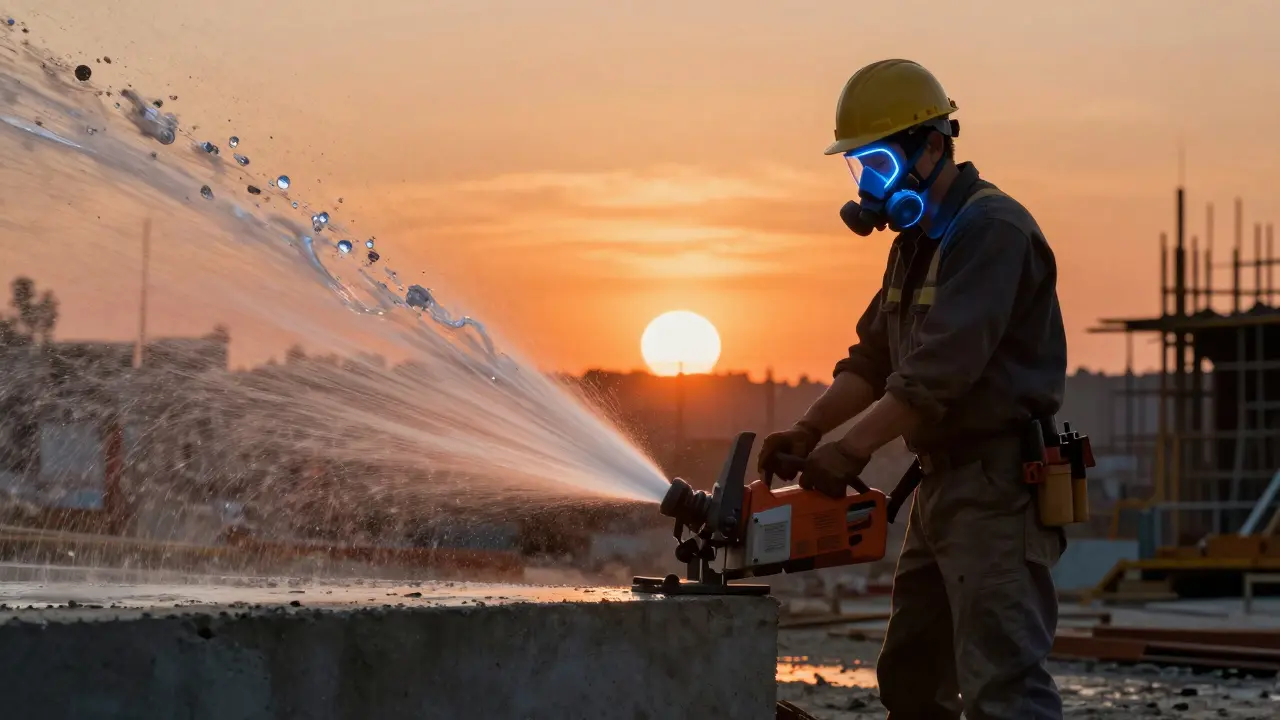
Every year, thousands of workers develop serious, irreversible lung damage from breathing in dust and fibers they’re exposed to on the job. These aren’t random accidents. They’re preventable diseases - silicosis and asbestosis - that still happen because safety measures are ignored, skipped, or poorly enforced. If you work in construction, mining, demolition, or manufacturing, this isn’t just a distant health warning. It’s your reality.
What Silicosis and Asbestosis Actually Do to Your Lungs
Silicosis comes from breathing in crystalline silica dust. You’ll find this dust when cutting stone, sandblasting, drilling concrete, or even doing landscaping work with crushed rock. Once it gets into your lungs, the particles don’t break down. Instead, they trigger scarring - thick, stiff tissue that replaces healthy lung space. Over time, your lungs lose their ability to expand and take in oxygen. People with silicosis often start with a dry cough, then struggle to breathe even walking up stairs. By the time symptoms show up, the damage is already advanced.
Asbestosis is caused by asbestos fibers - tiny, needle-like particles once used in insulation, pipe wrapping, roofing, and floor tiles. These fibers get trapped in lung tissue and cause slow, steady scarring. Unlike silicosis, which can develop in as little as 5-10 years with heavy exposure, asbestosis often takes 15-30 years to show symptoms. That’s part of why it’s so dangerous: workers feel fine for decades, then suddenly can’t catch their breath. Both diseases are progressive. Once the scarring starts, it doesn’t stop - even if you stop working in dusty conditions.
The numbers don’t lie. Between 2004 and 2014, over 1,100 U.S. workers died from asbestosis. Silicosis kills around 1,200 people every year in the U.S. alone. And here’s the worst part: every single one of those deaths could have been prevented.
The Hierarchy of Protection: What Actually Works
There’s a clear order of effectiveness when it comes to stopping these diseases. It’s not about what’s cheapest or easiest. It’s about what actually removes the danger at the source.
At the top of the list is elimination - removing the hazard entirely. For example, replacing sandblasting with wet abrasive blasting or using non-silica abrasives like steel shot. It’s not always possible, but where it is, it’s the most effective solution.
Next is substitution. If you can’t eliminate silica, can you use a less harmful material? In some cases, yes. Concrete with recycled aggregates or low-silica grout can cut exposure significantly.
Then come engineering controls - the real game-changers. These are physical changes to the work environment that stop dust from reaching workers in the first place. The most powerful examples:
- Wet cutting: Spraying water directly onto saws or drills reduces silica dust by up to 90%. OSHA data shows this simple trick cuts exposure more than any respirator ever could.
- Local exhaust ventilation: A vacuum system attached to a tool captures dust right at the source. When properly installed, it removes 70-80% of airborne particles. The system needs to pull air at 100-150 feet per minute - too slow, and dust escapes.
- Enclosed systems: Sealing off cutting or grinding operations with plastic barriers or glove boxes keeps dust contained. NIOSH says these must capture at least 95% of dust to be effective.
These methods reduce exposure by 80-90%. That’s the gold standard.
Next down the ladder are administrative controls - things like rotating workers to limit exposure time or scheduling dusty tasks for low-traffic hours. These help, but only cut exposure by 50-70%. They’re a backup, not a solution.
Finally, there’s personal protective equipment - respirators. This is where most companies stop. And it’s the weakest link.
N-95 masks filter 95% of particles 0.3 microns in size. P-100 masks go up to 99.97%. Sounds great, right? But here’s the catch: if the mask doesn’t fit, it’s useless. OSHA requires annual fit testing - but a 2022 CDC report found that 68% of worker complaints about respirators were about discomfort, poor fit, or heat. Workers in 90-degree heat on a demolition site aren’t going to wear a tight-fitting P-100 for eight hours. Some even cut the straps or tape the valves open. One Reddit user in construction said, “I’ve been in demolition for 15 years and never had a proper fit test until OSHA showed up last month.” That’s not an exception - it’s the norm.
Why Prevention Keeps Failing - Even When We Know How
The technology to prevent silicosis and asbestosis has existed for decades. So why are people still getting sick?
One reason is cost. A local exhaust system for a single workstation costs $2,000-$5,000. For a small business with 10 workers, that’s $20,000-$50,000 upfront. Many think they can save money by skipping it - until a worker files a claim or dies. The truth? The return on investment comes in 18-24 months through lower workers’ compensation costs and fewer lost workdays.
Another reason is culture. In many shops, safety gear is seen as slow, inconvenient, or “for rookies.” Supervisors who don’t wear their own respirators set the tone. A study of 15 construction companies found that when managers modeled 100% compliance, respiratory incidents dropped by 65% over three years. Leadership doesn’t just talk about safety - they live it.
Small businesses are especially vulnerable. In Wisconsin, 78% of companies with fewer than 20 employees had no formal respiratory protection program. They don’t have safety officers. They don’t have training budgets. They rely on word-of-mouth. That’s how mistakes happen.
What Workers Need to Know - And Demand
If you’re exposed to dust or fibers on the job, you have rights. And you need to know them.
- Fit testing: You must get an annual fit test for any respirator you wear. If your employer hasn’t scheduled one, ask. If they refuse, report it. OSHA’s whistleblower program protects you.
- Training: OSHA requires at least 2 hours of training on respirator use. The American Lung Association recommends 4-6 hours. If your training was 20 minutes of a video, it’s not enough.
- Health monitoring: You should get a baseline spirometry test when you start the job - and then every five years. If you have asthma or COPD, you need it every year. This isn’t optional. It’s how you catch damage before it’s too late.
- Wet methods: If you’re cutting stone or concrete, demand a water-fed saw. If your foreman says, “We’ve always done it dry,” push back. Wet cutting cuts exposure by 90%.
And here’s something no one talks about enough: smoking. If you smoke and work in a dusty job, your risk of developing lung disease jumps by 50-70%. Quitting isn’t just about health - it’s about survival.

The Bigger Picture: Regulation, Innovation, and Change
The U.S. OSHA silica standard from 2016 was supposed to save 900 lives and prevent 1,600 new cases of silicosis every year. But enforcement is spotty. In 2021 alone, OSHA cited over 1,000 construction companies for silica violations and fined them $3.2 million. That’s not enough. Many companies still treat fines as a cost of doing business.
Meanwhile, Europe is moving faster. The EU’s Carcinogens Directive requires binding exposure limits for asbestos and other toxins. By 2025, those limits will be even stricter. Germany’s pilot programs are showing 55% fewer new cases thanks to mandatory health checks and real-time dust monitoring.
New tools are emerging. Wearable sensors that beep when dust levels rise are now being tested on job sites. The CDC’s new “Prevent eTool” digital platform gives workers step-by-step guidance for 15 high-risk jobs. Companies using it saw a 40% drop in respiratory incidents in just six months.
But technology alone won’t fix this. What’s needed is a cultural shift - one that treats worker health as core to the business, not an afterthought. When a company’s bottom line depends on keeping workers alive and breathing, that’s when real change happens.
What You Can Do Today
Whether you’re a worker, a supervisor, or a business owner, here’s what matters:
- Ask: Is there a wet method or local exhaust system we can use?
- Insist on fit testing - every year, no exceptions.
- Push for proper training - not a 10-minute video, but hands-on practice.
- Report unsafe conditions. You have legal protection.
- Quit smoking. It’s the single biggest thing you can do to reduce your risk.
Silicosis and asbestosis are not inevitable. They are failures - failures of systems, of leadership, of priorities. But they are also solvable. We have the tools. We have the data. What we need now is the will.
Can you get silicosis from one-time exposure?
No, silicosis typically develops after months or years of repeated exposure to silica dust. However, acute silicosis can occur after very high exposure over a short period - like a few weeks or months - especially in sandblasting or demolition. It’s rare but deadly. Even brief, intense exposure should be avoided.
Is asbestosis the same as mesothelioma?
No. Asbestosis is a scarring disease of the lung tissue caused by asbestos fibers. Mesothelioma is a cancer of the lining of the lungs, heart, or abdomen. Both are caused by asbestos, but they’re different diseases. Mesothelioma has no cure and often appears decades after exposure. Asbestosis can be managed, but not reversed.
Do N-95 masks protect against asbestos?
N-95 masks are not sufficient for asbestos. Asbestos fibers are smaller and more persistent than silica dust. OSHA requires P-100 or HEPA respirators for asbestos work. N-95s may help in low-risk situations, but they are not approved for asbestos abatement. Always use the right class of respirator for the hazard.
Can you test your lungs for early signs of silicosis or asbestosis?
Yes. Spirometry - a simple breathing test - can detect early lung function decline before you feel symptoms. Chest X-rays and CT scans can show scarring. Workers exposed to silica or asbestos should get a baseline test at job start and regular follow-ups. Early detection doesn’t reverse damage, but it can stop further harm by removing you from exposure.
Are DIY home renovations risky for asbestos or silica?
Absolutely. Homes built before 1980 often contain asbestos in insulation, floor tiles, and pipe wrap. Cutting, sanding, or drilling these materials releases fibers. Similarly, using masonry saws or grinding concrete without water releases silica dust. If you’re doing home renovation, assume asbestos or silica is present. Hire certified professionals, wear proper PPE, and never dry-sweep debris.
12 Comments
March 19, 2026 Kal Lambert
Wet cutting works. Period. I've seen it cut dust by 90% on concrete saws. No magic, just physics. Companies that skip it are gambling with lives. Simple as that.
March 19, 2026 cara s
I work in demolition in Ohio. We were told to 'just wear the mask' for years. Then one guy got silicosis. They finally installed local exhaust. Guess what? Dust levels dropped 85%. No one complained about the noise anymore. The truth is, engineering controls don't just save lives-they make work easier. We’re not asking for miracles. Just basic science.
March 20, 2026 Srividhya Srinivasan
This is all a government scam. Silicosis? Asbestosis? They’re just scare tactics to push you into buying expensive respirators and ‘certified’ contractors. Real workers have been breathing dust for decades and lived to 80. The CDC? They’re funded by PPE corporations. Ask yourself: who profits when you panic?
March 22, 2026 Prathamesh Ghodke
Hey, I get the fear. But let’s be real-most of us aren’t getting fit-tested because our bosses don’t care. I had to ask HR for mine. Took three weeks. They acted like I was asking for a promotion. If you’re in a small shop, you’re on your own. Don’t wait for permission to protect yourself.
March 23, 2026 Stephen Habegger
I started using wet methods last year. My cough disappeared. My foreman hated it at first. Now he’s the one reminding people to turn on the water. Change starts with one person. You don’t need a policy. Just do the right thing.
March 24, 2026 Justin Archuletta
N-95s for asbestos?? No. Just no. I’ve seen guys tape their masks open in 95-degree heat. That’s not bravery. That’s suicide. P-100s are uncomfortable. But so is dying. Don’t be a hero. Be smart.
March 24, 2026 Kendrick Heyward
I’ve been in this game 20 years. I’ve buried three guys. One from asbestosis. One from silicosis. One from ‘it’s not that bad.’ They all had masks. They all had training. They all thought they were fine. I don’t trust the system. I don’t trust the bosses. I don’t even trust my own lungs anymore. :(
March 25, 2026 Ryan Voeltner
The hierarchy of controls is not theoretical. It is engineering ethics. Elimination and substitution are not luxuries-they are the baseline of professional responsibility. Administrative controls and PPE are fallbacks, not solutions. To prioritize respirators over engineering is to treat symptoms instead of disease. This is not opinion. It is the foundation of occupational hygiene.
March 26, 2026 Linda Olsson
I read this entire thing. And I’m sorry, but if you’re working with silica or asbestos without a degree in industrial hygiene, you’re a liability. The fact that you don’t know the difference between N-95 and P-100? That’s not ignorance. That’s negligence. You should not be allowed on site.
March 27, 2026 Ayan Khan
In India, we call this 'dust karma.' Workers don’t have respirators because they can’t afford them. Companies don’t install exhaust because they can’t be bothered. We talk about safety like it’s a charity. But health isn’t optional. It’s dignity. I’ve seen men in rural workshops cut stone with hand saws, no water, no mask. They don’t know it’s killing them. That’s the real tragedy-not the science. The silence.
March 28, 2026 Gaurav Kumar
American regulations? Pathetic. In India, we have real enforcement. Workers get mandatory health checks every six months. Dust sensors on every machine. Fines? 10x higher. We don’t wait for someone to die before we act. This post is well-written. But it’s written for a culture that treats safety like a suggestion. We don’t do suggestions here. We do results.
March 29, 2026 Emily Hager
I appreciate the thoroughness of this post. However, I must point out that the implicit assumption-that all workers are capable of demanding safety measures-is fundamentally flawed. Many laborers are undocumented, underpaid, and terrified of retaliation. To suggest they ‘report unsafe conditions’ is not just naive-it is cruel. The burden of prevention must not fall on the vulnerable. It must fall on the systems that exploit them.
Write a comment