
What Happens During an FDA Inspection of a Generic Drug Facility?
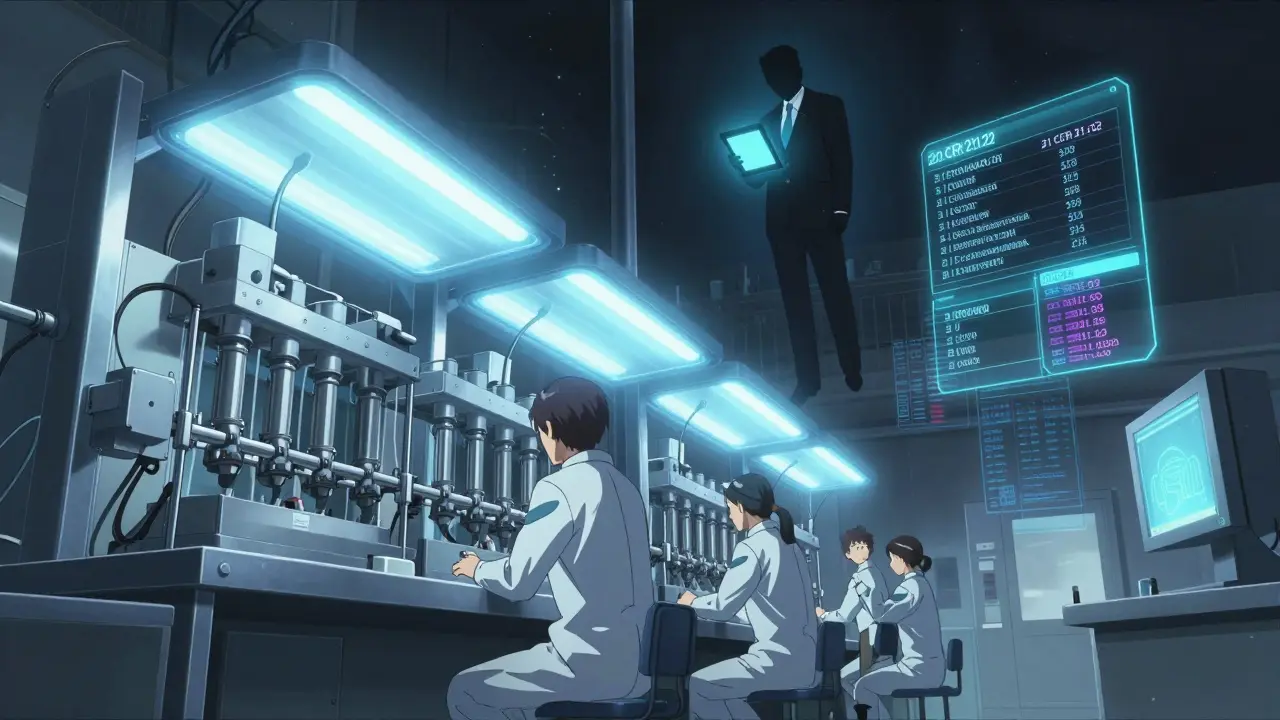
If you run a generic drug manufacturing plant, an FDA inspection isn’t something you wait for-it’s something you live with. Every day. The FDA doesn’t show up with a checklist and a smile. They come to verify that every pill, capsule, or injection you make meets the same strict standards as brand-name drugs. And they’re not guessing. They’re looking at records, watching procedures, and asking questions that cut straight to your quality culture.
The FDA uses a risk-based system to pick which facilities get inspected. It’s not random. A facility that’s had past issues, makes high-risk drugs, or gets a tip from a whistleblower is more likely to get visited. But even the cleanest plants aren’t immune. The FDA inspects over 3,500 generic drug sites globally each year. More than 90% come back with acceptable results. That sounds good-until you realize that 10% are the ones who get warning letters, delays, or worse.
The Six Systems the FDA Checks
Don’t think of an FDA inspection as a single event. Think of it as six separate audits rolled into one. The FDA evaluates your facility using a six-system model:
- Quality System-Always checked. Always. This is the backbone. Do you have a qualified quality unit that can stop production if something’s wrong? Are your SOPs followed? Is your quality unit independent from production?
- Facilities and Equipment-Are your cleanrooms properly maintained? Are your mixers, fillers, and packaging lines cleaned and validated? Is there evidence of wear, contamination, or poor maintenance?
- Materials-Where do your raw ingredients come from? Do you test every batch? Do you have approved suppliers? Are storage conditions documented?
- Production-Is your process validated? Can you prove you make the same product batch after batch? Are deviations logged and investigated?
- Packaging and Labeling-Is the right label on the right bottle? Are lot numbers and expiration dates accurate? Are you preventing mix-ups?
- Laboratory Control-Do your analytical methods work? Are your instruments calibrated? Are stability studies stored correctly? Is data being manipulated or deleted?
Here’s the catch: the FDA doesn’t just check one system. They start with Quality, then pick two or three others based on risk. But if they find a problem in one, they’ll dig into all of them. A broken thermometer in a storage room? That’s not just a Facilities issue-it’s a Quality System failure.
Pre-Approval Inspections: The Make-or-Break Moment
If you’re submitting a generic drug application to the FDA, you’re not done when you file the paperwork. You’ve just started the real test: the Pre-Approval Inspection (PAI). This isn’t a routine check. It’s a deep dive into whether your facility can actually make the drug you said you could.
The inspection team will ask three critical questions:
- Is your facility ready for commercial production?
- Is what you wrote in your application the same as what’s happening on the floor?
- Is your data complete and accurate?
They’ll compare your submitted methods to your actual lab procedures. If your application says you use HPLC to test purity, but your lab uses a cheaper, unvalidated method-boom. Your application gets delayed. They’ll check stability samples. If your records say samples are stored at 25°C/60% RH, but the fridge reads 30°C? That’s a red flag. They’ll walk through your validation reports. If your process validation was done on a small scale and never scaled up properly? You’re not approved.
PAIs are brutal because they’re the last gate before your drug hits U.S. shelves. One major finding and your approval is put on hold-sometimes for months. There’s no appeal. No second chance until you fix it and request a re-inspection.
What’s on Form FDA 483? And What Happens After?
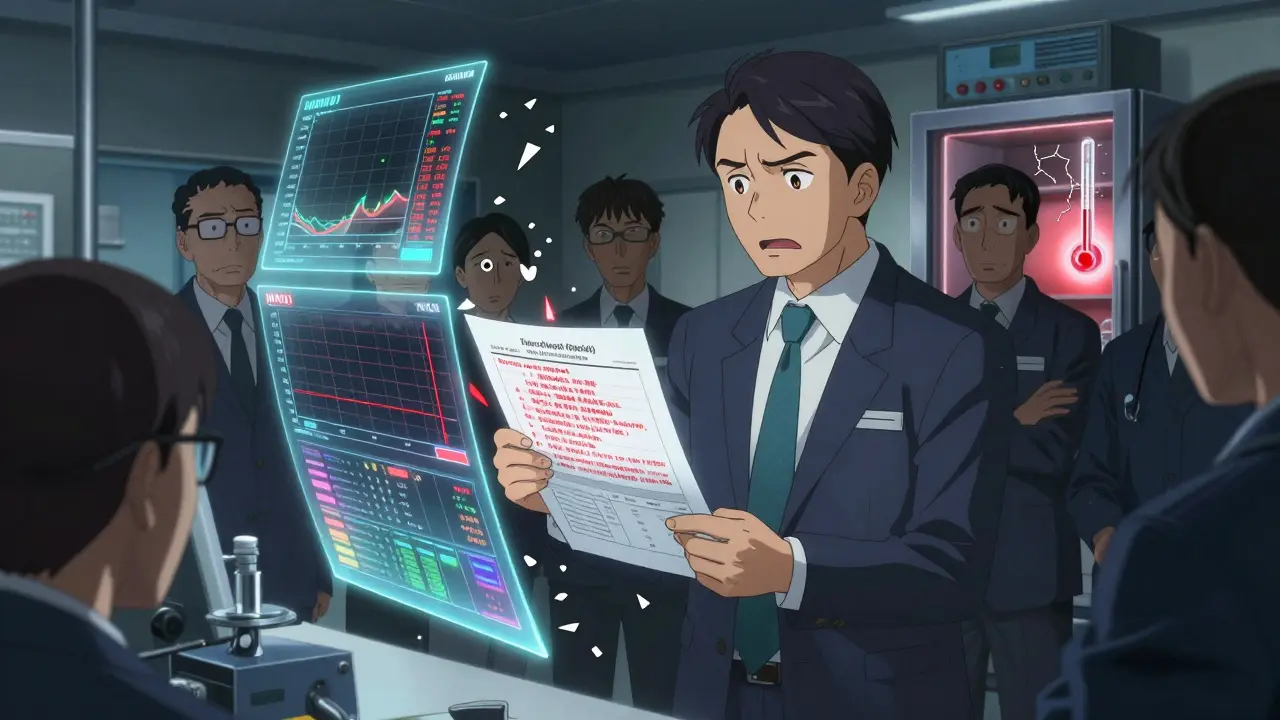
If the FDA finds problems, they don’t yell. They write. Form FDA 483 is their official list of observations. It’s not a warning letter. It’s a notice: “We saw this. Explain it.”
Each observation is tied to a specific regulation-like 21 CFR 211.22(a) for lack of a qualified quality unit, or 211.160(b) for missing equipment maintenance records. The list is ordered by severity. The first item is the biggest concern.
You have 15 business days to respond. This isn’t a formality. It’s your chance to fix the narrative. A good response includes:
- Specific actions taken to fix each issue
- Root cause analysis-why did this happen?
- Preventive steps to stop it from happening again
- Proof: updated SOPs, retraining logs, new validation data
After your response, the FDA reviews it. They check if your fix is real or just paper. They look at your history. Did you have the same issue last year? Did you ignore a previous 483? If they’re not satisfied, you get a Warning Letter. That’s a public document. It goes on the FDA website. Investors see it. Customers ask questions. And now, you’re on the FDA’s high-risk list for future inspections.
PreCheck: The New Way to Avoid Surprises
The FDA launched PreCheck in 2024-not to make inspections easier, but to make them less painful. It’s a voluntary program that lets you get feedback before you spend millions building a facility or launching a product.
Instead of waiting for an inspection to find flaws, you submit a Type V Drug Master File (DMF) early. It includes:
- Facility layout and design
- Quality system structure
- Equipment qualification plans
- Process validation strategy
The FDA reviews it and gives you feedback. Maybe they say your HVAC design won’t meet cleanroom standards. Maybe they spot a gap in your data integrity controls. You fix it before construction. Before equipment installation. Before you invest a dime more.
Companies using PreCheck report fewer 483s and faster approvals. It’s not a shortcut. It’s a safety net. And for manufacturers trying to bring generic drugs to the U.S. market-especially those onshoring production-it’s becoming the smartest move.
What You Need to Do Every Day
You can’t prepare for an FDA inspection. You can only live it. The best facilities don’t have a “inspection week.” They have a “quality every day” culture.
Here’s what that looks like:
- Document everything-If it wasn’t written down, it didn’t happen. Not just SOPs. Deviation reports, equipment logs, training records. All of it.
- Train constantly-New hires? Train them. Seasoned staff? Refresh them. FDA inspectors ask employees questions. If the person filling vials can’t explain why they’re using a specific filter, that’s a problem.
- Simulate inspections-Bring in a third party to do mock inspections. Don’t tell your team it’s a drill. See how they react. Where do they hesitate? What records are missing?
- Keep your facility clean-Not just physically. Organization matters. If the lab can’t find a validation report in 5 minutes, that’s a red flag.
- Protect your data-No shared passwords. No deleted files. No manual changes to electronic records. The FDA now has software tools to detect data manipulation. They’ll find it.
Inspections aren’t about perfection. They’re about control. Can you prove you’re in control? That’s the only question that matters.
Why Most Companies Fail (And How to Avoid It)
The biggest reason facilities fail inspections isn’t bad equipment or poor chemistry. It’s complacency.
Companies think: “We passed last year. We’re fine.” But regulations change. Staff turnover happens. Suppliers change. Processes drift. What was acceptable in 2023 might be a violation in 2026.
Another common mistake: treating the quality unit as a paperwork department. The quality unit must have authority. They must be able to say “no.” If production overrides them, you’re already in trouble.
And then there’s the data integrity issue. Too many labs still use paper logs. Too many operators “correct” values after the fact. Too many managers pressure staff to “make the numbers work.” The FDA is trained to spot these signs. They know the difference between a real deviation and a cover-up.
The fix? Build a culture where truth is rewarded, not punished. Where employees report problems without fear. Where leadership listens.
Final Reality Check
The FDA doesn’t want to shut you down. They want you to make safe, effective drugs. But they won’t tolerate shortcuts. If your facility is clean, your data is honest, and your people are trained-you’ll pass. Every time.
But if you’re waiting for the inspection notice to start preparing, you’re already behind. The best time to get ready was yesterday. The second best time is now.
Can the FDA inspect a generic drug facility without notice?
Yes. The FDA can conduct unannounced inspections, especially for facilities with a history of compliance issues, high-risk products, or those flagged by intelligence. Routine inspections are often scheduled, but the agency retains the right to show up without warning to ensure operations remain in a state of control at all times.
What happens if I ignore an FDA 483?
Ignoring an FDA 483 is a serious mistake. The FDA will interpret silence as non-cooperation or lack of commitment to quality. This often leads to a Warning Letter, which is publicly posted on the FDA website. It can trigger import alerts, delay product approvals, and damage your reputation with customers and investors. Follow-up inspections become more frequent and more aggressive.
How long does an FDA inspection usually last?
Most inspections last between 3 to 7 days, depending on facility size, complexity, and findings. A small, low-risk facility might be done in two days. A large, multi-product site with complex processes or prior issues can take two weeks or more. The FDA may extend the inspection if they uncover significant problems or need to review more records.
Are generic drug inspections different from brand-name inspections?
The inspection process is the same. Both follow the same CGMP rules under 21 CFR Part 211. The difference is in focus. For brand-name drugs, inspectors look more at clinical data and novel processes. For generics, they focus on process consistency, bioequivalence validation, and whether the product matches the application. The bar for quality is identical-just the emphasis shifts.
What’s the most common reason for a failed inspection?
The most common reason is failure in the Quality System, particularly lack of independent quality oversight. This includes situations where the quality unit doesn’t have authority to stop production, deviations aren’t properly investigated, or corrective actions aren’t documented. Data integrity issues-like backdated records or deleted electronic files-are also top causes of failure.
Can I appeal an FDA inspection outcome?
There’s no formal appeal process for inspection findings or 483s. However, you can respond in writing, request a meeting with FDA management, and submit corrective actions. If you receive a Warning Letter, you can request a Post-Warning Letter Meeting (PWLM), which the FDA finalized guidance for in June 2025. These meetings allow you to discuss your response and potentially avoid further enforcement actions.
14 Comments
February 2, 2026 Ellie Norris
I swear, the FDA walks in like they're gonna find a dragon in the autoclave. But honestly? If your quality unit can't say no to production, you're already toast. Just fix the culture before the checklist comes.
ps: i typoed 'autoclave' like 3 times. sorry.
February 3, 2026 Marc Durocher
lol i watched a guy try to explain 'data integrity' to an inspector while his laptop had 'admin123' as the password. the inspector didn't even blink. just wrote it down. like... dude. you really thought that'd fly?
February 3, 2026 larry keenan
The regulatory framework governing current good manufacturing practices (cGMP) under 21 CFR Part 211 mandates rigorous documentation, validation, and quality control protocols. Non-compliance in any of the six systems-quality, facilities, materials, production, packaging, or laboratory control-constitutes a material deviation that may result in regulatory action.
February 4, 2026 Nick Flake
bro. imagine your whole life’s work-your team’s sweat, your sleepless nights, your $$$-hinging on whether someone in a lab coat finds a typo in a logbook. 🤯
the FDA doesn’t care if you’re a hero. they care if your thermometer is 2 degrees off. it’s not about drugs. it’s about control. and we’re all just trying not to get crushed by the machine. 😔
February 6, 2026 Akhona Myeki
In South Africa we have no such luxury. We import generics from India and China because our own facilities cannot meet even 50% of these standards. The FDA is not the enemy. The enemy is the global inequality that lets rich nations dictate standards while poor nations struggle to afford a single calibrated balance.
February 7, 2026 Chinmoy Kumar
this is so true i just started at a small generic plant and everyone was like 'we passed last year so we good'... then the inspector asked a new hire what the SOP was for cleaning the tablet press and he said 'uhhh... we just wipe it?'
we had a whole training day after that. thanks fda for making us better even when we didn't want it
February 9, 2026 Brett MacDonald
so like... if you're not living the inspection, are you even manufacturing? 🤔 i mean, isn't this just capitalism pretending to be a religion?
February 9, 2026 Sandeep Kumar
why do americans think they invented quality control? we make 80% of the world's generics and we dont even have a single 483 in 5 years. your systems are broken not ours
February 10, 2026 Gary Mitts
precheck is genius. stop waiting for the axe. ask for feedback first. duh.
February 10, 2026 Dan Pearson
oh so now we're supposed to be friends with the FDA? they're not your therapist. they're the cop who shows up when you're robbing a pharmacy. if you didn't build a real quality system, you deserve every warning letter.
February 11, 2026 Eli Kiseop
i had a guy delete a batch record because it had a typo and then retype it with the same data... i swear to god he thought he was fixing it
February 12, 2026 Hannah Gliane
the fact that people still use paper logs in 2026 is criminal. if you're not on a LIMS system you're not just behind-you're a liability. 🤦♀️
February 13, 2026 Murarikar Satishwar
I’ve seen facilities in India and Bangladesh that outperform many U.S. plants in documentation and training. Quality isn’t about geography-it’s about leadership. If your CEO doesn’t sit in QA meetings, you’re already failing.
February 14, 2026 Bob Hynes
my buddy in Montreal built a precheck DMF last year. got feedback that his HVAC didn't meet ISO 14644-1. fixed it before pouring concrete. saved $2M. now he laughs at the guys who waited for the inspection to find out their filters were backwards. 🇨🇦
Write a comment