
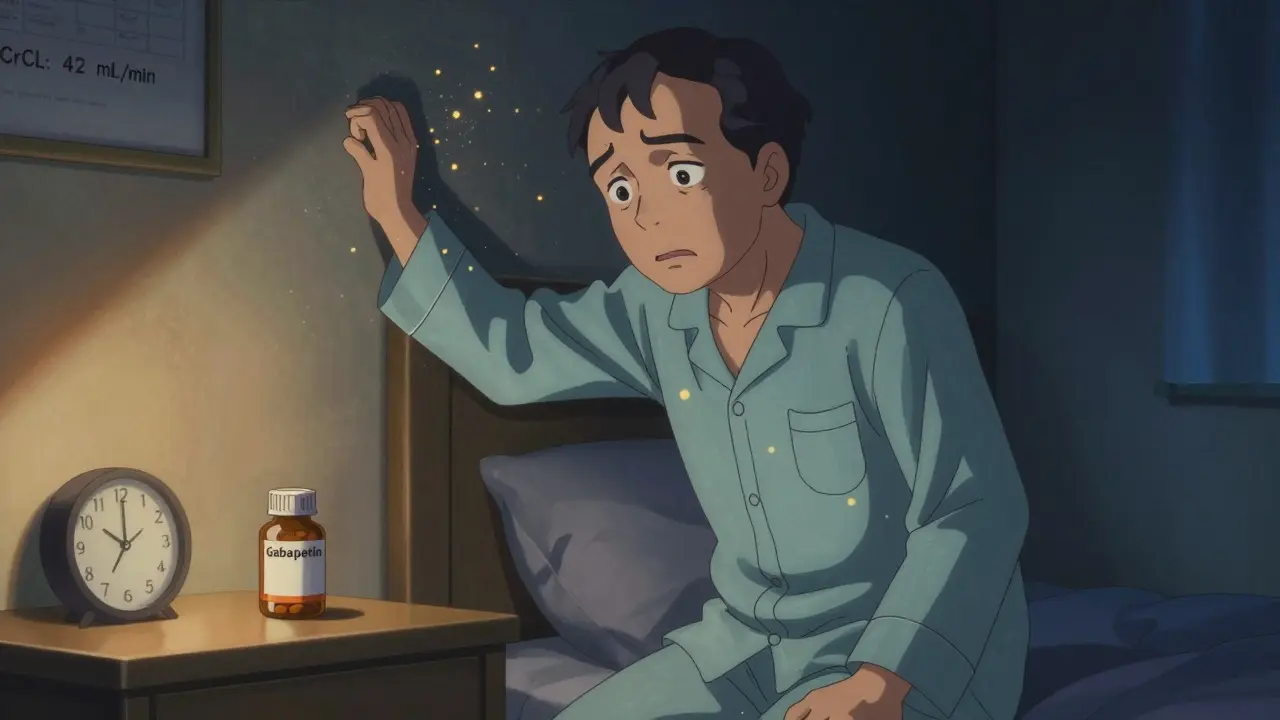
When doctors prescribe gabapentin or pregabalin for nerve pain, many patients expect relief - not dizziness that makes them stumble, or a growing urge to take more than prescribed. These drugs, called gabapentinoids, are widely used for conditions like diabetic neuropathy, post-shingles pain, and fibromyalgia. But safety issues are rising fast. Dizziness affects nearly one in three users. Misuse is climbing. And overdoses tied to these drugs have jumped nearly 500% in less than a decade. The truth? Most harm comes not from the drug itself, but from how it’s prescribed - and how little attention is paid to dosing, age, kidney function, and personal risk for substance misuse.
Start Low, Go Slow - That’s the Rule
Too many patients are started on high doses right away. That’s dangerous. Gabapentin doesn’t work better at higher doses - it just causes more side effects. The FDA and American Academy of Neurology agree: doses above 1,800 mg per day offer little extra pain relief but double the risk of dizziness and falls. For most adults, the sweet spot is between 900 mg and 1,800 mg daily, split into three doses.
Here’s how to do it right. Day one: 300 mg at night. Day two: 300 mg twice a day. Day three: 300 mg three times a day. Then, if pain isn’t controlled, bump up by 300 mg every 3 to 7 days. Never rush. A 2023 study in the Journal of Pain Medicine found that patients who increased their dose slowly (every 5-7 days) had 40% fewer dizziness-related dropouts than those who jumped quickly.
For pregabalin, start at 75 mg twice daily. After a week, increase to 150 mg twice daily. Only go to 300 mg twice daily if needed - and never exceed 600 mg daily. The European Pain Federation found that many older adults get full relief at just 900 mg of gabapentin or 150 mg of pregabalin daily. More isn’t better. It’s riskier.
Dizziness Isn’t Just an Annoyance - It’s a Fall Risk
Dizziness isn’t something you just ‘get used to.’ It’s a red flag. In clinical trials, 29% of people on pregabalin quit because they felt too unsteady. Real-world data from Reddit and Drugs.com show similar numbers: 62% of users who dropped their dose from 1,800 mg to 1,200 mg daily said their dizziness improved dramatically.
Older adults are at highest risk. People over 65 have a 40% chance of dizziness on gabapentinoids. Those over 80? Stick to 100 mg daily at first, and never go above 900 mg total. The American Geriatrics Society’s 2022 Beers Criteria says bluntly: avoid high doses in frail seniors. Why? Dizziness leads to falls. Falls lead to broken hips. Broken hips lead to death in up to 30% of elderly patients within a year.
Timing matters too. Taking gabapentin at night? That can cause morning dizziness. Try splitting doses evenly - morning, afternoon, evening - and avoid the last dose too close to bedtime. If dizziness hits within the first week, don’t ignore it. Talk to your doctor. Cut the dose. Slow down the increase. It’s not failure - it’s smart medicine.
Misuse Is Real - And It’s Getting Worse
People aren’t just taking gabapentin for pain. Some use it to get high. Others take it to calm down after opioids. A 2022 study in Addiction found that 15-22% of people with opioid use disorder deliberately stack gabapentin with heroin or fentanyl to boost the high or ease withdrawal. That’s not rare. It’s common.
The CDC reports a 497% rise in gabapentin-related overdose deaths between 2012 and 2020. Most of these cases involve multiple drugs - gabapentin plus opioids, benzodiazepines, or alcohol. The combination depresses breathing. That’s how people die.
And it’s not just street users. Prescription misuse is rising too. In 2021, over 15 million Americans misused prescription gabapentinoids. That’s more than the population of Canada. Many get multiple prescriptions from different doctors. That’s why 49 U.S. states now track gabapentin in their prescription drug monitoring programs (PDMPs). If your doctor doesn’t check your state’s PDMP before writing a script, ask why.

Renal Function Can Make or Break Safety
Gabapentinoids leave the body through the kidneys. If your kidneys aren’t working well, the drug builds up. That means even a normal dose can become toxic. Many doctors skip checking kidney function before prescribing. That’s a mistake.
Here’s what you need to know based on creatinine clearance (CrCl):
- CrCl 50-79 mL/min: Max 1,800 mg gabapentin daily
- CrCl 30-49 mL/min: Max 900 mg daily
- CrCl under 30 mL/min: Max 600 mg daily, or even 300 mg every other day
These aren’t guesses. They’re based on FDA and BPAC NZ guidelines. If you’re over 65, have diabetes, or high blood pressure - conditions that damage kidneys - get a simple blood test before starting. Repeat it every 3 months. If your CrCl drops, your dose must drop too.
How to Prevent Misuse - Before It Starts
Prevention starts before the first pill. The American Medical Association’s new ‘START’ protocol is simple:
- Screen for kidney function and substance use history - ask directly about past opioid use, alcohol misuse, or mental health conditions.
- Titrate slowly - no more than 300 mg every 3-7 days.
- Assess for dizziness every week - use a simple scale: ‘On a scale of 1 to 10, how dizzy do you feel?’
- Review every month: Is this still helping? Are side effects worse than the pain?
- Taper properly if stopping - never quit cold turkey. Drop by 300 mg every 3 days to avoid anxiety, insomnia, or seizures.
Also, limit initial prescriptions to 7 days for acute pain. That’s CDC guidance. It stops stockpiling. It stops sharing. It forces a check-in.
Urine drug testing isn’t about distrust - it’s about safety. If someone is taking gabapentin and testing positive for opioids they didn’t get prescribed, that’s a warning sign. It’s not punishment. It’s intervention.

What’s Changing in 2025?
The landscape is shifting. In 2023, the FDA updated gabapentin labels to highlight fall risks in the elderly and misuse potential. In 2024, the CDC proposed labeling doses over 1,800 mg/day as ‘high-risk’ - meaning doctors need extra documentation to justify them.
Pfizer is developing an extended-release version called gabapentin XR, designed to prevent crushing or injecting. It’s under FDA review. If approved, it could reduce misuse by making it harder to extract the drug for abuse.
Meanwhile, prescriptions are already falling. Between 2021 and 2022, gabapentinoid use dropped 8.7% - the first decline in 20 years. Why? More doctors are listening. More patients are asking questions. More states are monitoring.
But the CDC warns: if we don’t keep pushing for safer prescribing, emergency visits tied to gabapentinoids will rise 12.3% each year through 2025.
Bottom Line: Less Is More
Gabapentinoids can help. But they’re not harmless. They’re not magic. They’re tools - and like any tool, they can hurt if used wrong.
If you’re on gabapentin or pregabalin:
- Ask your doctor: ‘Is my dose above 1,800 mg? Why?’
- Track your dizziness. If it’s worse than the pain, speak up.
- Get your kidney function checked - even if you feel fine.
- Never take more than prescribed. Never combine with alcohol or opioids.
- If you’re stopping, don’t quit cold turkey. Taper slowly.
If you’re a prescriber:
- Start low. Go slow. Reassess monthly.
- Check PDMPs. Test urine. Screen for addiction.
- Remember: 900 mg can be enough. You don’t need to push to the max.
The goal isn’t to avoid these drugs. It’s to use them wisely. Pain matters. Safety matters more.
Can gabapentin cause falls in older adults?
Yes. Dizziness from gabapentin affects over 40% of adults aged 65 and older, and up to 60% of those over 80. This significantly increases fall risk, which can lead to fractures, hospitalization, or death. The American Geriatrics Society recommends starting at 100 mg daily and never exceeding 900 mg daily for frail elderly patients.
Is 1,200 mg of gabapentin a high dose?
No, 1,200 mg daily is a moderate, commonly prescribed dose for neuropathic pain. Most patients achieve good pain control between 900 mg and 1,800 mg daily. Doses above 1,800 mg offer little extra benefit but sharply increase side effects like dizziness and sedation.
Can you take gabapentin with alcohol?
No. Combining gabapentin with alcohol greatly increases dizziness, drowsiness, and risk of respiratory depression. It also raises the chance of overdose, especially when opioids are involved. The FDA and CDC both warn against mixing gabapentin with alcohol or other CNS depressants.
How long does it take for gabapentin to cause dizziness?
Dizziness usually appears within the first week, especially during dose increases. Studies show 68% of dizziness cases happen during the initial titration phase. Slowing the dose increase to every 5-7 days reduces this risk by nearly half.
Why is gabapentin being controlled in so many states?
Because of rising misuse and overdose deaths. Between 2012 and 2020, gabapentin-related overdose deaths increased by 497%. As of 2023, 49 U.S. states classify gabapentin as a controlled substance or include it in prescription monitoring programs to track overprescribing and doctor shopping.
What should I do if I want to stop taking gabapentin?
Never stop suddenly. Abrupt discontinuation can cause anxiety, insomnia, nausea, and even seizures. Taper slowly: reduce by 300 mg every 3 days. For example, if you’re taking 1,800 mg daily, drop to 1,500 mg for 3 days, then 1,200 mg, and so on. Always work with your doctor.
Next Steps for Patients and Providers
If you’re a patient: Write down your current dose. Ask your doctor if it’s above 1,800 mg. Ask if your kidney function has been checked in the last 3 months. Ask if you’re at risk for misuse. Don’t be shy - these are safety questions, not signs of distrust.
If you’re a provider: Use the START protocol. Check PDMPs before prescribing. Order creatinine clearance tests. Set a monthly review. Document why you’re prescribing above 900 mg. And if a patient says they’re taking more than prescribed - listen. That’s not defiance. That’s a cry for help.
The era of ‘prescribe and forget’ is over. Gabapentinoids are powerful - but they’re not safe by default. Their safety depends on how we use them. And right now, the data says: less is more. Slower is safer. Monitoring saves lives.
12 Comments
January 1, 2026 Andy Heinlein
I was on 1800mg for neuropathy and felt like i was walking through peanut butter. Cut it to 900mg and now i can actually walk to the fridge without holding onto walls. Less is more, fr fr.
January 3, 2026 Ann Romine
My mom was prescribed this after her shingles and ended up in the ER after a fall. No one checked her kidney function. She's 78. Just... why don't they test first? It's not that hard.
January 4, 2026 Todd Nickel
The pharmacokinetics of gabapentin are entirely renal-excreted and non-saturable, meaning plasma concentration scales linearly with dose and renal clearance. When CrCl drops below 50 mL/min, the half-life extends from 5-7 hours to over 15 hours, leading to dangerous accumulation. Most clinicians don't consider this because they're not trained in clinical pharmacology. The FDA label says this outright, yet 68% of prescriptions in Medicare Part D are issued without a recent eGFR. This isn't negligence-it's systemic ignorance.
January 5, 2026 Austin Mac-Anabraba
Let’s be real: this whole thing is a pharmaceutical industry scam. They turned a cheap antiseizure drug into a pain miracle, then watched as doctors prescribed it like candy. Now they’re pretending to care about safety? Wake up. The same companies that pushed opioids are now pushing gabapentinoids under a new name. The CDC numbers? Manufactured fear. The real problem? Doctors are lazy and patients are dumb.
January 5, 2026 Phoebe McKenzie
I CAN'T BELIEVE PEOPLE ARE STILL TAKING THIS STUFF. MY COUSIN DIED FROM A GABAPENTIN-OPIOID COMBO AND NOW YOU'RE JUST TALKING ABOUT 'DOSES' LIKE IT'S A COFFEE ORDER?! THIS ISN'T A HARM REDUCTION TALK SHOW - THIS IS A MURDER BY PRESCRIPTION. STOP GIVING PEOPLE POISON AND CALL IT MEDICINE.
January 7, 2026 gerard najera
Start low. Go slow. Check kidneys. That’s it.
January 8, 2026 Stephen Gikuma
They’re putting this in the PDMPs because the government wants to control us. Next thing you know, they’ll make you get a permit to take Tylenol. This isn’t about safety-it’s about power. Who decided 1,800mg is the limit? Some bureaucrat in D.C. who’s never met a patient with real pain.
January 10, 2026 Bobby Collins
i think gabapentin is just part of the deep state’s plan to make people zombified so they don’t question anything. dizziness? that’s the government slowing you down so you don’t notice the surveillance. also i heard they put fluoride in it too. 🤔
January 11, 2026 Layla Anna
this made me cry a little 😭 my grandma took this and fell and broke her hip and no one ever told us the risk... thank you for saying this out loud. i'm going to ask my dr about her kidney numbers tomorrow 💙
January 12, 2026 Heather Josey
As a primary care provider, I’ve implemented the START protocol in my practice since January. We now check PDMPs, order creatinine clearance before prescribing, and limit initial scripts to 7 days. Patient satisfaction has improved, ER visits for dizziness have dropped by 40%, and we’ve caught three cases of doctor shopping. This isn’t bureaucracy-it’s responsible medicine. Thank you for the clear guidelines.
January 13, 2026 Dusty Weeks
i got this for my back and now i cant sleep or wake up without feeling like a zombie... but i also feel kinda zen?? idk man 🤷♂️ maybe its the vibes
January 14, 2026 Sally Denham-Vaughan
I’m so glad someone finally said this. I’ve been telling my friends for years: if you’re dizzy, lower the dose. If you’re taking it with alcohol or opioids, stop. If your doctor won’t check your kidneys, find a new one. This isn’t just advice-it’s survival. You deserve to feel better, not like you’re falling through the floor.
Write a comment