
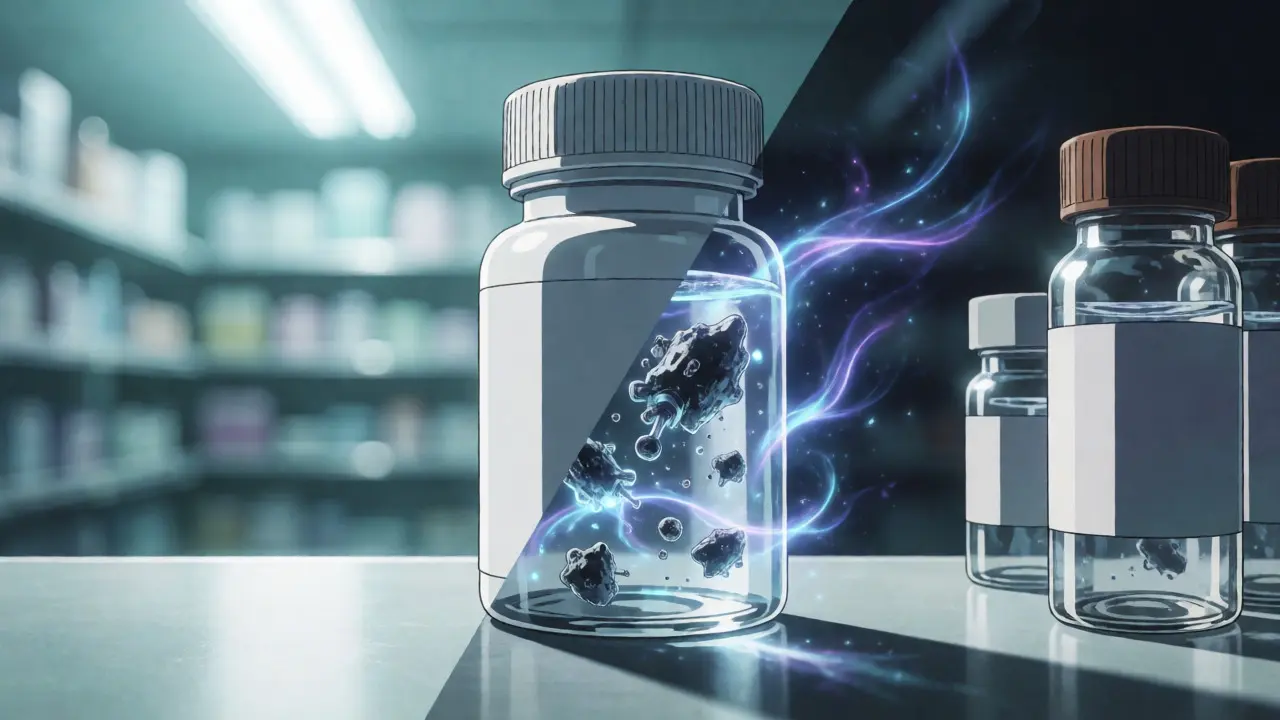
Imagine picking up your monthly prescription at the pharmacy counter. It looks identical to the one you’ve taken for years. But hidden in that bottle could be a batch contaminated with microscopic particles or labeled with the wrong dosage. This isn't rare paranoia; it's a statistical reality. In 2024 alone, the FDA documented 347 drug recalls, a number that has climbed steadily as our global supply chain gets more complex. Most people think recalls happen because a drug is "bad" from the start. The truth is messier. They happen because something went wrong in the intricate dance of chemistry, regulation, and human error.
The Anatomy of a Recall Trigger
Why does a specific batch of ibuprofen suddenly get pulled off shelves? It usually starts with a deviation from strict manufacturing rules known as Current Good Manufacturing Practice (CGMP). These aren't just suggestions; they are precise technical specifications. For instance, sterile injectable drugs must have endotoxin levels below 0.25 EU/mL. If a lab test reveals a spike above that threshold, the clock starts ticking.
Sterility lapses are the biggest culprit, accounting for 37% of all FDA recalls between 2012 and 2023. Think about an IV bag meant for a hospital patient. If air quality testing in the filling room fails to catch contaminants at the 0.5-micron level, bacteria can slip into the solution. Unlike a pill, where you might survive a minor contamination, a non-sterile injection can lead to sepsis. That’s why sterility issues often trigger immediate Class I recalls, which signal a reasonable probability of serious health consequences or death.
Contamination isn't the only trigger. Particulate matter-tiny bits of glass, rubber, or metal floating in liquid medications-causes about 12% of recalls. Labeling errors follow closely at 9%. A classic example occurred in July 2024 when ICU Medical recalled potassium chloride injections because 20 mEq doses were mislabeled as 10 mEq. For a heart patient, taking double the intended dose can stop their heart. These aren't abstract risks; they are measurable deviations from established limits.
Decoding the FDA Classification System
Not every recall means you should throw away your medicine cabinet. The FDA classifies recalls into three tiers based on risk severity. Understanding these categories helps you gauge how urgent a situation really is.
| Class | Risk Definition | Example Scenario | Action Required |
|---|---|---|---|
| Class I | Serious adverse health consequences or death | Mislabeled potent injectables; missing active ingredient | Stop use immediately; contact doctor |
| Class II | Temporary or medically reversible effects | Minor potency variance; incorrect tablet color | Consult pharmacist; monitor symptoms |
| Class III | Unlikely to cause health consequences | Label typo; packaging defect not affecting drug | Continue use unless advised otherwise |
In 2024, 87% of recalls fell into Class I or Class II. This high percentage suggests that most actions are precautionary but significant. Class II recalls, making up 62% of the total, often involve temporary side effects like stomach upset if the drug potency was slightly off. Class III recalls, about 13%, are mostly regulatory housekeeping-like a barcode that won’t scan properly at checkout.
The Global Supply Chain Blind Spot
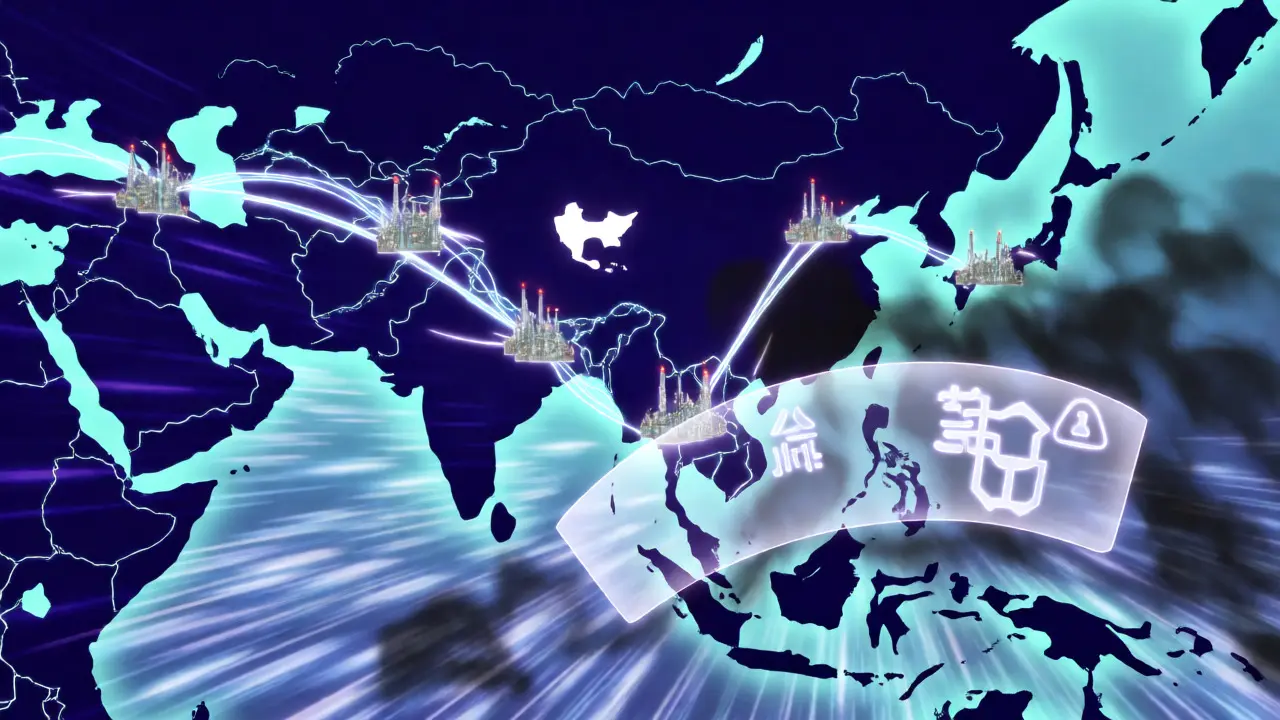
Here is the uncomfortable truth: the United States relies heavily on foreign manufacturing. Approximately 80% of active pharmaceutical ingredients (APIs) used in U.S. generics come from facilities in India and China. While this keeps costs down, it creates oversight challenges. Domestic facilities receive FDA inspections every 1.8 years on average. Foreign facilities? They wait about 4.6 years between visits.
This gap was starkly exposed by the Glenmark Pharmaceuticals case in April 2025. The company recalled nearly 40 generic medications due to CGMP violations at its Indian facility. Journalists uncovered problems that had lingered because the FDA hadn't inspected the site in over four years. Dr. Peter Lurie, former FDA associate commissioner, called this a "dangerous blind spot." When a factory in Hyderabad cuts corners on water purification, it takes time for those failures to ripple across the ocean to a pharmacy in Bristol or Boston.
The voluntary nature of the U.S. system adds another layer of complexity. About 98% of recalls are initiated by manufacturers themselves, not mandated by the agency. While this fosters collaboration, it also allows for delays. In the EU, mandatory reporting rules mean regulators act faster. Data shows the U.S. averages 42 days from detecting a quality issue to public notification, compared to just 18 days in Europe.
How Manufacturers and Pharmacies React
When a trigger occurs, the response is a coordinated scramble. It doesn't start with a press release; it starts with data. Manufacturers use tools like the Naranjo probability assessment scale to determine if adverse events are linked to the product. If the link is strong, they notify the FDA.
For healthcare providers, the job is logistical. Pharmacy Operations Directors must instantly add affected lot numbers to "do not purchase" lists in procurement systems. According to ASHP surveys, 76% of large hospitals use automated systems for this. Why? Because manual checks fail. Identifying affected lots across complex supply chains is difficult; 82% of hospitals report struggles here. One bad batch can be distributed to thousands of pharmacies before the first complaint comes in.
Patient communication is the hardest part. Only 12% of patients report receiving direct notices from manufacturers. Most find out through news reports or their pharmacist. This leads to confusion. A 2025 Consumer Reports survey found that 89% of patients found recall notices hard to understand. Consequently, 78% of adults would stop taking a recalled medication immediately, even if the FDA says it’s safe to consult a doctor first. Abruptly stopping blood pressure meds or antidepressants can be more dangerous than the minor defect itself.
Future Trends: Tech and Tightening Rules
The system is evolving to close these gaps. The FDA’s Enhanced Oversight Initiative, announced in April 2025, aims to increase inspections of high-risk foreign facilities from once every 4.6 years to annually. This targets the 12% of manufacturers responsible for two-thirds of recalls.
Technology is also playing a bigger role. Blockchain adoption in pharmaceutical supply chains jumped from 3% in 2023 to 18% in 2025. This digital ledger allows real-time tracking of every box from factory to shelf, potentially cutting recall identification time from days to hours. Additionally, the FDA is investing $47 million in AI-powered predictive analytics to spot quality trends before they become full-blown recalls.
However, funding remains a hurdle. The Government Accountability Office estimates a $780 million annual gap needed for adequate foreign inspection coverage. Until that money appears, consumers remain reliant on manufacturer integrity and post-market surveillance.
What is the difference between a Class I and Class II recall?
A Class I recall indicates a reasonable probability that using the product will cause serious adverse health consequences or death. A Class II recall involves temporary or medically reversible adverse health consequences, with a lower probability of serious harm. Class I requires immediate cessation of use, while Class II often allows for consultation with a healthcare provider.
Why are so many generic drugs manufactured overseas?
Cost efficiency drives this trend. Approximately 80% of active pharmaceutical ingredients (APIs) for the U.S. market are produced in India and China, where labor and operational costs are significantly lower. However, this geographic distance creates longer detection times for quality issues due to less frequent FDA inspections of foreign facilities.
Do I need to return my medication if it is recalled?
It depends on the recall class. For Class I recalls, you should stop taking the medication and contact your doctor or pharmacist immediately. For Class II and III recalls, you may continue taking it until you speak with a healthcare professional. Always check the specific guidance provided in the recall notice, as returning medication policies vary by pharmacy.
How do pharmacists know which batches to pull?
Pharmacists rely on specific lot numbers and expiration dates listed in the FDA Enforcement Report. Large hospitals and chains use automated inventory systems that flag these specific identifiers. Smaller pharmacies may manually cross-reference their stock against the published recall list, which can be time-consuming and prone to human error.
Is a recall the same as a safety alert?
No. A recall is the removal of a product from the market due to a defect or violation. A safety alert (or warning) informs healthcare professionals and patients about new information regarding risks or benefits of a drug that is still on the market. A recall removes the product; an alert changes how it is used or monitored.
12 Comments
September 1, 2026 Aaron Gragg
It is imperative to contextualize the statistical realities presented in this analysis within the broader framework of global pharmaceutical supply chain logistics. The reliance on foreign active pharmaceutical ingredients, particularly from facilities in India and China, introduces a latency period in quality assurance that domestic oversight mechanisms struggle to mitigate effectively. When we examine the disparity in inspection frequencies-1.8 years for domestic versus 4.6 years for foreign sites-we observe a structural vulnerability that is not merely bureaucratic but fundamentally systemic. This gap allows minor deviations in Current Good Manufacturing Practice standards to escalate into significant public health concerns before regulatory bodies can intervene. Furthermore, the voluntary nature of the majority of recalls suggests that manufacturer integrity is often the primary safeguard, which raises ethical questions about profit motives versus patient safety in an increasingly consolidated market.
The introduction of blockchain technology and AI-driven predictive analytics represents a paradigm shift in how we might address these historical inefficiencies. By enabling real-time tracking and earlier detection of quality trends, these tools could potentially reduce the time between defect identification and public notification significantly. However, the financial hurdles associated with implementing such advanced infrastructure cannot be understated. Without adequate funding to support enhanced foreign inspection coverage, the system remains reliant on post-market surveillance rather than proactive prevention. It is crucial for stakeholders to recognize that regulatory compliance is not just a legal obligation but a moral imperative that demands continuous investment and innovation.
September 2, 2026 Rose Boerner
I am absolutely appalled by the sheer negligence exposed here. How dare manufacturers treat our lives as acceptable margins of error? It is a moral failing of the highest order that we must rely on foreign entities with lax oversight to keep us alive. The fact that patients are confused and scared while corporations protect their bottom lines is nothing short of criminal indifference. We deserve better than being guinea pigs in a cost-cutting experiment. This isn't just business; it's a betrayal of the social contract between medicine and society. I refuse to accept that 'cost efficiency' is worth risking sepsis or heart failure due to mislabeled potassium. Shame on every executive who signed off on those delayed inspections.
September 3, 2026 Stuart Lorne
look at the data honestly people stop crying about feelings and look at the numbers. 37% sterility issues is huge but its also inevitable when you outsource everything to the cheapest bidder. you cant have cheap drugs and perfect oversight at the same time. its basic economics. if you want US level checks you pay US prices. simple as that. nobody wants to admit that though because they like saving $10 a month. its all just noise until someone actually dies from a bad batch then everyone acts surprised. predictable.
September 4, 2026 Sarah Leitschuh
I appreciate the nuanced breakdown of the recall classes. It helps demystify why some alerts cause panic while others don't. For those feeling anxious about their meds, remember that Class III issues are mostly packaging typos and rarely affect the drug's efficacy. Staying informed without letting fear dictate your treatment plan is key. If you're unsure, a quick chat with your pharmacist can provide peace of mind without needing to rush to the ER. Let's try to stay calm and proactive rather than reactive.
September 4, 2026 Adam Cox
So let me get this straight. We are trusting companies that haven't been inspected in 4+ years to keep us safe? And when something goes wrong, *we* have to figure out if we should stop taking our life-saving meds? That's insane. The burden is entirely on the patient to interpret FDA codes and lot numbers. Most people don't even know what a CGMP violation is. They just see "RECALL" and panic. Or worse, they ignore it because they don't understand the risk. This system is broken by design to protect corporate liability, not patient outcomes. Fix the inspection gaps first. Stop making consumers do the work of regulators.
September 5, 2026 Akeem Feiton
AMERICA FIRST!! Why are we buying garbage from India and China?? We used to make everything here. Now we import poison and hope for the best. These foreign factories cut corners because they dont care about American lives. Bring manufacturing back home where we can inspect them properly. Stop outsourcing our health to countries that laugh at our regulations. Its pathetic that we need AI to track boxes when we should just make them ourselves. Strong borders strong drugs. Wake up sheeple.
September 6, 2026 Kimberly Thomas
Stop romanticizing the "complex dance" of chemistry. It’s a failure of management. Period. If a factory cuts corners on water purification, that’s not an accident, that’s a choice. Blaming the supply chain is a cop-out for executives who prioritize quarterly earnings over sterile environments. The 42-day delay in notification compared to Europe’s 18 days is proof of institutional incompetence, not complexity. We need accountability, not more tech buzzwords.
September 7, 2026 Marshall Stephens
Hey, no worries! It sounds stressful, but most generic drugs go through rigorous testing before they hit the shelf. The recall stats include a lot of minor issues that don't impact health. Just keep talking to your doctor and don't stress too much. You've got this!
September 7, 2026 Curtis Surpless
actually the 42 day lag is optimal for minimizing stock disruption... premature alerts cause hoarding which creates artificial shortages... its a feature not a bug...
September 9, 2026 Harry Falk
Short and sweet: Check your lot number. If it matches a Class I recall, call your doc. Otherwise, take a breath.
September 10, 2026 Marc-David Mayer
Great read! 📚 It’s scary but knowing the difference between Class I and II helps so much less anxiety. 💊 Always check with your pharmacist-they are lifesavers! 🙌 Stay safe everyone! ❤️
September 12, 2026 Kristina Rhodes
Perhaps the true lesson here is one of humility. We assume control over our health, yet we are tethered to systems far beyond our sight. The chaos of the supply chain mirrors the chaos of life itself-unpredictable, vast, and occasionally flawed. Instead of anger, maybe we find empowerment in knowledge. Understanding the mechanics of a recall doesn't just inform our choices; it connects us to the collective human effort behind every pill. Let us view these alerts not as failures, but as signals of a living, breathing system trying to correct itself. 🌿✨
Write a comment