

Have you ever hesitated to take a generic pill because it looked different from the brand-name version? You are not alone. For decades, patients have whispered doubts about generic medications, fearing they are weaker, less safe, or somehow "inferior." These fears aren't just idle chatter; they can lead to skipped doses, reduced treatment effectiveness, and higher healthcare costs. In the world of patient education, which is the process of providing information and skills to individuals to help them make informed health decisions, separating fact from fiction is critical.
The truth is that generic drugs are rigorously tested to ensure they perform exactly like their brand-name counterparts. Yet, myths persist. This article cuts through the noise, debunking the most common misconceptions about generics with clear, evidence-based explanations. By understanding what generics really are, you can feel confident in your medical choices and trust the care you receive.
The Myth of "Lower Quality" Ingredients
One of the biggest barriers to generic acceptance is the belief that these drugs contain lower-quality ingredients. Many patients assume that because generics cost less, manufacturers must be cutting corners on purity or potency. This idea is completely false.
Generic drugs are medications developed after the patent on a brand-name drug has expired, containing the same active ingredient as the original product. The U.S. Food and Drug Administration (FDA) requires that every generic drug contains the exact same active ingredient as the brand-name drug, in the same strength and dosage form. Whether it's a tablet, capsule, or liquid, the core medicine is identical.
What might differ are the inactive ingredients-things like fillers, binders, or dyes that give the pill its shape or color. These do not affect how the drug works in your body. Think of it like two brands of aspirin: one might be white and round, the other blue and oval, but if they both contain 325mg of acetylsalicylic acid, they will relieve your headache in the same way. The FDA mandates that generics meet the same strict standards for quality, performance, and manufacturing processes as brand-name drugs. If a generic fails to meet these standards, it never reaches the pharmacy shelf.
- Active Ingredient: Must be chemically identical to the brand-name drug.
- Inactive Ingredients: May vary in type or amount but cannot alter therapeutic effect.
- Manufacturing Standards: Subject to the same Good Manufacturing Practices (GMP) as brand-name producers.
The "Bioequivalence" Confusion
You may have heard the term "bioequivalent" and assumed it means "similar enough" rather than "exactly the same." This misunderstanding fuels skepticism. Bioequivalence is not a loose standard; it is a precise scientific measure.
To earn approval, a generic drug must demonstrate bioequivalence to the reference listed drug (the brand-name version). This means the generic must deliver the same amount of active ingredient into your bloodstream at the same rate. The FDA sets narrow limits for this comparison: the average difference in absorption between the generic and the brand-name drug must be no more than 5%.
In practical terms, this tiny margin ensures that the clinical outcome-the effect the drug has on your condition-is virtually indistinguishable. Studies consistently show that switching between a brand-name drug and its generic equivalent does not change patient outcomes for the vast majority of medications. For example, a study published in the *New England Journal of Medicine* found no significant difference in blood pressure control when patients switched from brand-name antihypertensives to generics.
| Feature | Brand-Name Drug | Generic Drug |
|---|---|---|
| Active Ingredient | Original compound | Identical compound |
| Absorption Rate | Baseline standard | Within 5% of baseline |
| Safety Profile | Tested via clinical trials | Verified via bioequivalence studies |
| Cost | Higher (covers R&D) | Lower (no R&D costs) |

Why Generics Cost Less: It’s Not About Cutting Corners
If generics are just as effective, why are they so much cheaper? Patients often suspect hidden risks when they see a price tag that is 80-85% lower than the brand-name option. The reality is far simpler: economics, not quality.
Brand-name drug companies invest billions of dollars in research and development (R&D), clinical trials, and marketing before bringing a new drug to market. They set high prices to recoup these investments during the period when they hold the patent exclusivity. Once the patent expires, generic manufacturers can step in. They do not need to repeat the expensive early-stage research or conduct large-scale clinical trials to prove efficacy. Instead, they only need to prove bioequivalence.
This competitive landscape drives prices down. According to the Congressional Budget Office, generic competition saves the U.S. healthcare system over $100 billion annually. These savings allow more people to afford necessary treatments, improving overall public health. When you choose a generic, you are benefiting from a mature market where multiple manufacturers compete to provide the same medicine at the lowest possible cost.
The Narrow Therapeutic Index Exception
While most generics are interchangeable with their brand-name counterparts, there is a small group of drugs known as Narrow Therapeutic Index (NTI) drugs. These medications require extremely precise dosing because even slight changes in blood concentration can lead to serious side effects or loss of efficacy. Examples include warfarin (a blood thinner), levothyroxine (for thyroid conditions), and certain anti-seizure medications.
For NTI drugs, the FDA imposes stricter bioequivalence standards. While generics are still approved, some doctors prefer patients stay on a single manufacturer’s product-whether brand or generic-to avoid any potential variability. This is not because generics are unsafe, but because consistency is paramount for these specific conditions.
If you are taking an NTI drug, talk to your healthcare provider. They may recommend sticking with a specific brand or generic supplier to maintain stability. However, for the vast majority of medications-from antibiotics to cholesterol-lowering statins-switching between brands and generics is safe and effective.
Addressing Concerns About Allergies and Side Effects
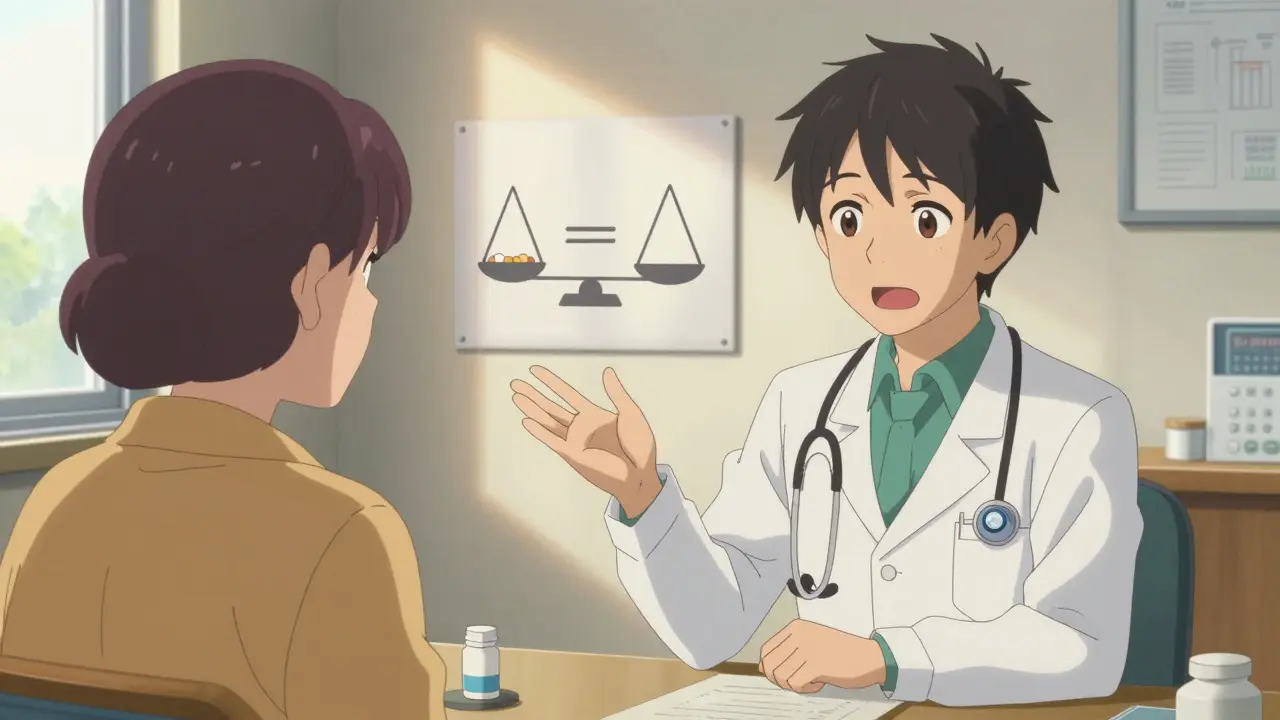
Some patients report experiencing new side effects or allergic reactions after switching to a generic. This leads to the myth that generics are "harder" on the body. In most cases, this reaction is linked to the inactive ingredients, not the active drug.
As mentioned earlier, inactive ingredients like dyes or fillers can vary between manufacturers. If you have a known allergy to a specific dye or filler, it is important to inform your pharmacist. They can check the generic’s formulation and switch you to a different manufacturer’s version if needed. This is a rare occurrence, but it highlights the importance of open communication with your healthcare team.
It is also worth noting that the "nocebo effect" plays a role here. When patients expect a generic to work poorly, they are more likely to perceive negative symptoms. A study in *JAMA Internal Medicine* found that patients who were unaware they had been switched to a generic reported similar satisfaction levels as those who remained on the brand-name drug. Awareness matters.
How Healthcare Providers Can Improve Patient Trust
Debunking myths requires more than just stating facts. It involves addressing the emotional and psychological barriers patients face. Healthcare providers play a crucial role in building trust around generic medications.
Using the "truth sandwich" technique recommended by the American Association for the Advancement of Science (AAAS), providers should start with the positive truth: "This generic medication is equally effective and safe." Then, briefly address the concern: "You might worry about the lower cost, but that’s because we skip redundant testing, not quality checks." Finally, restate the truth: "Your health outcomes will be the same, and you’ll save money."
Educational materials should be clear, concise, and visually engaging. Infographics comparing brand and generic attributes can help patients visualize the similarities. Additionally, pharmacists should proactively discuss generic options during dispensing, explaining the benefits and answering questions immediately.
Are generic drugs always safe?
Yes, generic drugs are required by the FDA to be safe, effective, and bioequivalent to their brand-name counterparts. They undergo rigorous testing to ensure they meet the same high standards for quality and performance.
Can I switch between brand-name and generic drugs freely?
For most medications, yes. However, for Narrow Therapeutic Index (NTI) drugs, it is best to consult your doctor before switching to ensure consistent dosing and stability.
Why do generic pills look different?
Generic pills may differ in color, shape, or size due to variations in inactive ingredients like dyes or fillers. These differences do not affect the drug’s effectiveness or safety.
Do generic drugs expire faster?
No, generic drugs have the same expiration dates and storage requirements as brand-name drugs. Their stability and longevity are verified during the approval process.
Is it legal for pharmacies to substitute generics without asking?
In most states, automatic substitution is allowed unless the prescriber specifies "Dispense as Written" on the prescription. Patients can always request the brand-name version if preferred, though insurance coverage may vary.