

Pregnancy Medication Risk & Trimester Guide
Check Your Stage
Select your current stage of pregnancy to see specific risks.
First Trimester
Critical window for structural formation (Weeks 1-12).
Key Risks & Considerations:
💡 Expert Advice:
Specific advice will appear here based on the selected week.
Enter your pregnancy week to view potential risks and guidelines.
Imagine finding out you are pregnant after taking a prescription for weeks. The immediate question that strikes most people is simple but terrifying: did I hurt my baby? This fear is real, especially given the history of teratogenic medications, which are pharmaceutical substances that can cause malformations or disruptions in fetal development when administered during pregnancy. While the headline-grabbing stories of drug-induced birth defects dominate social media feeds, the reality is far more nuanced. Understanding which drugs pose risks, when those risks occur, and how to balance maternal health against fetal safety is crucial for any expectant parent.
The History of Teratogens and Why We Care
To understand why we are so cautious about medications today, we have to look back at the late 1950s and early 1960s. During this period, the sedative thalidomide was widely prescribed to pregnant women for morning sickness. It resulted in severe limb deformities in approximately 10,000 infants worldwide before being withdrawn from the market in 1961. This tragedy fundamentally changed medical regulation. Today, organizations like the American College of Obstetricians and Gynecologists (ACOG) and the U.S. Food and Drug Administration (FDA) guide our understanding of medication safety. According to the Merck Manual (2023), only about 2-3% of all birth defects are attributable to medication exposure. That means the vast majority of babies born with defects were not affected by drugs, but the stakes remain high enough to warrant careful attention.
How Timing Changes Everything
Not all pregnancies are the same, and the timing of medication use matters immensely. The first trimester (weeks 1-12) is the critical window for structural formation. Specifically, days 15-60 post-conception represent the highest risk period for major structural birth defects because organ systems are actively forming. If a teratogen hits during this time, it can disrupt the blueprint of development.
In contrast, the second trimester (weeks 13-26) sees a shift toward functional defects or minor structural abnormalities. By the third trimester (weeks 27-birth), medications are less likely to cause physical malformations but can still affect organ function, neurological development, or cause withdrawal symptoms after birth. The Mayo Clinic (2023) notes that medications impact pregnancy through five primary mechanisms: no effect (which applies to 60-70% of drugs), direct damage, indirect impacts like reduced blood pressure, altered placental function, or uterine contractions leading to preterm birth.
Specific Medications with Known Risks
While many drugs are safe, some carry well-documented teratogenic effects. Here is a breakdown of specific medications and their associated risks:
- Warfarin: When used in the first trimester, it causes fetal warfarin syndrome in 5-30% of exposed pregnancies. Symptoms include nasal hypoplasia, bone stippling, optic atrophy, and intellectual disability. Later exposure can lead to cataracts, microcephaly, and hemorrhage.
- Carbamazepine: An anticonvulsant that carries a 1% risk of neural tube defects and can cause vitamin K deficiency in the newborn, leading to hemorrhagic disease.
- Methotrexate: A folate antagonist that increases neural tube defect risk by 10-20% if used during the first trimester. It should be avoided during this critical period.
- Factor Xa Inhibitors: Drugs like rivaroxaban, apixaban, and edoxaban cross the placenta. Due to inadequate human data and the lack of an antidote for reversal, they are generally avoided.
- Cannabis (THC): The FDA (2023) warns that THC increases the risk of low birth weight by 15-20% and preterm birth by 10-15%. It can also remain in breastmilk for up to six days, potentially affecting infant cognition.
| Medication Class | Specific Drug | Primary Risk | Risk Level/Stat |
|---|---|---|---|
| Anticoagulant | Warfarin | Fetal Warfarin Syndrome | 5-30% in 1st Trimester |
| Anticonvulsant | Carbamazepine | Neural Tube Defects | ~1% |
| Immunosuppressant | Methotrexate | Neural Tube Defects | 10-20% increase |
| Recreational | Cannabis (THC) | Low Birth Weight/Preterm | 15-20% / 10-15% increase |

The Acetaminophen Controversy
If there is one topic causing confusion right now, it is acetaminophen (paracetamol). For decades, it has been the go-to pain reliever for pregnant women. However, recent studies have sparked debate. The CDC (2023) notes that some studies associate chronic acetaminophen use with neurological conditions like autism and ADHD. But here is the catch: a direct causal relationship has not been established.
In September 2025, ACOG issued a strong statement affirming that acetaminophen plays a safe and important role in treating pain and fever during pregnancy. They argue that untreated maternal fever carries a 20-30% increased risk of neural tube defects. Essentially, the condition being treated (fever/pain) is often more dangerous than the theoretical risk of the drug. This divergence between CDC caution and ACOG’s reassurance highlights why consulting your specific healthcare provider is non-negotiable.
Navigating Labeling and Regulations
You might remember seeing letters like A, B, C, D, and X on medication labels in the past. Those categories were retired in 2015 when the FDA introduced the Pregnancy and Lactation Labeling Rule (PLLR). Instead of a simple letter grade, the PLLR requires detailed narrative information about risks, clinical considerations, and data sources. Despite this change, many providers still reference the old system for context.
Here is the hard truth: approximately 70-80% of medications lack sufficient pregnancy safety data. Most current evidence comes from observational studies, case reports, or animal research because randomized controlled trials in pregnant women face significant ethical barriers. This data gap is why resources like MotherToBaby, operated by the Organization of Teratology Information Specialists, handle over 10,000 consultations annually. They help bridge the gap between limited data and patient anxiety.
Practical Steps for Safer Medication Use
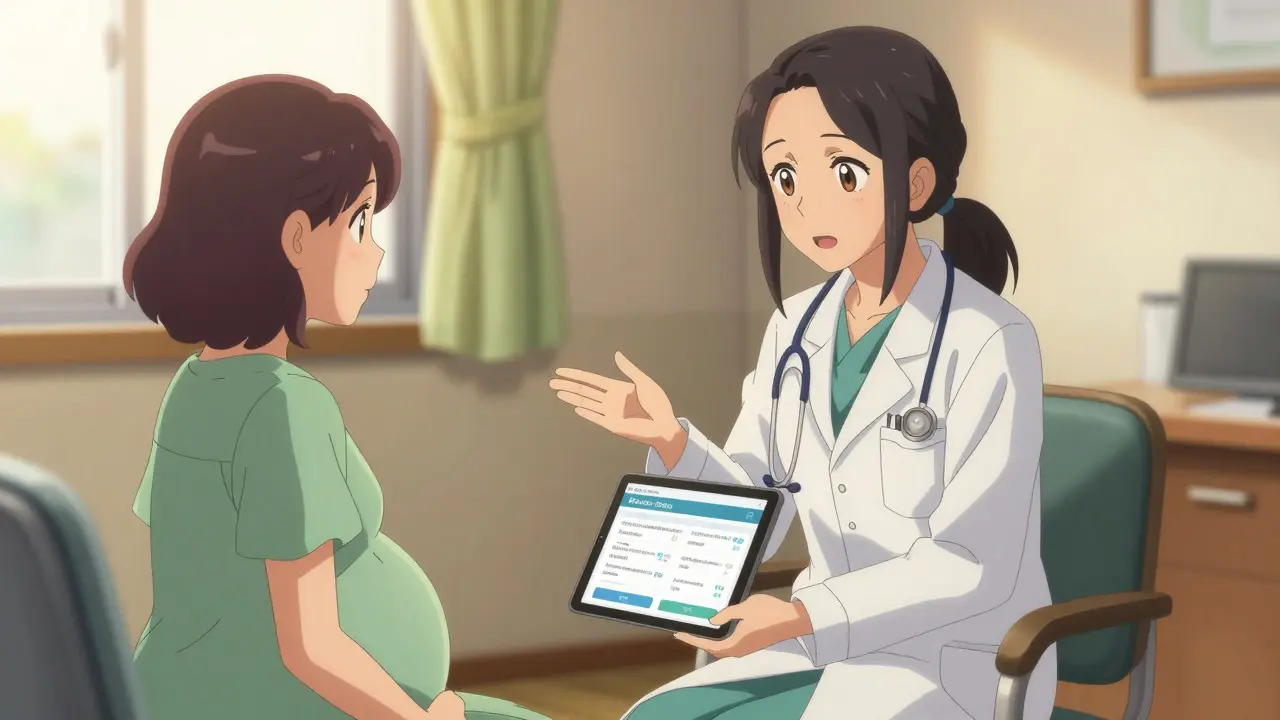
So, what should you do? First, never stop a necessary medication without talking to your doctor. Stopping drugs for epilepsy, hypertension, or depression can be more harmful than continuing them. Uncontrolled maternal illness poses greater risks than most medication exposures. Second, plan ahead. The CDC recommends discussing current medicines with your provider when planning pregnancy to create a treatment plan beforehand. About 90% of pregnant women take at least one medication, so preparation is key.
Use reliable resources. Check the medicine label, consult your pharmacist, and utilize databases like LactMed or MotherToBaby. Avoid relying solely on internet forums, where conflicting advice can cause unnecessary stress. As one Reddit user noted, contradictory information from different sources caused significant anxiety during her first trimester. Trust your interprofessional team-obstetricians, pharmacists, and nurses work together to enhance outcomes.
Future Directions and Personalized Care
The landscape of pregnancy medication safety is evolving. The FDA’s Sentinel Initiative aims to track 10 million patient records annually by 2026 to improve real-world evidence collection. Experts predict that personalized medication risk assessment using pharmacogenomics will become more prominent within the next five years, potentially improving individualized risk prediction by 30-40%. Until then, the best approach remains a balanced, informed dialogue with your healthcare provider, weighing the known benefits of treatment against the potential, often small, risks of exposure.
What percentage of birth defects are caused by medications?
According to the Merck Manual (2023), approximately 2-3% of all birth defects are attributable to medication exposure during pregnancy. The majority of birth defects have other causes.
Is acetaminophen safe during pregnancy?
ACOG affirmed in September 2025 that acetaminophen is safe and important for treating pain and fever. While some studies suggest links to neurological conditions, a direct causal relationship is not established, and untreated fever poses higher risks.
When is the fetus most vulnerable to teratogens?
The highest risk for major structural birth defects occurs during the first trimester, specifically between days 15-60 post-conception, when organ systems are forming.
What happened to the FDA pregnancy category letters (A, B, C, etc.)?
The FDA replaced the letter categories with the Pregnancy and Lactation Labeling Rule (PLLR) in 2015. This rule provides detailed narrative summaries of risks rather than simple letter grades.
Should I stop my medication if I find out I am pregnant?
Do not stop medication without consulting your provider. For conditions like epilepsy or hypertension, uncontrolled illness may pose greater risks to both mother and fetus than the medication itself.
Are Factor Xa inhibitors safe in pregnancy?
No, Factor Xa inhibitors like rivaroxaban and apixaban are generally avoided due to inadequate human data, evidence of placental crossing, and the lack of an available antidote for reversal.