
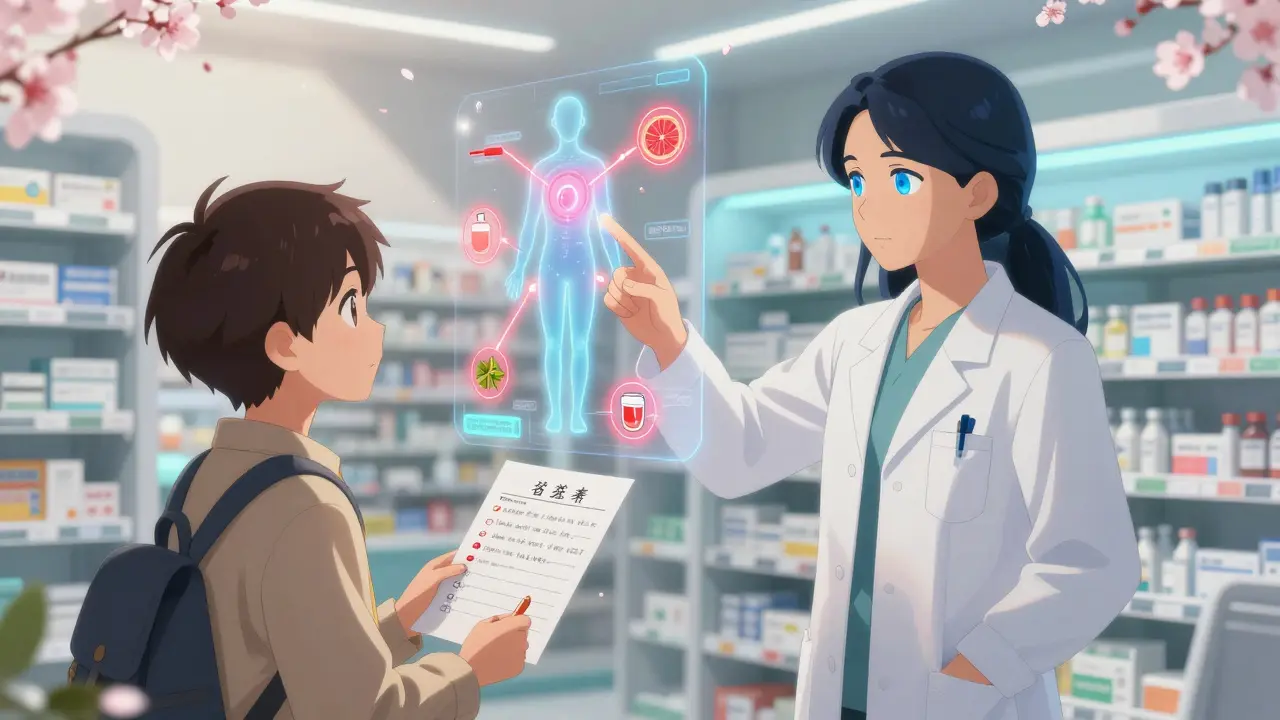
Every year, over a million people in the U.S. end up in the emergency room because of unexpected reactions between their medications. Many of these cases could have been avoided with a simple conversation with their pharmacist. You don’t need to be a medical expert to spot trouble-just know what to ask.
What exactly is a drug interaction?
A drug interaction happens when something changes how a medicine works in your body. It could be another pill, a food, a drink, or even a supplement you’re taking. The result? The drug might not work as well, or worse-it could cause serious side effects.There are three main types. First, drug-drug interactions occur when two or more medications react. For example, mixing blood thinners like warfarin with certain antibiotics can increase your risk of bleeding. Second, drug-food or drink interactions are common but often overlooked. Grapefruit juice, for instance, can make cholesterol or blood pressure meds too strong-sometimes dangerously so. Third, drug-condition interactions happen when a medicine harms you because of an existing health issue. Decongestants can spike blood pressure in people with hypertension, even if they’re sold over the counter.
What should you bring to your pharmacy visit?
Don’t rely on memory. Bring a complete list of everything you take. Not just prescriptions. Include:- All prescription drugs, including dosages and how often you take them
- Over-the-counter pills like pain relievers, antacids, or sleep aids
- Vitamins, minerals, and herbal supplements (yes, even turmeric or echinacea)
- Any recreational substances, like alcohol or cannabis
Pharmacists don’t guess-they check. But they can’t check what you don’t tell them. A 2022 study in JAMA Internal Medicine found that nearly one in five dangerous interactions were missed because patients didn’t mention their supplements. That’s not the pharmacist’s fault. It’s the gap between what’s recorded and what’s actually in your medicine cabinet.
What are the five most important questions to ask?
These aren’t optional. These are the questions every patient should ask-every single time a new medication is added.- Can I take this with my other medications? This sounds obvious, but many people assume their doctor already checked. Pharmacists are trained to spot hidden conflicts. For example, taking statins with certain antibiotics can cause muscle damage. Your doctor might not know you’re taking that herbal remedy for joint pain.
- Should I avoid any foods, drinks, or other products? Grapefruit juice interferes with more than 85 medications, including some antidepressants and heart drugs. Alcohol can worsen drowsiness from painkillers or anxiety meds. Even dairy can block absorption of antibiotics like tetracycline. Ask specifically about your diet.
- What signs should I watch for if there’s a problem? Don’t wait for a crisis. Know the red flags. For warfarin users: unusual bruising, nosebleeds, dark stools. For blood pressure meds: dizziness, rapid heartbeat, swelling. For diabetes drugs: sweating, shaking, confusion. Write these down. Share them with a family member.
- Will this affect my existing health conditions? If you have kidney disease, liver issues, or heart failure, some drugs become riskier. Even something as simple as ibuprofen can strain kidneys or raise blood pressure. Your pharmacist will cross-reference your condition list with the new drug’s profile.
- When and how should I take this? Some meds need food to be absorbed. Others must be taken on an empty stomach. Taking them at the wrong time can reduce effectiveness or increase side effects. Timing matters-especially with multiple daily doses.
Why supplements and herbal products are risky
You might think, “It’s natural, so it’s safe.” That’s a dangerous myth. The FDA doesn’t regulate supplements the same way as prescription drugs. That means no one checks for interactions before they hit the shelf.St. John’s wort, often used for mild depression, can reduce the effectiveness of birth control pills, antidepressants, and even HIV meds. Garlic supplements can thin your blood-problematic if you’re on warfarin or about to have surgery. Ginkgo biloba can increase bleeding risk during or after procedures. And don’t forget vitamin K. If you’re on warfarin, eating lots of kale or spinach can make your blood clot faster, undoing the drug’s effect.
According to the Council for Responsible Nutrition’s 2022 survey, 77% of American adults take at least one supplement. Most don’t tell their doctor or pharmacist. That’s a blind spot. Always name every product-even if you think it’s “just a vitamin.”
What about alcohol and caffeine?
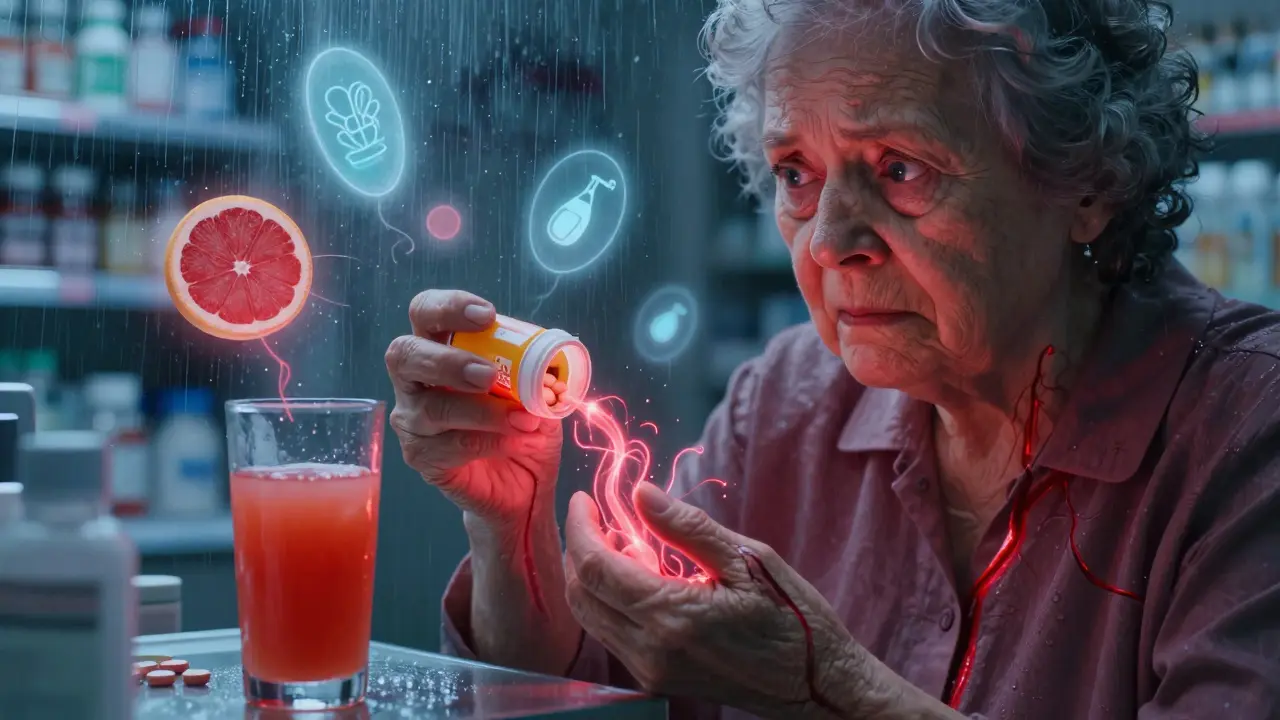
Alcohol doesn’t just dull your senses-it changes how your body processes medicine. Mixing alcohol with painkillers like acetaminophen can cause liver damage. With sedatives or anti-anxiety meds, it can slow your breathing to dangerous levels. Even moderate drinking can interfere with diabetes drugs, causing blood sugar to drop too low.Caffeine is trickier. It can make stimulant ADHD meds too powerful. It can also raise blood pressure in people on certain antihypertensives. If you drink more than two cups of coffee a day, mention it. Your pharmacist needs to know.
How often should you review your meds?
Don’t wait for a crisis. Schedule a medication review at least once a year-or every time you start or stop something. The most common interaction culprit? The newest drug on your list. A 2021 study by Cedars-Sinai found that in 78% of cases where a patient had a bad reaction, the problem came from the most recently added medication.Pharmacists at CVS and Walgreens now use electronic systems that flag potential interactions in real time. But those systems only work if your list is complete. If you’re seeing multiple doctors, each might prescribe something without knowing what the other added. That’s where the pharmacist becomes your safety net.
What if you’re on five or more medications?
You’re not alone. Nearly half of adults over 65 take five or more daily medications, according to the National Center for Health Statistics. This is called polypharmacy-and it’s the biggest driver of dangerous interactions.When you’re on multiple drugs, even small changes matter. A 10% change in how your body absorbs one drug can push another into toxic range. That’s why pharmacists use tools like the CYP450 enzyme system to predict how drugs are broken down. For example, if you’re on a drug metabolized by CYP3A4 (like simvastatin), avoid St. John’s wort, rifampin, or even some grapefruit products. These can either make the drug too strong or wash it out of your system too fast.
Don’t assume your doctor is keeping track. Ask your pharmacist to do a full med review. They’ll look for duplicates, unnecessary drugs, or combinations that shouldn’t be mixed. In a 2023 study published in the Journal of the American Pharmacists Association, pharmacist-led reviews cut interaction-related emergencies by nearly 24% in Medicare patients.
What if you’re unsure about a label?
Prescription labels now include interaction warnings in the “Warnings” section. But they’re written in medical jargon. If you see “May interact with CYP2C19 inhibitors” or “Avoid with strong CYP3A4 inducers,” you’re not supposed to understand it. That’s why you ask.Ask: “Can you explain this warning in plain English?”
Also check the “Other Information” section. Some pills contain high sodium-problematic for heart or kidney patients. Others have sugar or alcohol as fillers. If you’re diabetic or in recovery, that matters.
What’s changing in drug safety?
The FDA now requires drug makers to test for interactions during development. Pharmacogenomics-testing how your genes affect drug metabolism-is starting to enter mainstream care. In 2021, the FDA approved the first genetic test to help guide warfarin dosing. That means in the future, your pharmacist might know your body’s unique reaction to drugs before you even take the first pill.But until then, the best tool you have is your own voice. Don’t wait for your pharmacist to ask you questions. Bring your list. Ask the five key questions. Speak up about every pill, every supplement, every drink.
Medication safety isn’t just about the drugs you take. It’s about the conversations you have. And the more you ask, the safer you’ll be.
Can I take my vitamins with my prescription drugs?
Some vitamins can interfere with prescription drugs. For example, vitamin K reduces the effectiveness of warfarin, while vitamin E and fish oil can increase bleeding risk when taken with blood thinners. Calcium supplements can block absorption of thyroid medication and antibiotics. Always tell your pharmacist exactly what vitamins and minerals you take-even if you think they’re harmless.
Is grapefruit juice really that dangerous?
Yes, for certain medications. Grapefruit juice blocks an enzyme in your gut that breaks down some drugs, causing them to build up in your bloodstream. This can turn a normal dose into a toxic one. It affects statins (like simvastatin), blood pressure meds (like amlodipine), and some anti-anxiety drugs. Even one glass can cause problems that last over 24 hours. If you’re on any prescription, ask if grapefruit is safe.
Do over-the-counter cold medicines interact with my heart pills?
Many OTC cold and flu remedies contain decongestants like pseudoephedrine or phenylephrine. These can raise your blood pressure and heart rate-exactly what you don’t want if you’re on blood pressure or heart medication. Even antihistamines can cause drowsiness that worsens with sedatives. Always check with your pharmacist before taking anything for a cold, especially if you have heart disease, high blood pressure, or an irregular heartbeat.
Should I stop taking a supplement if I start a new medication?
Don’t stop anything without talking to your pharmacist first. Some supplements are safe to keep; others need to be paused. For example, if you’re on a blood thinner and take garlic or ginkgo, your pharmacist might suggest stopping them temporarily before surgery. But if you take a B-complex vitamin for nerve health and are on diabetes meds, it may be fine. Only a pharmacist can weigh the risks based on your full profile.
How do I know if a drug interaction is happening to me?
Watch for sudden changes: unusual dizziness, confusion, nausea, rash, swelling, irregular heartbeat, or bleeding that won’t stop. If you feel different after starting a new drug-especially within the first week-it could be an interaction. Don’t ignore it. Call your pharmacist. Bring your medication list. They can tell you whether it’s normal or needs action.
Can my pharmacist check my meds for interactions without me asking?
They can-and they should. But they can only do it if your list is complete. Many pharmacies run automatic checks when you pick up a prescription. But if you didn’t mention your supplement, herbal tea, or alcohol use, the system won’t flag it. You’re the only one who knows your full picture. Always update your pharmacist, even if they don’t ask.
What if I forget to ask a question during my visit?
Call back. Most pharmacies offer free phone consultations with pharmacists. Don’t wait until you feel sick. If you think of a question later-about timing, food, or another drug-call. It’s part of their job. You’re not bothering them. You’re keeping yourself safe.
Next steps: What to do today
- Write down every medication, supplement, and vitamin you take-including doses and times.
- Bring that list to your next pharmacy visit-even if you’re just picking up a refill.
- Ask the five key questions listed above.
- If you’re on five or more meds, ask for a full medication review.
- Set a reminder to do this every six months, or whenever you start something new.
Drug interactions don’t always cause immediate harm. But they don’t need to. A small, unnoticed change today can become a crisis tomorrow. Your pharmacist is your best defense. Use them.
11 Comments
December 16, 2025 Michelle M
It’s wild how something as simple as grapefruit juice can turn a life-saving med into a danger zone. I used to drink it every morning with my statin-until my pharmacist pulled me aside and said, ‘You’re basically playing Russian roulette with your liver.’ Now I drink orange juice. Small change, huge difference.
December 18, 2025 Lisa Davies
As someone who takes 7 meds and 5 supplements, I didn’t realize how much my ‘harmless’ turmeric capsule was messing with my blood thinner. My pharmacist flagged it during a refill-saved me from a trip to the ER. Always bring your whole list. Even the ‘just in case’ stuff. 💪
December 19, 2025 Jake Sinatra
The data is clear: pharmacist-led reviews reduce adverse events by over 20%. Yet, most patients still treat pharmacists as order-fillers, not clinical partners. This is a systemic failure in patient education, not a gap in pharmacy capability. We need mandatory med reviews with every new prescription.
December 19, 2025 Sai Nguyen
Why do Americans need a lecture on this? In India, we take 10 pills a day and never ask. We just survive. Your overthinking is your problem.
December 20, 2025 Nupur Vimal
St Johns wort messes with everything even your birth control and your antidepressants and dont even get me started on how it ruins your chemo if you have cancer and nobody tells you this because its natural so its safe right yeah right
December 20, 2025 Cassie Henriques
From a pharmacogenomics standpoint, CYP450 polymorphisms are the silent killers here. If you’re a CYP2D6 poor metabolizer and on a beta-blocker + SSRI combo, you’re looking at QT prolongation risk. Most patients don’t even know their phenotype. Pharmacies should offer point-of-care genotyping-this isn’t sci-fi, it’s standard in Scandinavia.
December 21, 2025 Benjamin Glover
Pathetic. A whole article on this because Americans can’t read a label. In the UK, we’ve had pharmacist consultations since the 80s. You’re 40 years behind.
December 23, 2025 Raj Kumar
bro i used to take garlic pills with my blood pressure med and never thought twice until my grandma told me her friend had a stroke. now i tell my pharmacist everything. even my weed. they dont judge. they help. thank u pharmacists 🙏
December 24, 2025 John Samuel
Let us not underestimate the elegance of the pharmacist’s role: they are the final arbiters of therapeutic harmony. Where physicians prescribe, pharmacists synthesize. Where patients forget, pharmacists remember. A well-informed patient, armed with a comprehensive list and five targeted questions, transforms a transactional encounter into a collaborative safeguard. This is not merely healthcare-it is stewardship of biological integrity. 🌿🩺
December 26, 2025 Melissa Taylor
I used to think my multivitamin was harmless. Then I started feeling dizzy every afternoon. My pharmacist asked about it-and found it was interacting with my thyroid med. Now I take it at night. Simple fix. Thank you, unsung heroes of medicine.
December 27, 2025 John Brown
My dad’s on 8 meds. He didn’t tell his new cardiologist about his fish oil. Got admitted for bleeding. Now he brings his whole pill box to every appointment. We all should. Your life isn’t a guess game.
Write a comment