
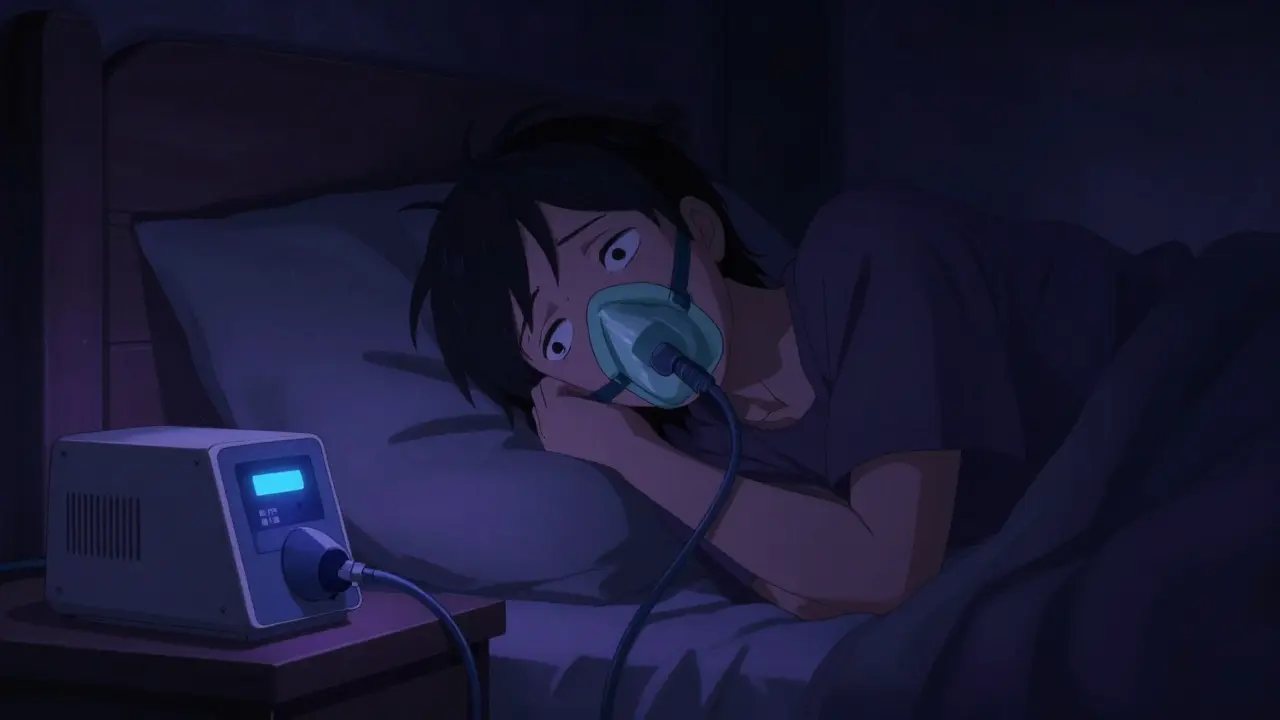
For a long time, doctors treated these as two separate problems. They'd fix the breathing first, then deal with the wakefulness. But research led by Dr. Alexander Sweetman has shown that this "one-at-a-time" approach often fails. In fact, nearly 40% to 60% of people with sleep apnea also struggle with insomnia. When you have both, the traditional gold-standard treatment for apnea-the CPAP machine-becomes much harder to stick with. Why? Because insomnia makes the mask feel more intrusive and the pressure more irritating, leading to a cycle of frustration and poor sleep.
The Real Cost of the "One-by-One" Treatment Approach
When doctors treat Obstructive Sleep Apnea (OSA) without addressing the insomnia, they run into a massive adherence problem. Data shows that people with only OSA have a CPAP adherence rate of about 62%, but that number plummets to roughly 43% for those with COMISA. It's a common-sense struggle: if you can't fall asleep, the last thing you want is a plastic mask strapped to your face blowing air into your nose.
On the flip side, treating insomnia with Cognitive Behavioral Therapy for Insomnia ( CBT-I) without managing the apnea is like trying to put out a fire while someone is still pouring gasoline on it. You might train your brain to associate the bed with sleep, but if your throat is closing and waking you up ten times an hour, your brain will quickly learn that the bed is actually a place of struggle and suffocation.
| Approach | Focus | Common Outcome | The Downside |
|---|---|---|---|
| CPAP Only | Airway Patency | Fixed Breathing | Persistent wakefulness; high dropout rate |
| CBT-I Only | Sleep Drive/Behavior | Reduced Anxiety | Untreated respiratory events; daytime fatigue |
| Combined (Concurrent) | Integrated Care | Remission of both | Requires more time and specialized providers |
How to Diagnose the Dual Struggle
Getting a COMISA diagnosis isn't as simple as a single test. You need two different sets of data. First, you need a Polysomnography (PSG), which is the fancy name for an overnight sleep study. This measures your Apnea-Hypopnea Index (AHI). If your AHI is 5 or higher, you've got sleep apnea. But a PSG doesn't always "capture" insomnia; it just shows that you're awake, not why you feel like you can't sleep.
The second part is a clinical interview and the use of the Insomnia Severity Index (ISI). If you score 15 or higher on the ISI, you're officially in the clinical insomnia zone. It's also crucial to figure out if you have sleep onset insomnia (trouble falling asleep) or sleep maintenance insomnia (waking up and not being able to get back to sleep). About 68% of COMISA patients struggle with maintenance, and this detail changes how your therapist adjusts your behavioral plan.
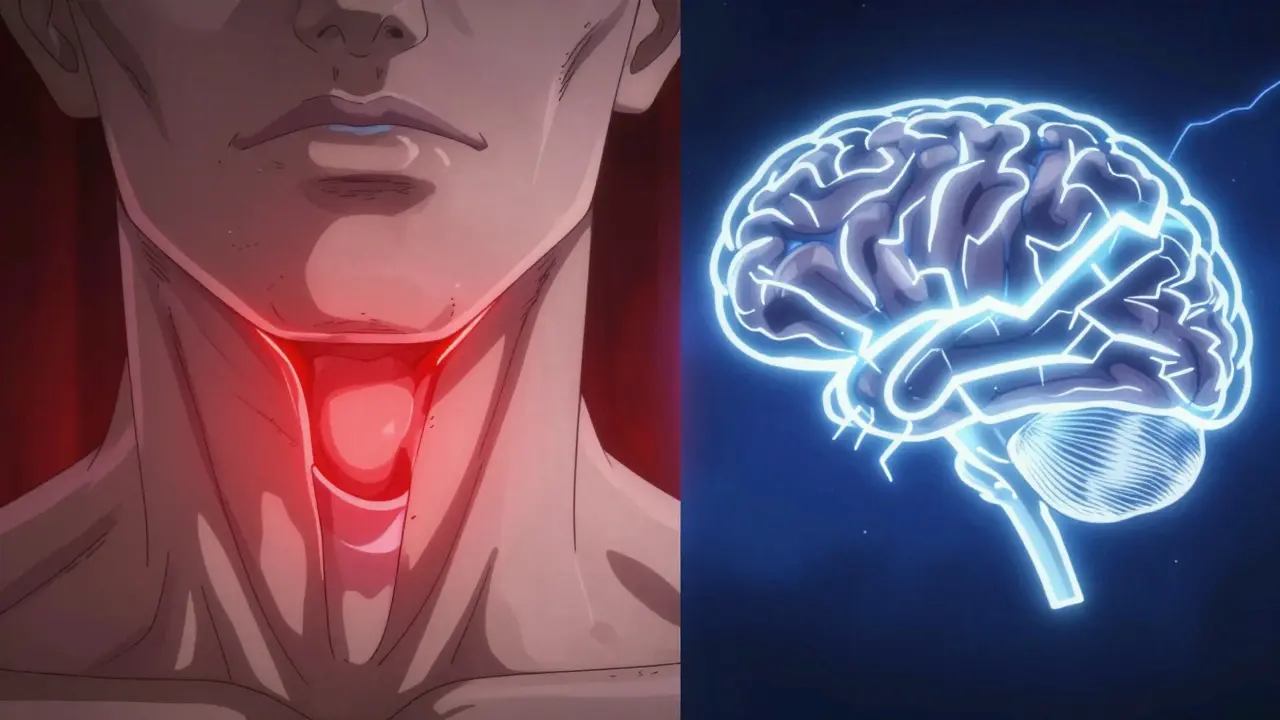
The Game Plan: Integrated Treatment Strategies
The most effective way to tackle COMISA is through a concurrent approach. This means you don't wait for the apnea to be "perfect" before starting the insomnia work. You do both at once. Here is how a typical integrated plan works:
- CBT-I Adaptation: Instead of standard sleep restriction, your therapist modifies the plan to account for the CPAP. They help you deal with "mask anxiety" and use stimulus control to stop you from associating the CPAP mask with the frustration of wakefulness.
- CPAP Titration: A sleep physician sets your pressure levels, but they use a "ramping" feature to slowly increase pressure, so the sudden blast of air doesn't trigger an insomnia-driven panic response.
- Behavioral Coaching: Using a sleep coach to bridge the gap between the doctor (who gives you the machine) and the psychologist (who gives you the mental tools). This has been shown to increase CPAP usage by over an hour per night.
If behavioral changes aren't enough, some doctors are now using Orexin Antagonists (like suvorexant). Unlike old-school sedatives that can make sleep apnea worse by relaxing the throat muscles too much, these newer drugs target the "wakefulness" system of the brain. In pilot studies, they've helped about 42% of COMISA patients stay asleep longer without compromising their breathing.
Common Pitfalls and What to Avoid
One of the biggest mistakes is the "sequential trap." Some experts argue that if your apnea is severe (AHI over 30), you must fix the breathing first to avoid heart complications. While that sounds logical, the reality is that 52% of people in that scenario quit using their CPAP within three months because the insomnia makes it unbearable. The secret is to treat the breathing as a medical necessity but the insomnia as the key to compliance.
Another trap is relying solely on digital apps. While Digital CBT-I (dCBT-I) works for mild cases, people with moderate to severe OSA often find them insufficient. If your AHI is high, a self-guided app usually isn't enough to manage the complex interplay between your respiratory failures and your brain's inability to shut down.
Real-World Challenges: Why It's Hard to Get Help
If you feel like your doctor is only seeing half the picture, you aren't alone. Many primary care physicians only treat the most "obvious" symptom. If you're snoring loudly, they give you a CPAP and ignore the fact that you're anxious and awake for four hours a night. This often leads to a diagnostic delay of over seven years.
Even when you get the right diagnosis, finding a provider who understands both sides is tough. Most sleep labs are run by physicians who don't do behavioral therapy, and most psychologists don't know how to read a sleep study. You essentially need a "sleep navigator" or a multidisciplinary team to ensure your mental health and respiratory health are talking to each other.
Can I just take a sleeping pill to help me use my CPAP?
Be very careful. Many traditional sedatives (like benzodiazepines) relax the muscles in your throat, which can actually make sleep apnea worse. This is why doctors prefer CBT-I or specific medications like orexin antagonists, which don't suppress your breathing as much as older sedatives do.
Does CBT-I actually help my sleep apnea?
Interestingly, yes. Research shows that by consolidating your sleep and reducing the time you spend tossing and turning, some patients see a 15% decrease in the severity of their OSA. When you sleep more soundly and in a better position, your respiratory patterns often improve.
Why does my CPAP make my insomnia feel worse?
This is often due to "mask discomfort" or a psychological reaction to the air pressure. If you already struggle with sleep onset, the physical sensation of the mask can act as a trigger for anxiety, keeping you awake. This is why combining CPAP with stimulus control therapy is so effective.
How long does integrated COMISA treatment take?
CBT-I usually consists of 5 to 8 weekly sessions. When combined with CPAP titration, most patients start seeing a significant shift in their sleep quality within 8 to 12 weeks, though long-term maintenance is key to preventing relapse.
What if I can't afford a specialist team?
Look for dCBT-I platforms if your apnea is mild. If it's severe, try to find a sleep physician who is open to coordinating care with a behavioral sleep medicine provider. Some insurance companies are now starting to cover integrated codes for this specific comorbidity.
Next Steps for Recovery
If you suspect you have both conditions, don't just ask for a sleep study. Specifically ask your doctor about COMISA. Request both a polysomnography to check your breathing and an Insomnia Severity Index (ISI) screening to document your wakefulness. If you're already on CPAP and failing, ask for a referral to a psychologist who specializes in CBT-I and has experience with sleep apnea patients. The goal isn't just to stop the snoring-it's to actually get you to sleep.
9 Comments
April 23, 2026 Ajinkya Joshi
Oh brilliant, so the solution to not being able to sleep with a mask on is to pay a "sleep navigator" to hold your hand while you wear the mask. Groundbreaking stuff right here.
April 23, 2026 Divyanshu Giri
This is total gold!! Keep pushing forward everyone! You got this and your sleep will be super awesome soon!! 🚀🔥
April 23, 2026 Anantha Lakshmi
So glad to see a combined approach being discussed! It really helps to feel seen in this struggle ✨🙏
April 25, 2026 Sarah Watters
Sure, trust the "specialists" and their fancy new Orexin drugs. It's all just a way to keep us dependent on a medical system that's probably funded by the same people who want us tired and compliant. They probably don't even want us to actually wake up to what's happening in the world.
April 26, 2026 Olayinka Ibukunoluwa Mercy
This is such a helpful breakdown!!! Please remember to be gentle with yourselves while navigating these health challenges... You are not alone in this journey!! 💖🌟🌸
April 27, 2026 Chidi Prosper
I completely agree with the point about the sequential trap. Treating one without the other is just a waste of time and money.
April 28, 2026 Mayur Pankhi Saikia
The logic here is... flawed, at best!!! One simply cannot ignore the primacy of respiratory failure over a mere "anxious mind"... It's almost laughable that some think a psychologist can "bridge the gap" for a physiological collapse of the airway... simply absurd!!!
April 29, 2026 Ally Warren
It's interesting how the body and mind create this feedback loop. We treat the body as a vessel and the mind as the captain, but in COMISA, the vessel is leaking while the captain is panicking about the leak, making it impossible to plug the hole.
April 29, 2026 Dan Wizard
I find it quite fascinating that the adherence rate drops so significantly when insomnia is present, and it makes a lot of sense that the physical sensation of the mask would trigger a panic response in someone already struggling with sleep onset, though I wonder if there are alternative mask styles that might mitigate this psychological trigger for some patients.
Write a comment