
Echinacea & Immunosuppressant Interaction Checker
Check Your Medication
This tool checks if your immunosuppressant medication interacts with echinacea. Always consult your healthcare provider for medical advice.
People take echinacea because they want to feel stronger-less prone to colds, quicker recovery, better immune defense. It’s natural, widely available, and marketed as safe. But if you’re on immunosuppressants, this common herb could be putting your life at risk. The problem isn’t just theoretical. Real patients have had organ rejection, severe blood disorders, and disease flare-ups after taking echinacea while on immune-suppressing drugs. This isn’t a warning you can ignore.
How Echinacea Actually Works
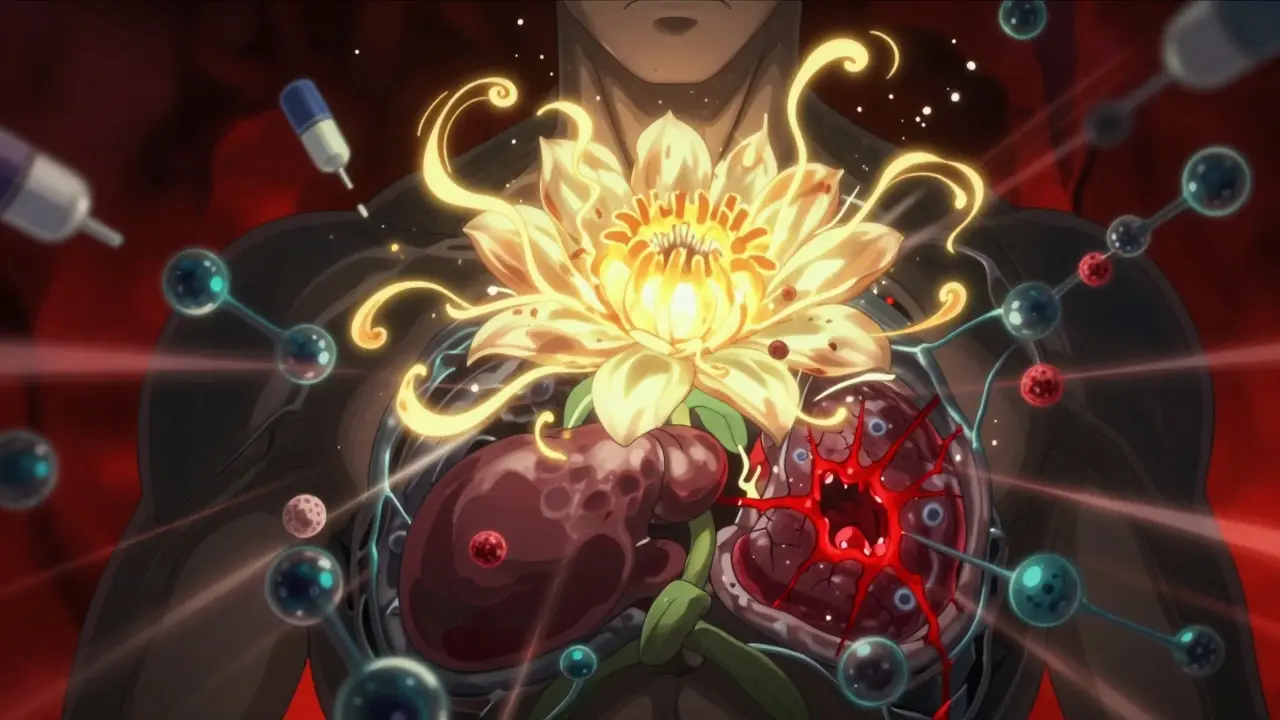
Echinacea isn’t just a plant. It’s a complex mix of chemicals-alkamides, polysaccharides, caffeic acid derivatives-that interact with your immune system in ways science is still untangling. In the short term, it stimulates immune cells. It wakes up neutrophils, macrophages, and natural killer cells. These are the body’s first responders. They swarm infections, gobble up pathogens, and sound alarms. That’s why people feel better after taking it for a cold.
But here’s the twist: after eight weeks or more, the same plant can start doing the opposite. Studies from the American Academy of Family Physicians show long-term use may actually suppress immune activity. This isn’t a mistake-it’s a biological flip-flop. Your body gets overstimulated, then burns out. This dual effect is what makes echinacea so dangerous when paired with immunosuppressants.
What Are Immunosuppressants?
Immunosuppressants aren’t optional. They’re life-saving. If you’ve had a kidney, liver, heart, or lung transplant, your body sees the new organ as an invader. Without these drugs, your immune system would attack it-right after surgery. The same goes for people with autoimmune diseases like lupus, rheumatoid arthritis, or multiple sclerosis. Their immune systems are turned against their own tissues. Immunosuppressants dial that down.
Common drugs in this group include:
- Cyclosporine
- Tacrolimus
- Azathioprine
- Mycophenolate mofetil
- Methotrexate
- Corticosteroids like prednisone
These drugs work by quieting specific immune pathways. They’re carefully dosed. Too little, and rejection happens. Too much, and you’re vulnerable to infections or cancer. Now imagine someone takes echinacea, which fires up the immune system. It’s like trying to stop a fire with a fan.
The Real-World Danger
Case reports aren’t rare. The Memorial Sloan Kettering Cancer Center documented multiple incidents:
- A 55-year-old man with pemphigus vulgaris-on immunosuppressants-started taking echinacea for a cold. His skin lesions worsened. His medication had to be increased, and he never fully recovered.
- A 61-year-old with lung cancer developed dangerously low platelets while taking echinacea with chemotherapy. He needed emergency treatment.
- A 32-year-old man developed thrombotic thrombocytopenic purpura, a rare and deadly blood disorder, after using echinacea for a respiratory infection.
These aren’t outliers. A 2021 survey of 512 transplant patients found 34% had used echinacea after surgery. Twelve percent reported complications they believed were linked to the herb. In transplant forums, 23 out of 147 posts described suspected interactions-17 needed higher drug doses, 6 had acute rejection episodes.
And yet, many patients don’t tell their doctors. They think supplements are harmless. They don’t realize echinacea isn’t like vitamin C. It doesn’t just “boost immunity.” It actively interferes with the delicate balance of their treatment.
Why This Interaction Is Unique
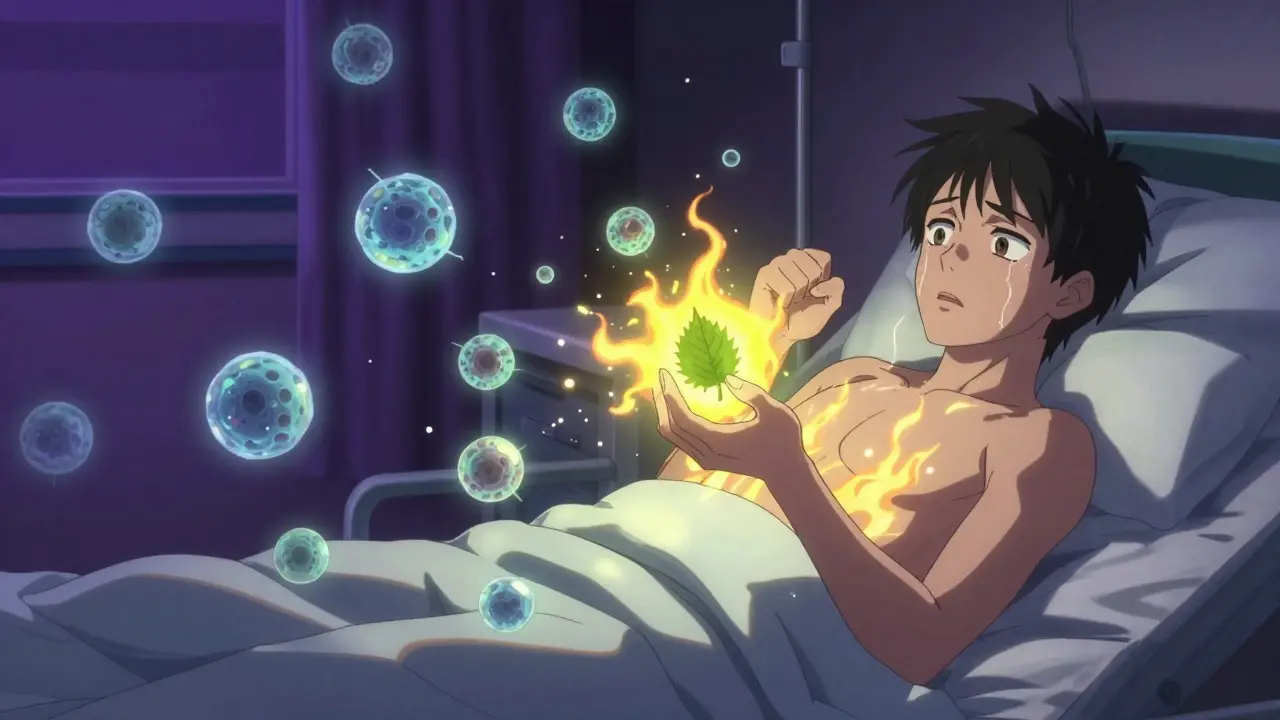
Not all herbs are risky in the same way. Ginger? Mild anti-inflammatory. Turmeric? Low risk for immune interference. Milk thistle? Affects liver enzymes, not immune cells. Echinacea is different. It directly targets immune pathways that immunosuppressants are trying to calm.
Its alkamides bind to cannabinoid receptor type 2 (CB2)-a key regulator of immune response. This isn’t just a guess. Peer-reviewed studies confirm this mechanism. When you take echinacea, you’re turning on signals that cyclosporine and tacrolimus are trying to shut down. The result? Reduced drug effectiveness. Higher rejection risk.
The American Society of Health-System Pharmacists classifies this interaction as “moderate”-a label that sounds mild but means: avoid combining them. The American Society of Transplantation went further: they recommend complete avoidance of echinacea in all solid organ transplant recipients. Eighty-seven percent of transplant centers follow this rule.
What Experts Say
There’s no debate among specialists who treat transplant and autoimmune patients. The Cleveland Clinic, Mayo Clinic, and Memorial Sloan Kettering all warn against echinacea use in these populations. The European Medicines Agency says the interaction “cannot be excluded.” The FDA issued warning letters to supplement makers in 2023 for not disclosing this risk.
The American College of Rheumatology’s 2023 guidelines are blunt: “Patients on immunosuppressive therapy for autoimmune diseases should avoid echinacea due to potential reduction in medication efficacy.” A 2022 survey of rheumatologists found 92% agreed.
Even the National Center for Complementary and Integrative Health (NCCIH), which often takes a neutral stance on herbs, lists echinacea-immunosuppressant interaction as a primary safety concern.
What About the “No Evidence” Argument?
You might hear: “There’s no big study proving this.” That’s true. Large randomized trials haven’t been done. Why? Because it’s unethical. You don’t test something that could cause organ rejection in people who depend on those drugs.
Instead, we rely on what we have: mechanistic data, case reports, expert consensus, and real-world outcomes. The absence of proof isn’t proof of absence. In medicine, we don’t wait for 10,000 deaths before acting. We act on the weight of evidence.
And the weight is heavy. The American Botanical Council reported $29.5 million in U.S. sales of echinacea in 2022. The global market hit $142 million. Nearly half of users take it for “immune support.” That’s millions of people-many of them unaware they’re playing Russian roulette with their health.
What Should You Do?
If you’re on immunosuppressants:
- Stop taking echinacea-immediately.
- Tell your doctor or pharmacist you’ve used it, even if it was months ago.
- Don’t assume “natural” means safe. Natural doesn’t mean harmless.
- Ask for alternatives. If you want immune support, focus on sleep, stress management, and nutrition-not unregulated herbs.
If you’re a caregiver or family member: don’t let someone take echinacea “just to feel better.” The risk isn’t worth it. A cold isn’t worth losing a transplanted organ.
If you’re a healthcare provider: ask about supplements every time. Don’t assume patients will volunteer this information. Most don’t. Make it part of your routine intake questions.
What’s Next?
The National Institutes of Health is funding a $2.4 million study (NCT04851234) to measure exactly how echinacea affects tacrolimus levels in kidney transplant patients. Results are expected in mid-2025. That’s important. But you don’t need to wait for those results to make a decision.
Right now, the evidence is clear enough. The risk is real. The consequences can be fatal. And the solution is simple: don’t mix them.
There’s no magic herb that replaces medical treatment. And when your life depends on a drug, you don’t gamble with nature’s wildcards.
12 Comments
January 17, 2026 Ryan Hutchison
Echinacea is just another scam sold by hippies who think plants are magic. I’ve seen this crap in every supplement aisle - 'boost your immune system!' Yeah, right. Meanwhile, real medicine - the kind backed by labs and peer review - tells you to stay the hell away from it if you’re on immunosuppressants. People die because they trust Amazon reviews over their transplant team. This isn’t a debate. It’s a public health failure.
January 18, 2026 Melodie Lesesne
My cousin had a kidney transplant last year and she swore by echinacea 'for winter colds.' She didn’t tell her doctor until she got sick and her levels spiked. Now she’s on a stricter regimen and feels guilty as hell. I’m just glad she’s okay. Please, if you’re on these meds - just skip the herbal crap. Your body already has enough to deal with.
January 19, 2026 Corey Sawchuk
My dad’s on tacrolimus after his liver transplant. He used to take echinacea because his wife swore it helped her colds. He didn’t know it was dangerous. Now he just takes zinc and sleeps more. Honestly I’m glad this post exists. A lot of people don’t even know supplements can interact like this.
January 20, 2026 evelyn wellding
YESSSS this needs to be screamed from the rooftops!!! 🙌 I work in pharmacy and I’ve seen too many people get hospitalized because they thought 'natural' = safe. Echinacea is NOT vitamin C. It’s a wild card. Don’t gamble with your transplanted organ. 💪❤️
January 20, 2026 Corey Chrisinger
It’s funny how we’ll trust a pill made in a lab with 17 side effects but freak out if someone says 'don’t drink this tea.' We’ve lost the ability to think in terms of mechanism. Echinacea doesn’t 'boost' immunity - it hijacks CB2 receptors. That’s not folklore. That’s pharmacology. And if you’re suppressing immune pathways with cyclosporine? You’re literally fighting your own biology. The fact that this isn’t on every supplement bottle is criminal.
January 21, 2026 Bianca Leonhardt
Of course people die from this. They’re too lazy to read labels. They think 'herbal' means 'no consequences.' You want to feel better? Take your meds. Sleep. Drink water. Stop chasing magic plants like it’s 2008. This isn’t yoga retreats. This is life or death. And you’re not special. Your immune system doesn’t get a pass.
January 23, 2026 swarnima singh
they dont want you to know this because big pharma owns echinacea too lol... they sell you the drugs then sell you the herbs to make you need more drugs... its all a cycle... the government knows but they dont care... your body was meant to heal itself... they just want you dependent...
January 24, 2026 Isabella Reid
I’m from India and we’ve used neem and tulsi for generations - but we also respected context. If someone was sick after surgery, we didn’t give them herbs. We gave them rest and broth. Modern medicine isn’t the enemy. Ignorance is. This post is a gift to anyone on immunosuppressants. Please share it with your family. Even if they think you’re being dramatic.
January 26, 2026 kanchan tiwari
THEY’RE HIDING THE TRUTH!! ECHINACEA IS A GOVERNMENT WEAPON TO MAKE TRANSPLANT PATIENTS SICK SO THEY’LL NEED MORE DRUGS!! THE FDA IS IN ON IT!! I SAW A VIDEO WHERE A DOCTOR SMILED WHILE SAYING 'IT’S JUST A HERB' - THAT’S A SIGNAL!! MY COUSIN’S FRIEND’S NEPHEW DIED BECAUSE HE TOOK IT!! THEY’RE COVERING IT UP!!
January 27, 2026 Bobbi-Marie Nova
So let me get this straight… you’re telling me I can’t take that $12 bottle of 'Immune Boost' from Whole Foods because it might… kill me? Wow. That’s wild. Guess I’ll just drink more orange juice and pray. 🙃
January 28, 2026 Allen Davidson
Listen - I’ve been on methotrexate for 8 years. I used echinacea for a while because I thought it was harmless. Then I got a bad infection and my rheumatologist flipped. She said, 'You’re not a guinea pig. This isn’t a trial.' I stopped. I didn’t get sick again. It’s not about being scared. It’s about being smart. Your body’s already working overtime. Don’t ask it to fight two wars at once.
January 29, 2026 john Mccoskey
The entire narrative around echinacea is a textbook example of confirmation bias wrapped in pseudoscience. People feel better after taking it because they believe it works - the placebo effect is powerful, but it doesn’t alter cytokine pathways. The fact that long-term use suppresses immunity is documented in multiple peer-reviewed journals, including the Journal of Clinical Pharmacology and Phytomedicine. The interaction with calcineurin inhibitors like tacrolimus isn’t speculative - it’s pharmacokinetic. The CYP3A4 enzyme system is affected, and the AUC of tacrolimus drops significantly when co-administered with echinacea extracts. The FDA warning letters weren’t just noise - they were legally binding directives. The fact that 34% of transplant patients still use it is a systemic failure of patient education. Healthcare providers aren’t asking because they assume patients won’t disclose. Patients aren’t disclosing because they think it’s irrelevant. This isn’t an isolated problem. It’s a cultural blind spot in integrative medicine. And until we stop treating herbs like harmless candy and start treating them like pharmacologically active substances - more people will die. Not because they’re stupid. Because the system failed them.
Write a comment