

It is easy to reach for a bottle of ibuprofen or naproxen when pain strikes. These nonsteroidal anti-inflammatory drugs (NSAIDs) are among the most widely used medications in the world, with roughly 30 million people taking them daily. They work by blocking enzymes called cyclooxygenases (COX), which produce prostaglandins-chemicals that signal inflammation and pain. But here is the catch: those same prostaglandins also protect your stomach lining and keep blood flowing freely to your kidneys. When you block them to stop pain, you inadvertently strip away these vital defenses.
The stakes are higher than many realize. According to data from the American College of Gastroenterology, complications linked to NSAID use lead to over 107,000 hospitalizations and nearly 16,500 deaths annually in the United States alone. Most of these events happen not because the drug failed to work, but because the side effects went unchecked. Understanding how NSAIDs impact your gut and kidneys, and knowing exactly what to monitor, can mean the difference between effective pain relief and a medical emergency.
How NSAIDs Damage the Gut
To understand why NSAIDs hurt the stomach, you have to look at the two ways they cause damage. First, there is topical irritation. Some NSAIDs are acidic and can directly irritate the stomach lining when they dissolve. Second, and more significantly, there is systemic inhibition. NSAIDs block COX-1 enzymes, which normally produce prostaglandins that maintain the thick mucus layer protecting your stomach wall from its own acid.
When that protective shield thins, acid eats away at the tissue. This leads to NSAID-induced gastropathy, which affects anywhere from 10% to 50% of users, depending on dosage and duration. About 15% of long-term users develop peptic ulcers-open sores in the stomach or duodenum. The scary part? You might not feel it coming. Dr. John T. Lamont from Harvard Medical School notes that NSAID gastropathy is asymptomatic half the time. Many people only discover an ulcer after it bleeds, resulting in black, tarry stools (melena) or vomiting blood.
The damage isn't limited to the upper digestive tract. NSAIDs also cause enteropathy, damaging the small intestine. A 2020 study in Gut and Liver confirmed that there is currently no proven strategy to completely prevent this lower GI injury. Symptoms can include persistent diarrhea, abdominal pain, and protein loss, which may last for days even after stopping the medication.
The Silent Threat to Your Kidneys
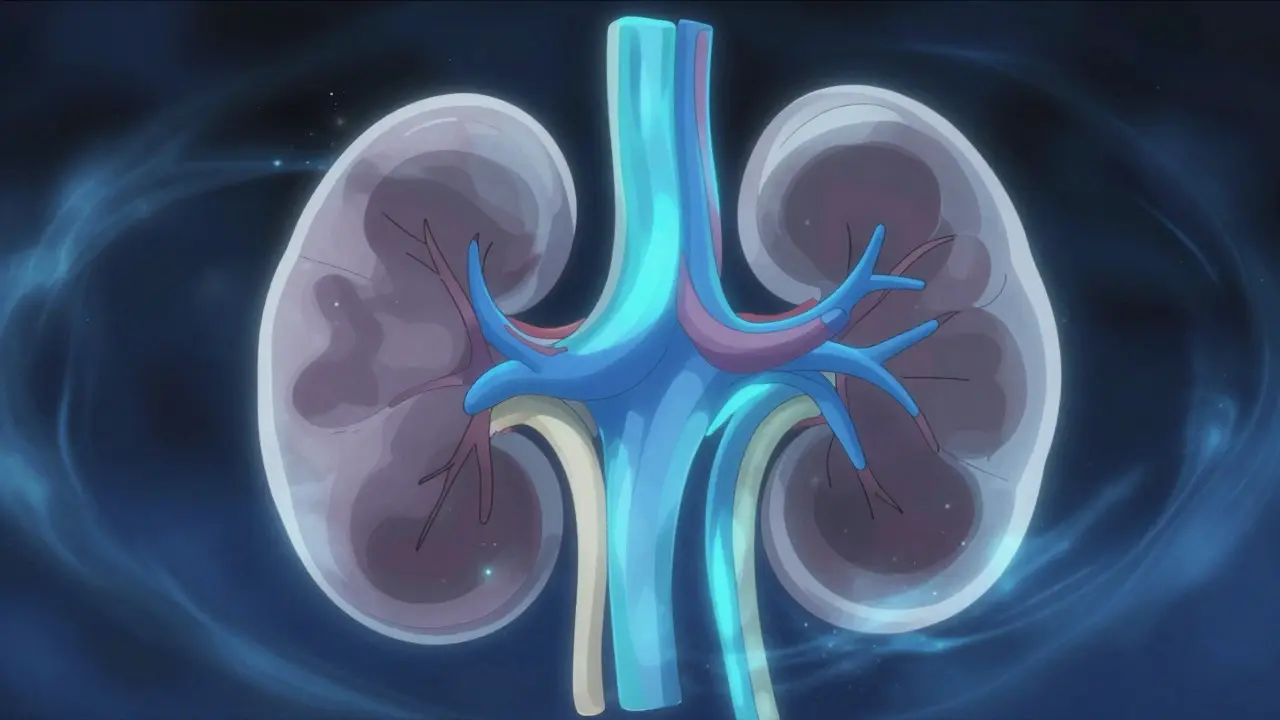
While stomach issues get more attention, kidney damage is equally dangerous and often silent until it is severe. Your kidneys rely on prostaglandins to dilate blood vessels and ensure adequate blood flow, especially when you are dehydrated or under stress. NSAIDs constrict these vessels, reducing the filtration rate.
This mechanism can lead to acute kidney injury (AKI), which occurs in 1% to 5% of NSAID users. For people with pre-existing conditions, the risk skyrockets. If you have chronic kidney disease, heart failure, or liver cirrhosis, your body is already struggling to regulate fluid and pressure. Adding an NSAID removes the kidney's ability to compensate. Long-term use can also lead to interstitial nephritis (inflammation of the kidney tissue) and papillary necrosis, where parts of the kidney tissue die off.
The American College of Cardiology updated its guidance in 2024 to recommend avoiding all NSAIDs in patients with stage 3 or worse chronic kidney disease (an eGFR below 60 mL/min/1.73m²). Even short-term use in older adults or those who are dehydrated can trigger a sudden spike in creatinine levels, signaling that the kidneys are failing to filter waste.
Risk Factors: Who Is in Danger?
Not everyone faces the same level of risk. Some factors make you significantly more vulnerable to GI bleeding and kidney injury. The American College of Gastroenterology uses a validated calculator to assess this risk. Here is what pushes your risk score up:
- Age: Being over 65 adds significant risk points. The elderly have thinner stomach linings and reduced kidney function naturally.
- History of Ulcers: If you have had a peptic ulcer before, you are far more likely to get another one.
- Concomitant Medications: Taking anticoagulants (blood thinners like warfarin), corticosteroids (like prednisone), or SSRIs (antidepressants) drastically increases bleeding risk. Studies show combining NSAIDs with SSRIs raises bleeding risk by 3.38-fold.
- Dosage and Duration: Higher doses and longer use correlate directly with higher complication rates. Each additional week of use increases complication risks by 3-5%.
If you fall into multiple high-risk categories, simply taking a pill with food is rarely enough protection. You need a structured mitigation plan.
Monitoring Protocols: What to Check and When
You cannot manage what you do not measure. If you are prescribed NSAIDs for long-term pain management, regular monitoring is non-negotiable. Here is the standard protocol recommended by gastroenterological and renal guidelines:
- Serum Creatinine and BUN: Check these within 30 days of starting the medication. They indicate how well your kidneys are filtering waste. If you are high-risk, check them periodically thereafter.
- Complete Blood Count (CBC): Monitor hemoglobin and hematocrit levels to detect occult (hidden) bleeding that hasn't yet caused visible symptoms.
- Fecal Occult Blood Testing: For high-risk patients, testing stool for hidden blood every six months can catch GI bleeding early.
- Blood Pressure: NSAIDs can raise blood pressure, adding strain to both the heart and kidneys.
Despite these clear guidelines, adherence is poor. A 2023 analysis of Medicare claims found that only 52% of NSAID users had their creatinine checked within 90 days of starting treatment. Don't be part of that statistic. Ask your doctor for a schedule.
Mitigation Strategies: Protecting Yourself
If you must take NSAIDs, there are ways to lower your risk. However, "lowering" risk does not mean "eliminating" it. The hierarchy of safety starts with avoidance. Can you use acetaminophen or topical treatments instead? If not, follow these steps:
1. Use the Lowest Effective Dose Take the smallest amount needed to control pain, for the shortest time possible. Do not push through pain by increasing the dose without medical advice.
2. Consider COX-2 Inhibitors Drugs like celecoxib selectively target COX-2 (inflammation) while sparing COX-1 (stomach protection). A 2023 meta-analysis showed celecoxib carries a 1.9-fold increased risk of upper GI bleeding compared to non-users, whereas non-selective NSAIDs like naproxen carry a 4.2-fold risk. However, COX-2 inhibitors have their own cardiovascular risks, so they are not suitable for everyone.
3. Add Proton Pump Inhibitors (PPIs) For moderate-to-high risk patients, combining an NSAID with a PPI (like omeprazole) reduces ulcer complications by 70-90%. But beware: recent studies warn that long-term combined use of NSAIDs and PPIs may increase the risk of microscopic colitis. This is a trade-off you must discuss with your doctor.
| Drug Type | Examples | GI Bleeding Risk | Kidney Impact |
|---|---|---|---|
| Non-Selective NSAIDs | Ibuprofen, Naproxen | High (4.2x vs non-users) | Significant vasoconstriction |
| COX-2 Selective Inhibitors | Celecoxib | Moderate (1.9x vs non-users) | Similar to non-selective |
| Nitric Oxide-Donating NSAIDs | Naproxcinod | Lower (58% fewer ulcers than naproxen) | Under investigation |

Red Flags: When to Stop Immediately
Your body will send signals if things go wrong. Stop taking NSAIDs and seek immediate medical attention if you experience:
- Black, tarry, or bloody stools: This indicates upper GI bleeding.
- Vomiting blood or material that looks like coffee grounds.
- Sudden swelling in legs, ankles, or feet: This suggests fluid retention due to kidney impairment.
- Significant decrease in urine output.
- Unexplained fatigue or dizziness: Could signal anemia from slow, chronic bleeding.
Many users report feeling fine until the event happens. One Reddit user noted persistent diarrhea lasting six days after stopping naproxen, highlighting that side effects can linger. Do not ignore subtle changes in your health.
The Future of Safer Pain Relief
Science is working on better options. In 2023, the FDA approved naproxcinod, a nitric oxide-donating NSAID designed to preserve blood flow to the stomach lining while reducing inflammation. Phase III trials showed it caused 58% fewer endoscopic ulcers than traditional naproxen. Additionally, new point-of-care fecal immunochemical tests (FIT) launched in 2024 offer a sensitive way to screen for occult bleeding in NSAID users regularly.
However, experts warn that without broader adoption of monitoring protocols, hospitalizations could rise by 18% over the next decade. The best tool we have right now is informed caution. Know your risks, monitor your labs, and never treat NSAIDs as harmless candy.
How long does it take for NSAIDs to damage the stomach?
Damage can begin almost immediately upon ingestion due to topical irritation, but significant structural damage like ulcers typically develops over weeks or months of continuous use. However, individual susceptibility varies, and some high-risk patients may bleed after just a few days of use.
Can I take NSAIDs if I have mild kidney disease?
It depends on the stage. Current guidelines suggest avoiding all NSAIDs if you have Stage 3 or higher chronic kidney disease (eGFR <60). For earlier stages, occasional use under strict medical supervision may be permitted, but regular monitoring of creatinine levels is essential.
Does taking NSAIDs with food prevent stomach ulcers?
Taking NSAIDs with food may reduce immediate irritation and nausea, but it does not prevent the systemic inhibition of prostaglandins that causes ulcers. For high-risk patients, food alone is insufficient protection; proton pump inhibitors (PPIs) or alternative medications are usually required.
Which NSAID is safest for the stomach?
Celecoxib, a COX-2 selective inhibitor, generally has a lower risk of upper GI bleeding compared to non-selective NSAIDs like ibuprofen or naproxen. However, it is not risk-free and may pose higher cardiovascular risks. Naproxcinod is a newer option showing promising lower ulcer rates, but availability may vary.
What are the signs of NSAID-induced kidney failure?
Early signs can be subtle, including slight swelling in the extremities, changes in urination frequency, or unexplained fatigue. More severe cases present with significantly reduced urine output, rapid weight gain from fluid retention, and confusion. Regular blood tests for creatinine are the most reliable way to detect early kidney stress before symptoms appear.