
When a drug has a narrow therapeutic index, even a tiny change in dose can mean the difference between healing and harm. These aren’t just ordinary medications-they’re the ones where your body’s response is razor-thin. Too little, and the treatment fails. Too much, and you could end up in the hospital-or worse. That’s why doctors, pharmacists, and patients need to treat NTI drugs with extreme care. If you or someone you know is taking one of these, you need to know exactly what you’re dealing with.
What Exactly Makes a Drug an NTI Drug?
An NTI drug has a very small window between the dose that works and the dose that causes serious side effects. The U.S. Food and Drug Administration (FDA) defines it simply: small changes in blood concentration can lead to life-threatening failures or toxic reactions. For most medications, your body can handle a little variation. But with NTI drugs, that margin is often less than a twofold difference. For example, digoxin’s therapeutic range is just 0.5 to 2.0 nanograms per milliliter. Go above 2.0, and you risk dangerous heart rhythms. Drop below 0.5, and your heart failure won’t improve. There’s no room for guesswork.
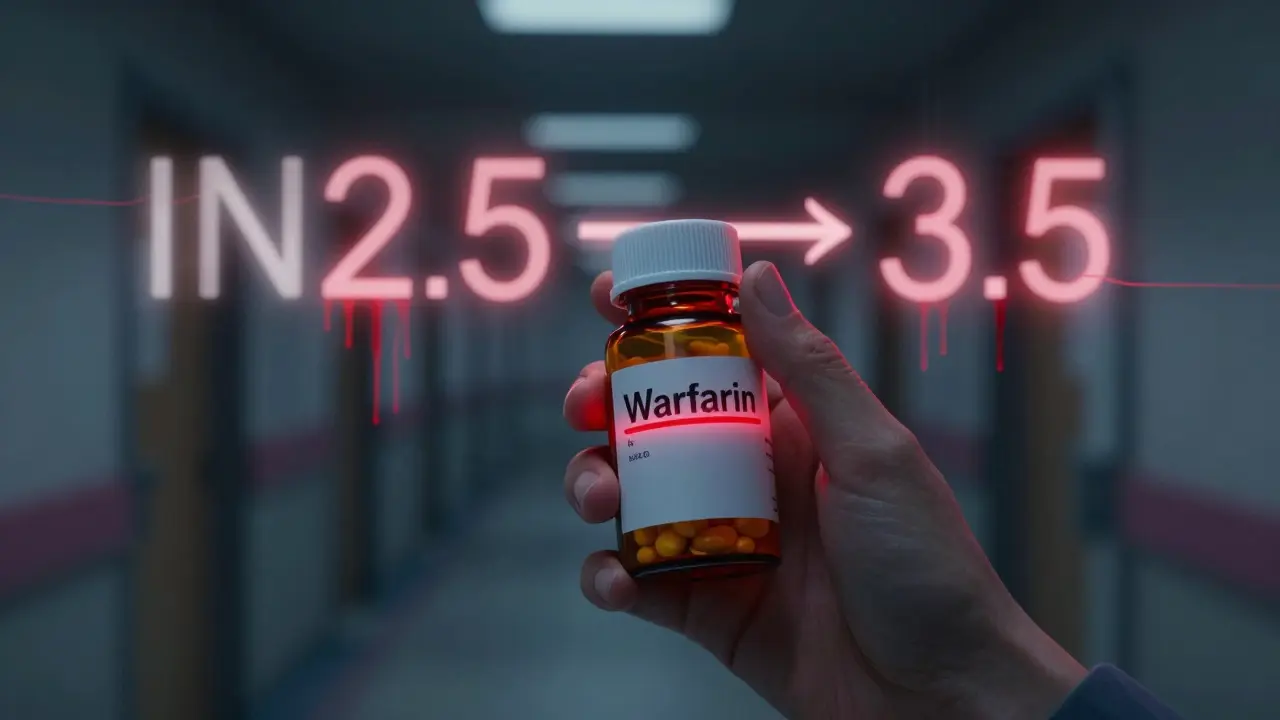
This isn’t just theoretical. Studies show that NTI drugs account for about 30% of all dosing-related adverse events, even though they make up only about 15% of drugs that require blood level monitoring. A 10% increase in warfarin dosage can push a patient’s INR from a safe 2.5 to a dangerous 3.5 or higher-raising the risk of major bleeding by more than seven times. That’s why these drugs demand precision, not just in dosing, but in monitoring, switching brands, and even how they’re stored.
The Core NTI Drug List: What’s on It
There’s no single official federal list, but multiple authoritative sources-including the FDA, state pharmacy boards, and clinical guidelines-agree on a core group of drugs that consistently fall into this high-risk category. Here are the most common ones you’ll encounter in clinical practice:
- Warfarin - Used for blood thinning. The target INR is 2.0-3.0 for most conditions. A single missed dose or dietary change (like eating more leafy greens) can throw it off. INR checks are needed weekly at first, then every few weeks once stable.
- Digoxin - For heart failure and atrial fibrillation. Therapeutic range: 0.5-2.0 ng/mL. Toxicity can cause nausea, confusion, and fatal arrhythmias. Levels must be checked before each dose adjustment.
- Lithium - A mood stabilizer for bipolar disorder. Therapeutic range: 0.6-1.2 mmol/L. Below 0.6, it may not work. Above 1.2, you risk tremors, kidney damage, or seizures. Blood tests every 3-6 months are standard.
- Phenytoin - An antiseizure medication. Target: 10-20 mcg/mL. Small changes in dose or liver metabolism (from other drugs or alcohol) can push levels into toxicity, causing slurred speech, dizziness, or even coma.
- Tacrolimus - Used after organ transplants to prevent rejection. Trough levels must stay between 5-15 ng/mL. A drop below 5 can lead to rejection; above 15 increases risk of kidney damage and neurotoxicity. Levels are checked 2-3 times a week in the first month after transplant.
- Carbamazepine - Another antiseizure and mood stabilizer. Therapeutic range: 4-12 mcg/mL. It interacts with dozens of other drugs, making dosing unpredictable without monitoring.
- Valproic Acid - Used for seizures and bipolar disorder. Therapeutic range: 50-100 mcg/mL. Liver toxicity and pancreatitis are real risks if levels climb too high.
- Cyclosporine - Another transplant immunosuppressant. Target: 100-400 ng/mL depending on time since transplant. Even minor changes in formulation can trigger rejection.
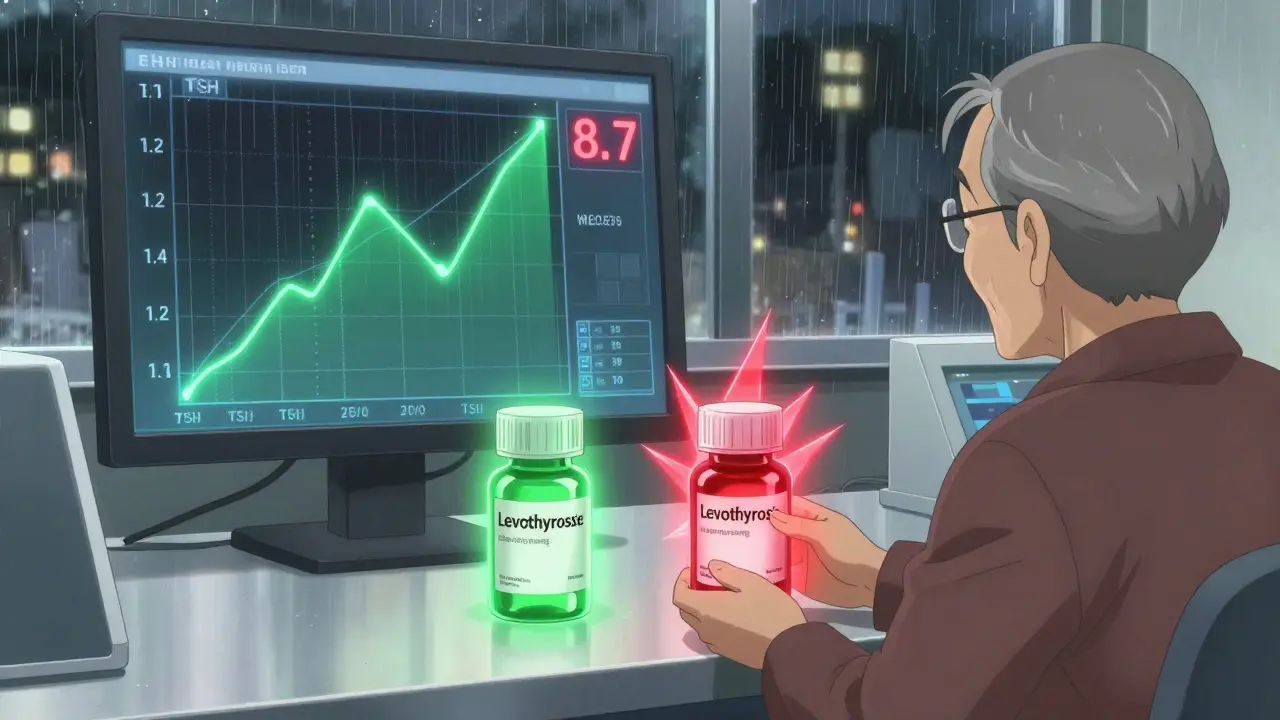
- Levothyroxine - For hypothyroidism. Not typically monitored by blood level, but TSH (thyroid-stimulating hormone) is used instead. Target: 0.5-4.5 mIU/L. Switching between generic brands has caused TSH levels to swing from normal to severely high, requiring dose re-titration over months.
Why Generic Substitutions Can Be Dangerous
You might think all pills with the same name are interchangeable. That’s not true for NTI drugs. The FDA requires stricter bioequivalence standards for generics of NTI drugs: the 90% confidence interval for absorption must stay within 90-111% of the brand-name drug. For non-NTI drugs, the range is wider: 80-125%. But even with these tighter rules, real-world problems persist.
A 2023 Reddit thread from a pharmacist described a 62-year-old patient whose TSH jumped from 1.2 to 8.7 after switching from one generic levothyroxine brand to another. It took three months of dose changes and repeated lab tests to get back to normal. That’s not an isolated case. State laws reflect this risk: 47 U.S. states have rules limiting automatic substitution of NTI drugs. In 28 states, a doctor must explicitly write “dispense as written” or “no substitution” on the prescription. In North Carolina, the law lists nine NTI drugs where substitution requires written permission. Oklahoma added desipramine, esketamine, and nortriptyline to its list in 2025.
Monitoring Isn’t Optional-It’s Essential
There’s no way around it: if you’re on an NTI drug, regular blood tests aren’t a suggestion-they’re part of your treatment plan. For warfarin, that means INR checks every few days initially. For lithium, it’s every 3-6 months. Tacrolimus levels are drawn multiple times a week right after transplant. Missing a test isn’t just negligence-it’s a safety risk.
But monitoring comes with hurdles. Each test costs between $25 and $150. Medicare covers 80%, but patients still pay out-of-pocket. A 2022 study in JAMA Internal Medicine found that 32% of lithium patients miss their scheduled monitoring appointments. And even when tests are done, many hospital systems don’t have automated alerts when levels go out of range. Only 45% of hospitals do, according to HIMSS Analytics in 2023. That means a nurse or pharmacist might not notice a dangerous spike until it’s too late.
Emerging NTI Drugs: The New Frontier
The list isn’t static. As precision medicine grows, more cancer drugs are falling into the NTI category. Drugs like axitinib (for kidney cancer), ponatinib (for leukemia), and olaparib (for ovarian cancer) now have defined therapeutic ranges. Axitinib’s target is 15-30 ng/mL. Ponatinib’s is 20-50 ng/mL. These drugs are designed to target specific cancer pathways-but if the concentration is off, they either don’t work or cause severe toxicity like liver failure or stroke.
In 2023, the FDA released draft guidance suggesting that newer anticoagulants like apixaban and rivaroxaban should also be considered NTI drugs, despite previous assumptions that they were safer than warfarin. While some experts argue their therapeutic window is wider, others point to real cases of major bleeding when patients took slightly higher doses. The debate continues, but the trend is clear: more drugs are entering this high-risk zone.

What You Need to Do
If you’re taking one of these drugs:
- Never switch brands without talking to your doctor.
- Keep all blood test appointments-even if you feel fine.
- Inform all your providers about every medication you take, including supplements. Many NTI drugs interact with common things like St. John’s wort, grapefruit, or antibiotics.
- Use one pharmacy if possible. That way, your pharmacist can track interactions and catch errors before they happen.
- Ask for a written copy of your target level and what to do if you miss a dose.
For prescribers and pharmacists: always check state laws on substitution. Use electronic alerts when available. Document every dose change and lab result. And never assume a patient understands the risk-explain it in plain language: “This isn’t like your blood pressure pill. One pill too many could send you to the ER.”
The Bigger Picture
The global market for NTI drugs was $48.7 billion in 2022 and is projected to hit $72.3 billion by 2028. Why? Because more targeted cancer therapies, immunosuppressants, and psychiatric drugs are being developed with narrow windows by design. AI-driven dosing tools and wearable biosensors are being tested to help patients stay in range without constant lab visits. A 2023 NIH-funded study using genetic testing to guide warfarin dosing cut the time to reach the right level by 40%. That’s progress.
But technology alone won’t fix the problem. The real challenge is access. Patients without reliable transportation, insurance, or consistent care are at highest risk. A person who can’t afford a $100 blood test or can’t get an appointment for weeks is living on a knife’s edge. That’s why awareness isn’t just about knowing the drug list-it’s about recognizing the system gaps that make these drugs dangerous for some and safe for others.
Are all generic drugs unsafe for NTI medications?
No, not all generics are unsafe. The FDA requires stricter bioequivalence testing for NTI drugs-90-111% absorption range versus 80-125% for others. Many generic versions are safe and effective. But because small differences can matter, some patients respond differently to certain manufacturers. That’s why doctors often recommend staying on the same generic brand once a stable dose is found. Switching brands without medical supervision can cause dangerous fluctuations.
Can I stop monitoring my NTI drug if I feel fine?
No. NTI drugs often don’t cause symptoms until levels are dangerously high or low. You might feel fine while your lithium level climbs toward toxic levels, or your warfarin INR rises into the bleeding risk zone. Monitoring isn’t about how you feel-it’s about preventing hidden, life-threatening changes. Skipping tests is one of the most common causes of preventable hospitalizations with these drugs.
Why is levothyroxine on the NTI list if we don’t measure blood levels?
Levothyroxine is monitored indirectly through TSH (thyroid-stimulating hormone), not the drug itself. The therapeutic window is narrow: a TSH above 4.5 means under-treatment; below 0.5 can cause bone loss or heart problems. Studies show that switching between generic brands-even those approved by the FDA-can cause TSH levels to shift significantly. One patient’s TSH jumped from 1.2 to 8.7 after a brand switch. That’s why many doctors insist on using the same brand consistently.
Do insurance plans cover NTI drug monitoring?
Yes, most insurance plans, including Medicare, cover therapeutic drug monitoring for NTI drugs, typically paying 80% of the cost. However, patients still face out-of-pocket expenses ranging from $5 to $30 per test. Some plans require prior authorization, especially for frequent testing. If cost is an issue, ask your pharmacist about patient assistance programs or generic alternatives that are less likely to require repeated monitoring.
Is there a list I can carry with me?
Yes. The FDA’s Orange Book lists 12 drugs with official NTI designations, but clinical practice includes more. Many states publish their own lists-North Carolina’s includes 9, Oklahoma’s includes 12. Ask your pharmacist for a printed list of your specific NTI drugs and their therapeutic ranges. Keep it in your wallet or phone. It’s a simple step that can prevent a medical emergency.
Final Thought
NTI drugs aren’t inherently bad. They’re powerful tools-used to save lives after transplants, control seizures, stabilize moods, and prevent strokes. But their power comes with responsibility. Whether you’re a patient, a caregiver, or a provider, treating these drugs with the respect they demand isn’t optional. It’s the difference between staying healthy and facing a crisis you never saw coming.
8 Comments
March 6, 2026 phyllis bourassa
Ugh, I swear NTI drugs are the reason I stopped trusting pharmacies. My aunt went from ‘fine’ to ICU because they switched her levothyroxine brand without telling her. She felt ‘fine’-until her heart started acting like it was auditioning for a horror movie. No one warned her. No one checked. Just a silent, deadly brand swap. Why do we let this happen? It’s not rocket science-keep the same pill, same pharmacy, same doctor. But nope, corporate greed wins again. 🤦♀️
March 7, 2026 William Minks
Same. My dad’s on tacrolimus after his kidney transplant. We used to get his levels checked every 3 days. Now? Insurance wants us to wait 2 weeks. I had to call the pharmacy 4 times just to get them to call the doctor. 😔
He’s lucky he has me. What about people without family? This system is broken. 🙏
March 9, 2026 Jeff Mirisola
Man, I wish more people knew how dangerous this stuff is. I’m a nurse, and I’ve seen too many patients come in with lithium toxicity because they switched generics or started taking ibuprofen for a headache. It’s not a ‘maybe’-it’s a ‘you’re gonna die’ situation.
And yeah, I get that generics save money-but when your life’s on the line, ‘saving’ is a myth. I always tell patients: ‘If your pill looks different, call your pharmacist before you swallow it.’ Simple. Life-saving.
March 10, 2026 Susan Purney Mark
Thank you for this post. I’ve been on lithium for 12 years and honestly, I didn’t realize how many people don’t know about the monitoring. My doctor always explained it like: ‘Think of it like tuning a guitar-you don’t just play it once and hope it sounds right.’
Also, if you’re on an NTI drug, keep a note in your phone with your target range. I have mine saved under ‘My Life Depends on This.’ 😊
And yes, I do use the same pharmacy. Always.
March 11, 2026 Ian Kiplagat
Interesting. UK has similar rules-NHS won’t auto-substitute NTI drugs without prescriber approval. But uptake varies by region. Some GPs still don’t know the list. A 2023 audit found 18% of NTI prescriptions were incorrectly substituted.
Education gap. Not a policy gap. 🇬🇧
March 11, 2026 Amina Aminkhuslen
Oh sweet mother of mercy, this is why I refuse to let anyone touch my meds. I had a pharmacist once try to swap my phenytoin for a ‘bioequivalent’ generic. I screamed so loud they called security. Not because I’m dramatic-because I’ve seen what happens when your brain forgets how to stop seizing.
Don’t you dare touch my pills. I’ve got the TDM logs. I’ve got the doctor’s note. And I’ve got the receipts. 💥
March 12, 2026 amber carrillo
Monitoring is non-negotiable. Skipping tests because you feel fine is like not checking your car’s oil because the engine sounds quiet. It’s not about how you feel. It’s about numbers. Numbers don’t lie.
Stay consistent. Stay informed. Stay alive.
March 13, 2026 Tim Hnatko
My brother’s on cyclosporine after his liver transplant. He’s been stable for 4 years. But every time he travels, he has to carry his lab results, a letter from his doctor, and a printed list of his drugs. No one at the airport or foreign pharmacy knows what NTI means. It’s exhausting.
Maybe we need a global NTI card-like a passport for your meds.
Just a thought.
Write a comment