
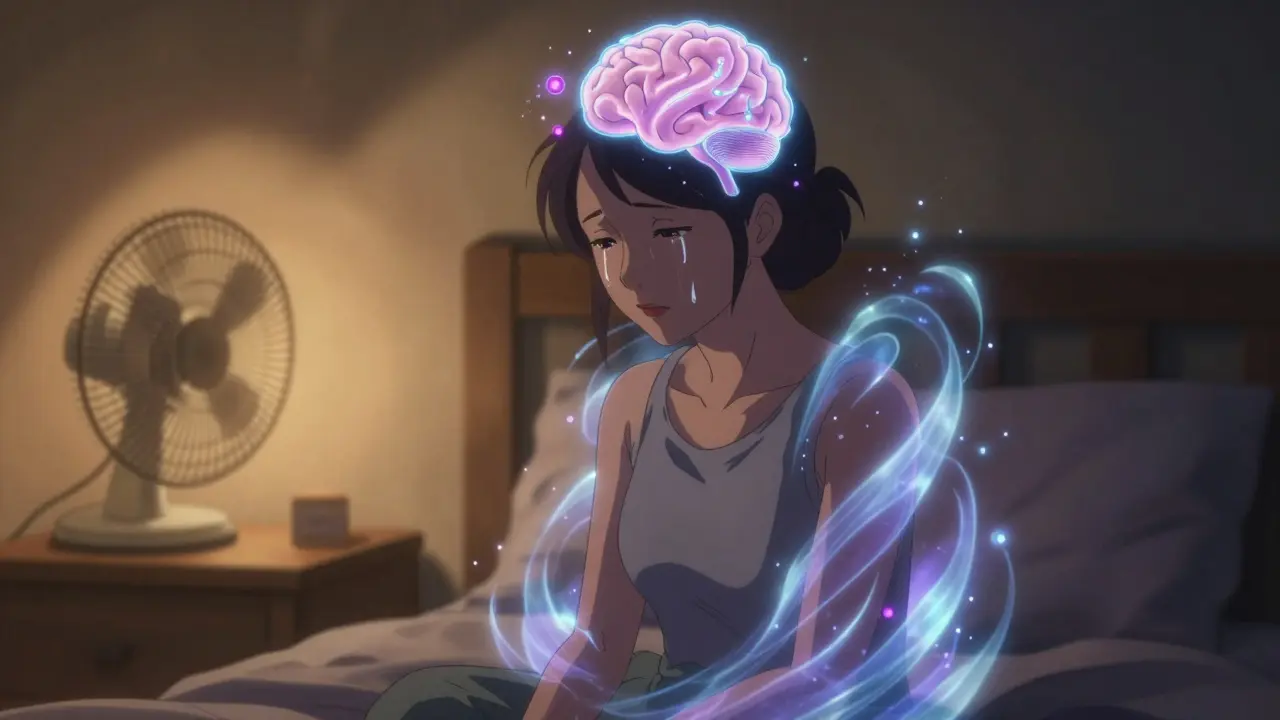
When your mood starts feeling out of control-sudden tears, unexplained anger, or anxiety that won’t quit-it’s easy to blame stress, sleepless nights, or even yourself. But if you’re in your 40s or early 50s and these feelings are new or worsening, it might not be you. It could be your hormones.
Why Your Mood Feels Like It’s on a Rollercoaster
Perimenopause isn’t just about irregular periods or hot flashes. It’s a slow, messy shift in your body’s chemistry that lasts, on average, four to eight years. Estrogen, progesterone, and even testosterone levels don’t just drop-they swing wildly. One week you might feel fine; the next, you’re crying over a spilled cup of coffee or snapping at your partner for leaving the towel on the floor. Estrogen doesn’t just control your reproductive system. It talks directly to your brain. It helps make serotonin, the chemical that lifts your mood. It also helps regulate dopamine, the reward chemical that keeps you motivated. When estrogen drops or spikes unpredictably, your brain struggles to keep up. That’s why so many women say they feel like they’ve become someone else. Progesterone, which calms your nervous system, also dips. That means less GABA-the brain’s natural chill pill. Without enough of it, your stress response goes into overdrive. Even small things feel overwhelming. And when you’re not sleeping because of night sweats (which 63% of women experience), your brain doesn’t get time to reset. Poor sleep + hormonal chaos = a perfect storm for anxiety and irritability.It’s Not Just ‘Being Emotional’-It’s Biology
Women’s brains have 30-40% more estrogen receptors than men’s. That means hormonal changes hit harder. Studies show that during perimenopause, gray matter in the brain declines faster in women than in men of the same age. That’s not aging-it’s hormonal. And it’s linked to brain fog, memory lapses, and emotional sensitivity. The American College of Obstetricians and Gynecologists confirms that hormonal shifts during perimenopause can trigger or worsen mood disorders. This isn’t in your head. It’s in your neurochemistry. And it’s real. About 10-20% of women experience mood symptoms severe enough to interfere with daily life. For 15%, it’s so bad they need medical help. And here’s something most people don’t tell you: if you’ve had depression before, you’re five times more likely to struggle with mood swings during perimenopause. That doesn’t mean you’re weak. It means your brain is more sensitive to these chemical changes.How It’s Different From Other Mood Disorders
If you’ve had PMS or postpartum depression, you might think this is the same thing. It’s not. Premenstrual dysphoric disorder (PMDD) follows a tight 28-day cycle. You feel fine for most of the month, then crash for a few days before your period. Perimenopausal mood changes? They come and go randomly. One day you’re fine. The next, you’re overwhelmed by sadness or rage-with no clear trigger. Postpartum depression hits fast, usually within weeks of giving birth. Perimenopausal mood changes creep in over months or years. They’re slower, quieter, and harder to pin down. And here’s the kicker: depression triggered by perimenopause is harder to treat. Studies show women with this type of depression are 3.2 times more likely to resist standard antidepressants. That’s not your fault. It’s because the root cause isn’t just low serotonin-it’s low estrogen.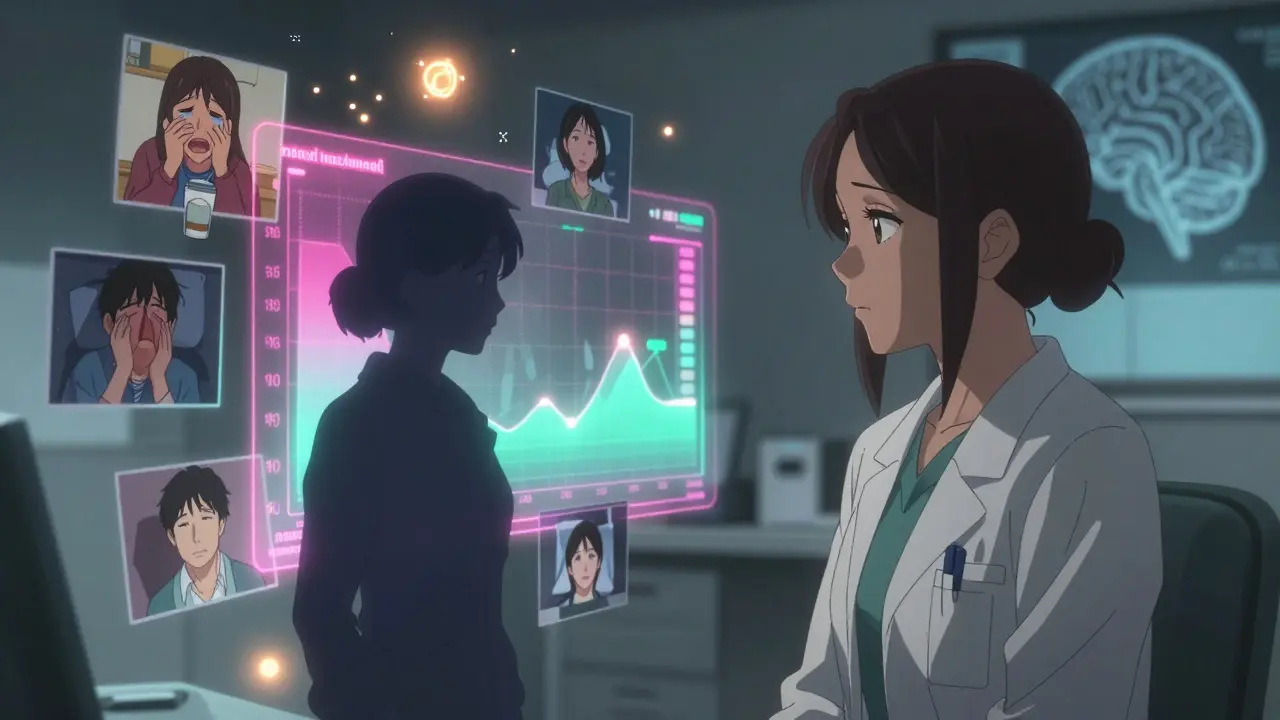
What Actually Works: Treatments That Address the Root Cause
There’s no one-size-fits-all fix, but the best results come from targeting both hormones and brain chemistry. Hormone therapy (HRT), especially low-dose estrogen, helps about 45-55% of women with mood symptoms. It’s not a magic cure, but for many, it’s the missing piece. A 2023 update from the North American Menopause Society now recommends starting with low-dose estrogen (0.25-0.5 mg daily) before jumping to antidepressants. Why? Because if your mood is tied to estrogen drops, antidepressants alone won’t fix the root problem. SSRIs like sertraline or escitalopram help about 50-60% of women with mood symptoms. They’re especially useful if you’re not a candidate for HRT-say, if you have a history of breast cancer or blood clots. But they don’t touch hot flashes or sleep issues. That’s why many women take both: estrogen for the physical symptoms, an SSRI for the emotional ones. Therapy matters too. Cognitive behavioral therapy (CBT) helps you reframe negative thoughts and manage stress. The FDA even approved a digital CBT app called MenoMood in 2023. In clinical trials, it reduced mood symptoms by 35% over 12 weeks. No pills. Just guided exercises you can do on your phone. Lifestyle tweaks aren’t optional-they’re essential. Regular exercise, even just 30 minutes of walking five times a week, boosts serotonin naturally. Cutting back on caffeine and alcohol helps stabilize mood. And sleep? Prioritize it. Use a fan, wear breathable pajamas, keep your bedroom cool. Better sleep = better emotional control.What Doesn’t Work (and Why You Should Avoid It)
Don’t wait until you’re in crisis to act. Too many women are told they’re just “stressed” or “going through a phase.” That’s outdated thinking. Herbal supplements like black cohosh or evening primrose oil? Some women swear by them, but studies show they’re no better than placebo for mood. And they’re not regulated-what’s in the bottle might not match the label. Antidepressants alone, without addressing hormones? Often ineffective. One study found that 40% of women on SSRIs alone saw no improvement in mood until they added estrogen therapy. Ignoring symptoms because “it’s just menopause”? That’s dangerous. Left untreated, perimenopausal mood changes can lead to chronic depression, relationship breakdowns, and even early retirement. Sixty-eight percent of women say their work performance drops during this time.
9 Comments
January 14, 2026 TooAfraid ToSay
So now we’re supposed to believe every mood swing is biology? My cousin smokes weed, drinks espresso at midnight, and yells at her cat-she calls it ‘perimenopause.’ You’re not a lab rat, lady. Stop outsourcing your emotions to hormones.
January 15, 2026 Susie Deer
This is why America’s falling apart. Women used to just deal with it. Now we got apps and hormones and doctors telling you you’re broken because you cried at a commercial. Grow a spine.
January 16, 2026 says haze
The reductionist framing here is both scientifically naive and culturally toxic. Estrogen doesn’t ‘talk’ to the brain-it modulates receptor kinetics across the limbic system, influencing serotonin synthesis rates and GABAergic tone via allosteric interactions at the 5-HT1A and NMDA receptors. To reduce this to ‘hormones made me cry’ is to ignore the epigenetic and neuroplastic dimensions of neuroendocrine adaptation. Also, the NIH study is underpowered. 10k women won’t capture interindividual variance in CYP19A1 polymorphisms. You need GWAS-level granularity.
January 17, 2026 Alvin Bregman
i get what ur saying but honestly i just started taking walks after work and it helped way more than i thought. no pills no drama. just fresh air and not checking my phone for an hour. my husband noticed i stopped snapping at him too. weird how simple stuff works
January 17, 2026 Allison Deming
It is both irresponsible and deeply concerning that this article casually endorses hormone replacement therapy as a first-line intervention for mood dysregulation without adequately addressing the increased risk of thromboembolic events, estrogen-sensitive malignancies, or the long-term cognitive consequences of exogenous hormone exposure in women over 50. Furthermore, the uncritical endorsement of digital CBT apps as a viable substitute for clinical psychotherapy represents a dangerous commodification of mental health care that prioritizes corporate convenience over therapeutic integrity. Women deserve evidence-based, individually tailored interventions-not algorithm-driven quick fixes masquerading as empowerment.
January 19, 2026 Dylan Livingston
Oh wow, so now we’re giving out medical licenses to wellness influencers? ‘Use a fan’ and ‘wear breathable pajamas’-how revolutionary. Meanwhile, Big Pharma is quietly funding these ‘studies’ to push SSRIs and HRT into every woman’s medicine cabinet. Did you know the North American Menopause Society gets 63% of its funding from pharmaceutical sponsors? The real ‘chemical imbalance’ is in the boardrooms, not your hypothalamus.
January 19, 2026 Andrew Freeman
hormone therapy works for 50 percent of women but you want me to believe that’s science and not just placebo because you said so? i tried it. my boobs got huge and i cried at a squirrel. then i quit. now i just yell at my dog and call it a day. also why is everyone so obsessed with estrogen like its the holy grail? what about testosterone? nobody talks about that
January 20, 2026 Sarah -Jane Vincent
They’re lying to you. This whole perimenopause narrative? It’s a distraction. The real reason you’re anxious is because the government is spraying lithium in the water supply to keep women docile during election cycles. The FDA knows. The WHO knows. That’s why they’re pushing ‘MenoMood’-it’s a tracking tool for your neural data. Your mood swings? They’re not hormonal. They’re surveillance triggers. Check your tap water. Check your smart fridge. They’re watching.
January 22, 2026 Henry Sy
you ever notice how every time a woman says ‘i’m hormonal’ men start acting like she just confessed to robbing a bank? like, sure, estrogen dips might make you wanna scream at your kid for eating cereal with a fork-but that doesn’t mean you’re not still a fucking goddess. i’ve seen women in their 50s run marathons, start businesses, and write novels while crying over burnt toast. you’re not broken. you’re upgraded. and if your doctor doesn’t get that? find a new one. or better yet-go to Nigeria. they don’t have this ‘hormone crisis’ nonsense there. they just hand you a plate of eba and tell you to pray. works better than SSRIs.
Write a comment