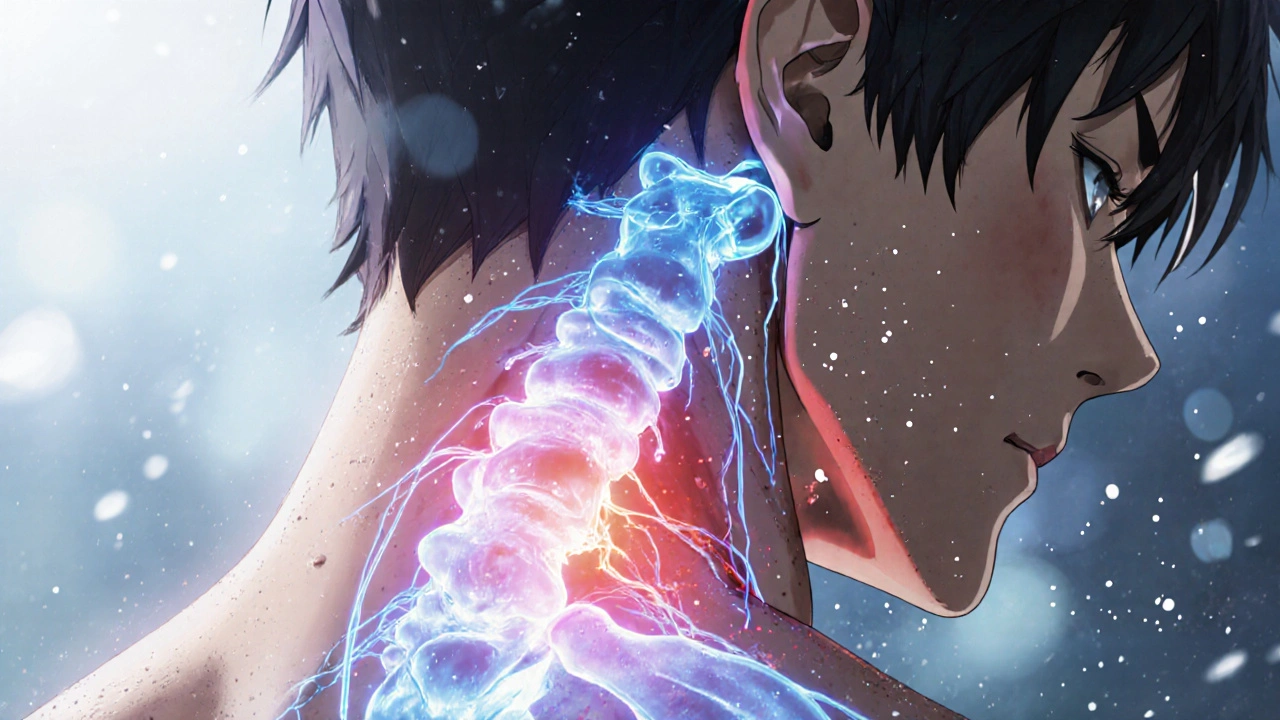
Cervical Radiculopathy: Causes, Symptoms, and Treatment Options
When a nerve in your neck gets squeezed or irritated, it doesn’t just hurt there—it sends pain, tingling, or weakness down your arm. That’s cervical radiculopathy, a condition where a spinal nerve root in the neck is compressed or inflamed. Also known as a pinched nerve in the neck, it’s not just a sore neck—it’s your nervous system screaming for attention. You might feel it as a sharp, electric shock when you turn your head, or a dull ache that won’t go away no matter how much you stretch. Some people wake up with numb fingers. Others can’t grip their coffee cup. It’s not imaginary. It’s physical. And it’s more common than you think.
This isn’t just about aging. While degenerative discs and bone spurs are common culprits, especially in people over 40, younger folks get it too—from sports injuries, car accidents, or even long hours hunched over a phone. A herniated disc, when the soft center of a spinal disc bulges out and presses on a nerve is one of the top causes. So is spinal stenosis, the narrowing of the space around the spinal cord. Both squeeze the nerves that run from your neck to your hands. And if you’ve ever had a flare-up after lifting something heavy or sleeping funny, you know how quickly it can hit.
Here’s what most people don’t realize: the pain isn’t always where you feel it. A pinched C6 nerve might make your thumb tingle, while C7 affects your middle finger. Doctors use that pattern to track down the problem. Imaging like MRIs help, but often, the diagnosis comes from a simple physical exam—checking your reflexes, strength, and where the pain shoots. And here’s the good news: most cases improve without surgery. Physical therapy, posture fixes, anti-inflammatories, and sometimes steroid injections can calm things down. But if your arm is going weak, or you’re losing grip, that’s a red flag. Don’t wait.
The posts below aren’t just about cervical radiculopathy—they’re about what happens next. You’ll find real stories and clear advice on how medications, physical rehab, and even lifestyle tweaks can ease the pressure on your nerves. Some articles dig into how painkillers affect recovery. Others show how sleep position can make it worse—or better. You’ll see how one person’s neck pain was actually linked to a medication side effect, and how another found relief through targeted exercises, not pills. This isn’t theory. It’s what people have tried. And it’s what works.