
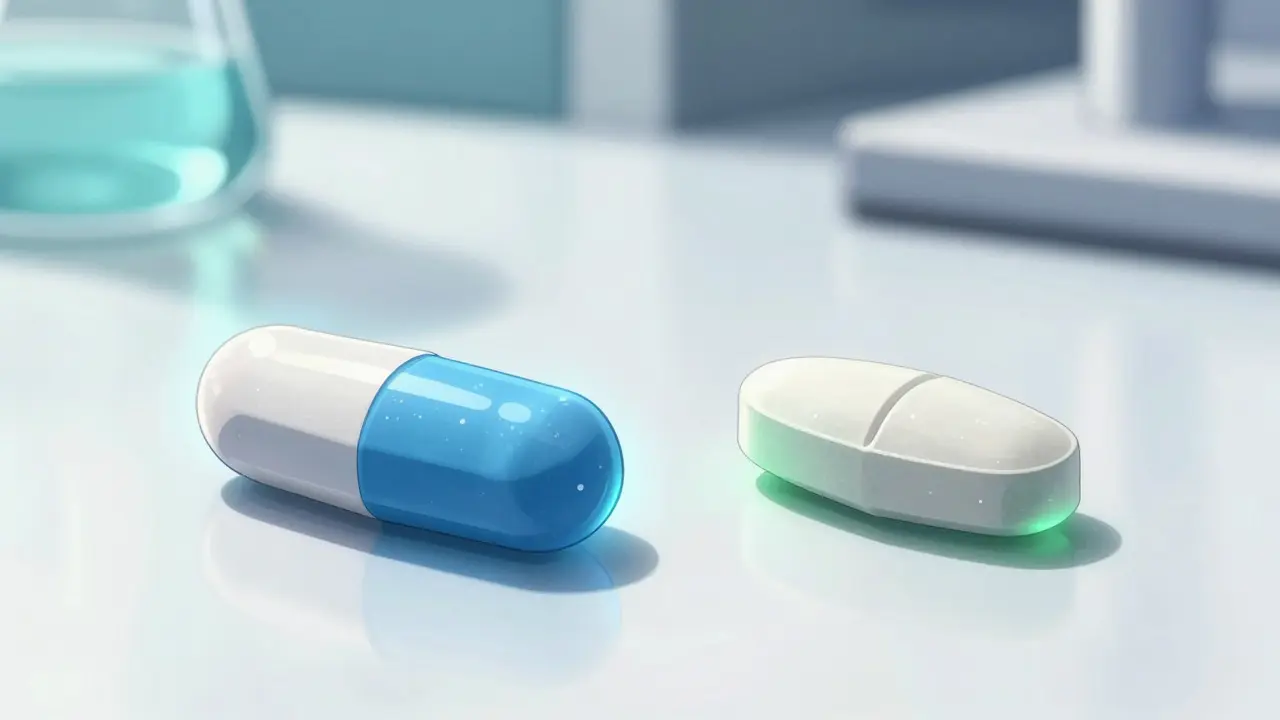
Imagine paying $20 for a pill that works exactly the same as one costing $150. That is the reality of generic drugs, which are pharmaceutical products containing the same active chemical substance as their proprietary counterparts. You might wonder how they can be so much cheaper if they work the same way. The answer lies in patent expiration and streamlined regulatory pathways. Once a brand-name drug’s patent expires-typically after 20 years-other manufacturers can produce versions of it without repeating the expensive research and development process. This shift allows companies to pass savings directly to consumers while maintaining strict quality standards.
What Defines a Generic Drug?
To understand what makes a medication "generic," you need to look at its core components. A generic drug is identical or bioequivalent to a brand-name drug in dosage form, safety, strength, route of administration, quality, performance characteristics, and intended use. This definition comes directly from the U.S. Food and Drug Administration (FDA). It means that if your doctor prescribes a specific medication, a pharmacist can legally substitute a generic version because the therapeutic effect remains the same. The only major difference often visible to patients is the appearance. Since trademark laws prevent generics from looking exactly like the brand name, they may have different colors, shapes, or flavors. However, these inactive ingredients do not change how the medicine works in your body.
The Regulatory Pathway: How Generics Get Approved
You might assume that because generics are cheaper, they go through less rigorous testing. In reality, they follow a specific legal path known as the Abbreviated New Drug Application (ANDA) process. This system was created by the Hatch-Waxman Act of 1984. Instead of running new animal studies or large clinical trials, generic manufacturers prove that their product is bioequivalent to the original reference listed drug. Bioequivalence means the generic delivers the same amount of active ingredient into your bloodstream at the same speed as the brand-name version. The FDA requires statistical proof that the ratio of population geometric means for key pharmacokinetic parameters falls within an 80% to 125% range. This ensures that any differences in absorption are too small to matter clinically. The FDA processes about 1,000 ANDAs annually, with review times averaging around 10 months for first-cycle approvals.
Bioequivalence and Manufacturing Standards
Bioequivalence is the technical heart of generic drug approval. It involves comparing the rate and extent to which the active ingredient reaches systemic circulation. For most drugs, this means measuring the area under the curve (AUC) and the maximum concentration (Cmax) in healthy volunteers. If the generic matches the brand within the accepted statistical limits, it is considered therapeutically equivalent. Beyond just the formula, manufacturing standards are equally strict. The FDA conducts approximately 3,500 inspections annually of generic drug facilities worldwide. These checks ensure compliance with Current Good Manufacturing Practices (cGMP), which mandate identical standards for identity, strength, purity, and quality. Just like brand-name drugs, generics must undergo months-long stability testing to prove they last until their expiration date. The agency permits only minimal variability in manufacturing, typically allowing a ±5% variation in active ingredient content.

Cost Comparison: Why Generics Are Cheaper
The price gap between generic and brand-name drugs is significant and benefits the entire healthcare system. Generics typically cost 80% to 85% less than their brand-name equivalents. According to the Congressional Budget Office, generic competition reduces prices to about 15% of the original brand price within one year of entry. This savings happens because generic manufacturers don't have to recoup the average $2.6 billion spent on researching and developing the original drug. In the United States, generics account for 90.5% of all prescriptions dispensed but represent only 13.1% of total drug expenditure. Over the past decade, this has saved the U.S. healthcare system an estimated $2.18 trillion. When multiple generic manufacturers enter the market, prices drop even further. The Federal Trade Commission reports that when five or more competitors are present, prices can fall to about 9% of the original brand price.
| Feature | Brand-Name Drug | Generic Drug |
|---|---|---|
| Active Ingredient | Original compound | Identical compound |
| Approval Process | New Drug Application (NDA) | Abbreviated New Drug Application (ANDA) |
| Typical Cost | High (covers R&D) | Low (80-85% less) |
| Appearance | Unique trademarked design | Different color/shape (inactive ingredients vary) |
| Therapeutic Effect | Proven efficacy | Bioequivalent (same clinical benefit) |
Expert Consensus and Safety Profile
Are generic drugs really as safe? Major medical bodies say yes. The American Medical Association states that offering patients a generic medicine when available is one of the primary ways physicians can practice cost-effective prescribing. The Institute of Medicine reviewed 38 clinical studies and found no clinically meaningful differences in effectiveness between generic and brand-name cardiovascular drugs. Dr. Janet Woodcock, former Director of the FDA's Center for Drug Evaluation and Research, noted that the FDA would not allow generics to be marketed unless they were therapeutically equivalent. However, there is a nuance for certain medications. Narrow therapeutic index drugs, such as warfarin or levothyroxine, require closer monitoring when switching between brands and generics. For these specific cases, small variations in blood concentration can have larger clinical consequences, so doctors may prefer consistency or adjust dosages carefully. For the vast majority of common medications, though, the switch is seamless and safe.

Market Dynamics and Future Trends
The global generic pharmaceuticals market was valued at $404.4 billion in 2022 and is projected to reach $569.5 billion by 2028. This growth reflects the increasing reliance on affordable treatments worldwide. In the U.S., the top 10 generic manufacturers control about 50% of the market by value, indicating high consolidation. One challenge facing the industry is supply chain resilience. Currently, 80% of active pharmaceutical ingredients for generics are sourced from facilities in India and China. Recent regulations aim to diversify these sources to reduce risk. Looking ahead, the FDA projects that 350 brand-name drugs with annual sales of $138 billion will lose patent protection between 2023 and 2027. This wave of expirations will likely drive further price reductions and expand access to complex therapies. As regulations evolve, such as the Generic Drug User Fee Amendments (GDUFA) III, the focus remains on speeding up reviews while maintaining high quality standards.
Frequently Asked Questions
Do generic drugs work the same as brand-name drugs?
Yes. Generic drugs are bioequivalent to brand-name drugs, meaning they deliver the same active ingredient to your body at the same rate. They must meet the same FDA standards for safety, strength, and quality. Any differences in appearance are due to inactive ingredients and do not affect therapeutic performance.
Why are generic drugs so much cheaper?
Generic manufacturers do not have to pay for the initial research, development, and marketing costs associated with creating a new drug. They also use an abbreviated approval process (ANDA) that skips redundant clinical trials. This lower overhead allows them to sell the medication at a significantly reduced price, typically 80-85% less than the brand-name version.
Can my pharmacist substitute a generic for my prescription?
In most U.S. states, pharmacists can substitute a generic for a brand-name drug if your prescription does not specify "dispense as written." This is known as generic substitution. For narrow therapeutic index drugs, your doctor may need to approve the switch to ensure consistent dosing levels.
Are there any risks with taking generic drugs?
For most patients, the risk is negligible. However, individuals taking narrow therapeutic index drugs (like warfarin) should monitor their levels closely when switching between brands and generics. Otherwise, generics undergo the same rigorous quality controls and post-market surveillance as brand-name drugs, ensuring long-term safety and efficacy.
How long does it take for a generic drug to be approved?
The FDA aims to review standard Abbreviated New Drug Applications (ANDAs) within 10 months. This timeline includes verifying bioequivalence data and inspecting manufacturing facilities. Recent updates to user fee agreements aim to maintain this efficiency while increasing oversight of global supply chains.