
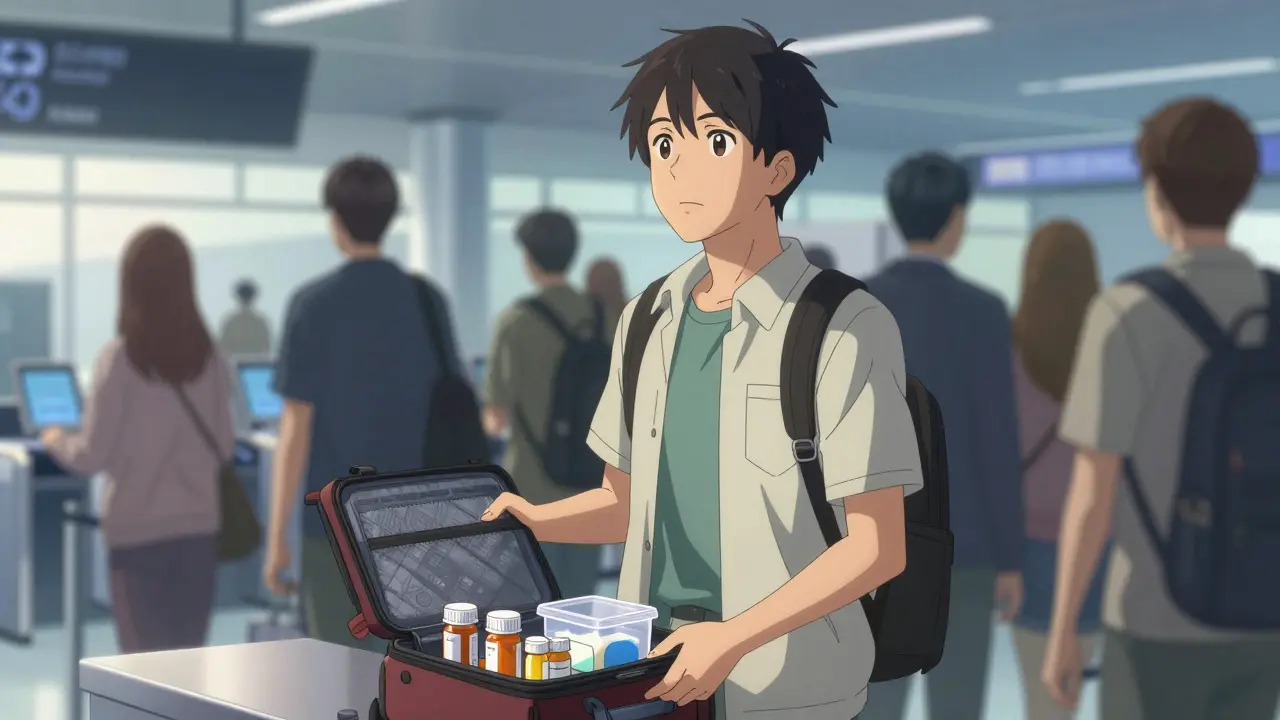
Imagine standing in a long line at the airport security checkpoint. You’re already stressed about making your flight on time. Then, you reach into your bag for your daily blood pressure pills or insulin, only to realize you packed them in your checked luggage. Or worse, you have a large bottle of liquid cough syrup that might trigger an alarm. It’s a nightmare scenario that thousands of travelers face every year.
The good news? The Transportation Security Administration (TSA) has clear, traveler-friendly rules for bringing prescription medications through security. In fact, they actively encourage you to keep your meds with you. But knowing exactly what is allowed, how to pack it, and what documents to carry can save you from awkward delays or confiscated medicine.
Key Takeaways
- Keep meds in carry-on: Never pack essential medications in checked bags. They are exempt from the standard liquid limits.
- Liquids are allowed: Prescription liquids, gels, and creams do not need to fit in the 3-1-1 quart-sized bag.
- Labeling matters: Keep medications in original containers whenever possible, especially for international travel or controlled substances.
- CBD restrictions apply: Only hemp-derived CBD with less than 0.3% THC is federally legal; marijuana remains prohibited regardless of state laws.
- Declare at screening: Tell TSA officers if you have medical liquids or devices to speed up the process.
Why Carry-On Is Non-Negotiable
If there is one golden rule for traveling with medicine, it is this: Carry-on luggage is the only safe place for prescription medications during air travel. Checked bags get lost, delayed, or stolen. If your heart medication or inhaler is stuck in a baggage carousel in another city, you are left without critical care.
Airlines like United explicitly advise passengers to never place medication in checked bags. This isn't just advice; it’s a safety protocol. Even if you don’t think you’ll need a dose during the flight, keep it with you. Temperature fluctuations in cargo holds can also degrade certain medicines, particularly insulin and biologics.
For those who worry about bulk, consider transferring pills to smaller pill organizers *only* if you are traveling domestically within the U.S. However, for international trips or controlled substances, original labeling is crucial. We will dive deeper into packaging later.
Navigating the Liquid Rules: Exemptions for Meds
Most travelers know the "3-1-1" rule: liquids must be in containers of 3.4 ounces (100 milliliters) or less, all fitting into one quart-sized bag. This rule applies to shampoo, toothpaste, and water bottles. But it does not apply to medically necessary liquids.
You can bring unlimited quantities of FDA-approved prescription medications in liquid form. This includes:
- Insulin in pre-filled pens or vials
- OmniPod insulin delivery systems
- Prescription creams for conditions like psoriasis or eczema
- Saline solution for contact lenses
- Cough syrups and cold medicines (like DayQuil)
- Medically necessary gels like hydrocortisone or antibiotic ointments
When you approach the scanner, remove these items from your bag and declare them to the TSA officer. They may need to be screened separately, often via X-ray or explosive trace detection. Do not put them back in your main bag until cleared.
| Item Type | Standard Rule | Medical Exception |
|---|---|---|
| Toiletries (Shampoo, Lotion) | Max 3.4 oz per container | No exception |
| Prescription Liquids | N/A | Unlimited quantity allowed |
| Ice Packs/Gel Packs | Prohibited if liquid | Allowed if completely frozen solid |
| Packaging Requirement | Must fit in quart bag | Must be declared to officer |
Packing Tips: Original Containers vs. Pill Organizers
Should you keep your pills in the pharmacy bottle or transfer them to a weekly organizer? It depends on where you are going.
Domestic Travel (Within the U.S.): You can generally use pill organizers. TSA does not require prescriptions to be in original containers for domestic flights. However, keeping them labeled helps if questions arise.
International Travel: Always use original, pharmacy-labeled containers. Customs and Border Protection (CBP) and foreign authorities often require proof that the medication is prescribed to you. A generic plastic box offers no proof of ownership or dosage. Additionally, CBP recommends carrying no more than a 90-day supply unless you have specific documentation for longer stays.
Controlled Substances: If you take medications like Adderall, Xanax, or codeine-containing painkillers, keep them in their original bottles. These are Schedule II-V controlled substances. Mismatches between the name on the prescription and your government-issued ID are a leading cause of security delays. Ensure your ID matches the prescription label exactly, including middle names or initials.
CBD, Marijuana, and Federal Law Conflicts
This is where things get tricky. Many states have legalized medical or recreational marijuana. However, airports are federal jurisdiction. Under federal law, marijuana remains illegal.
TSA guidelines state that marijuana and cannabis-infused products are prohibited in both carry-on and checked bags. This applies even if you have a valid state medical card. The only exception is hemp-derived CBD oil containing no more than 0.3% THC on a dry weight basis, provided it is approved by the FDA or meets specific agricultural standards.
Despite this, enforcement can be inconsistent. Some travelers report confiscation of compliant CBD products due to officer discretion or lack of clear labeling proving THC content. To minimize risk, carry a certificate of analysis (COA) from the manufacturer showing the THC percentage is below 0.3%. If you rely on marijuana for medical reasons, consult with your doctor about alternative, federally legal options for travel days.

Special Equipment: Insulin Pumps and Coolers
Traveling with medical devices requires extra preparation. Insulin pumps, continuous glucose monitors (CGMs), and auto-injectors are permitted through security.
You have the right to request a visual inspection instead of having your device go through the X-ray machine, as radiation can potentially damage sensitive electronics. Notify the TSA officer before screening begins. You may also wear your pump through the metal detector or body scanner if you prefer, but inform the officer so they can guide you through the process.
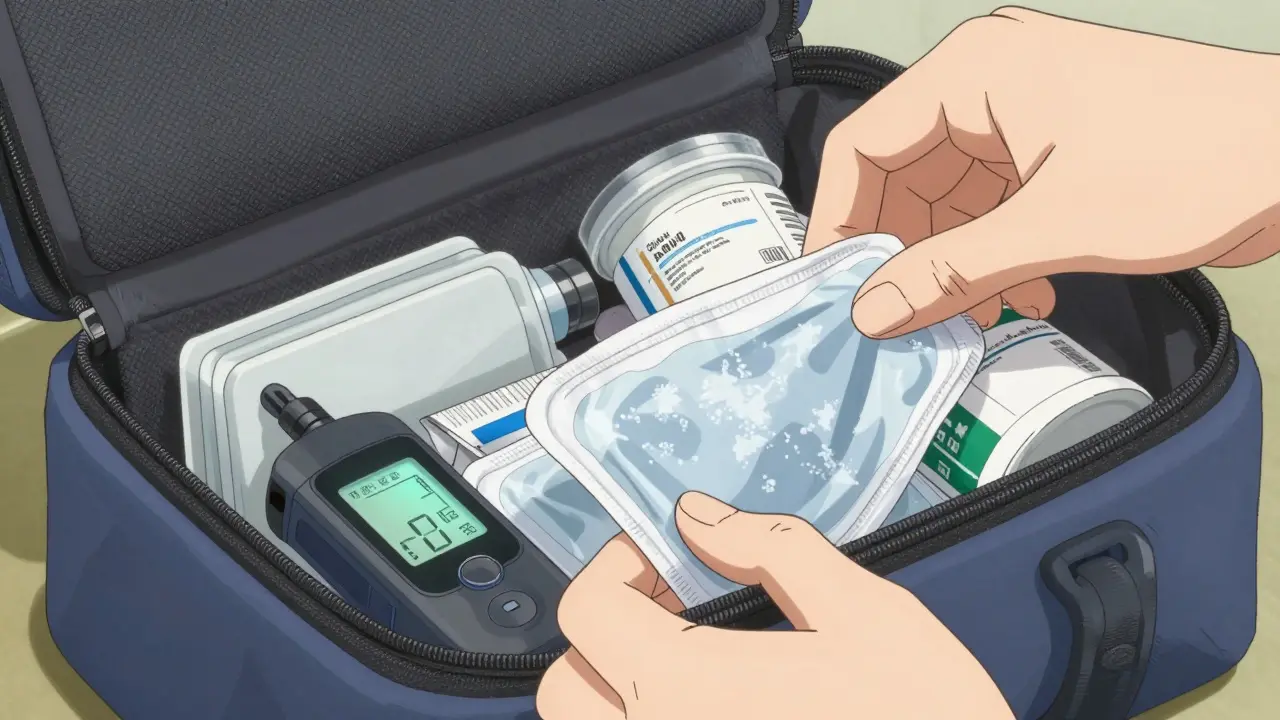
For temperature-sensitive meds, you can bring ice packs. The key is that they must be completely frozen solid when they go through security. If they are slushy or leaking, they may be subject to additional screening. Frozen gel packs are allowed under TSA Security Directive 1544-2023-01.
Speeding Up the Process: PreCheck and Sunflower Lanyards
If you fly frequently, consider joining TSA PreCheck. This program allows trusted travelers to keep shoes, belts, light jackets, laptops, and compliant liquids in their bags. As of late 2024, PreCheck members can also keep medications in their bags during screening without removing them, saving valuable time.
Another helpful resource is the TSA Cares program. If you have complex medical needs or disabilities, call TSA Cares at 1-855-787-2227 at least 72 hours before your flight. They can coordinate with airport staff to provide specialized assistance.
Additionally, look out for the Sunflower Lanyard program. Available at over 45 major U.S. airports, this discreet lanyard signals to TSA officers that you have a hidden disability or medical condition and may need extra time or communication support. You can pick one up at customer service desks in participating airports.
International Considerations: Beyond TSA
TSA handles security within the U.S. Once you land abroad, local laws take over. What is legal in America may be strictly prohibited elsewhere.
Dr. Jane Chen from Johns Hopkins University notes that many travelers face arrest or denial of entry for bringing common U.S. prescriptions into countries like Japan, South Korea, or the UAE. Common culprits include ADHD medications, strong painkillers, and some sleep aids.
Before booking an international trip:
- Check the destination country’s embassy website for restricted medication lists.
- Carry a letter from your physician explaining your diagnosis, the necessity of the medication, and confirming it is prescribed to you.
- Keep medications in original packaging with your name clearly visible.
- Verify if a permit or prior notification is required for controlled substances.
The International Association for Medical Assistance to Travellers (IAMAT) database, now integrated into the TSA app, can help verify medication status in over 200 countries.
Can I bring prescription pills in a pill organizer?
Yes, for domestic flights within the U.S., you can use pill organizers. However, for international travel or controlled substances, always keep medications in their original, pharmacy-labeled containers to prove ownership and compliance with customs regulations.
Do I need to declare my medication to TSA?
You do not need to declare solid pills, but you should declare liquid medications, gels, and creams. Remove them from your bag and inform the officer so they can screen them appropriately. This speeds up the process and avoids alarms.
Is CBD oil allowed on planes?
Only hemp-derived CBD oil with less than 0.3% THC is federally legal and allowed. Marijuana and high-THC cannabis products are prohibited, even with a medical card, because airports are under federal jurisdiction. Carry proof of THC content if possible.
Can I bring ice packs for insulin?
Yes, ice packs are allowed if they are completely frozen solid when they go through security. If they are partially melted or slushy, they may be subject to additional screening. Gel packs are also permitted under the same condition.
What documents should I carry for international travel?
Carry a letter from your doctor detailing your diagnosis, medication list, and dosage. Keep all meds in original labeled containers. Check the destination country’s specific requirements, as some nations require permits for controlled substances like ADHD meds or painkillers.